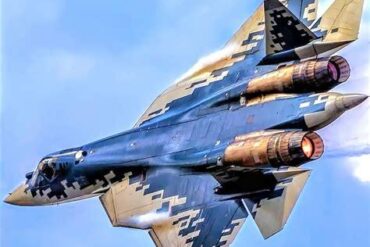
In a bold move that could redefine the balance of airpower in Asia, Russia has extended an unprecedented offer to India: the Su-57E fifth-generation stealth fighter, coupled with full source code access. This level of technological openness is virtually unmatched by Western suppliers, including the United States and France, and is being hailed by defence analysts as a “strategically disruptive” proposition.
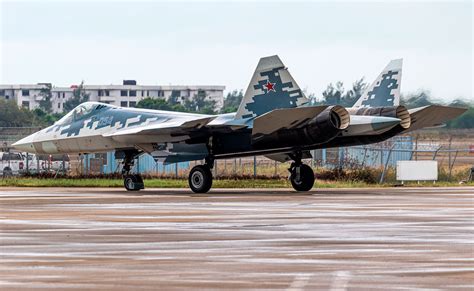
The Russian offer comes at a pivotal moment. As Washington readies a formal bid to sell the F-35A to India, Russia’s proposal is being viewed in New Delhi not merely as a weapons deal but as a potent instrument of strategic autonomy. Full source code access would empower India to integrate its own indigenous systems and weaponry, effectively bypassing the software restrictions that have hampered previous Western acquisitions.
Russia’s Source Code Offer: A Game Changer for India’s Military Independence
Unlike the limited customization options provided by the U.S. or France, Russia’s willingness to hand over the software architecture of the Su-57E reflects a deepening strategic partnership. This openness grants India the capability to embed its own Astra Mk1/Mk2 BVR missiles, Rudram anti-radiation systems, and other indigenously developed PGMs directly into the fighter jet’s avionics. This flexibility plays directly into the Modi government’s “Atmanirbhar Bharat” (self-reliant India) doctrine, which aims to reduce dependency on foreign defense technologies.
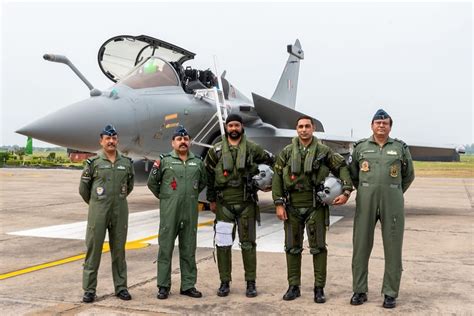
This offer stands in stark contrast to India’s experience with the Rafale jets procured from France. Despite India’s €7.8 billion investment in the Rafale fleet, French manufacturer Dassault Aviation has consistently denied India access to core operational codes—particularly those underpinning the Thales RBE2 AESA radar and mission computer modules. This lack of transparency has hindered full integration of Indian weapons like the Astra BVR missile, fueling long-standing dissatisfaction in New Delhi.
The Su-57E: Russia’s Answer to the F-35 and China’s J-20
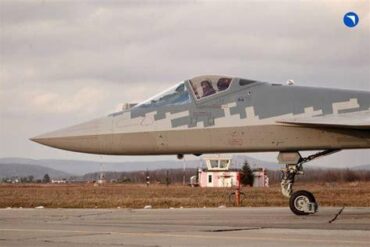
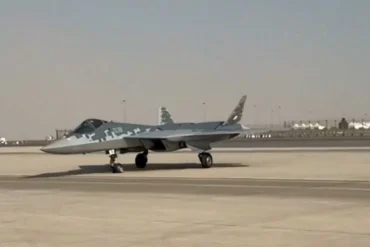
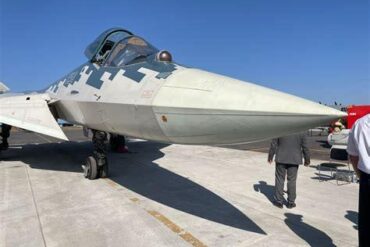
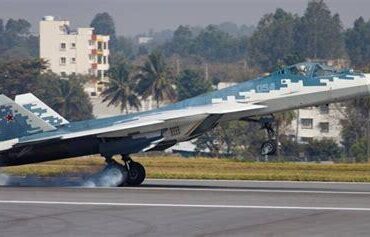
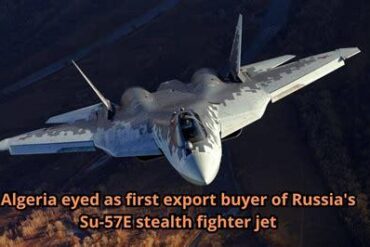
Russia’s Su-57E stealth fighter, designed by the Sukhoi Design Bureau under United Aircraft Corporation (UAC), is a multi-role aircraft emphasizing stealth, maneuverability, and digital warfare integration. Export variants were first showcased globally at Aero India 2021, where Indian military planners saw the potential for next-generation air combat capability.
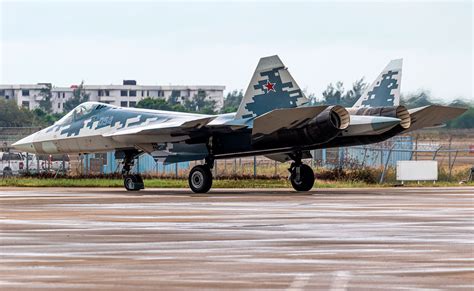
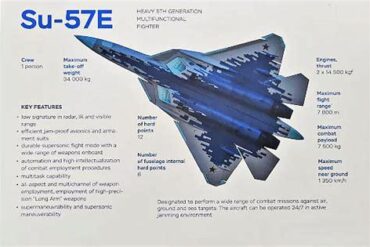
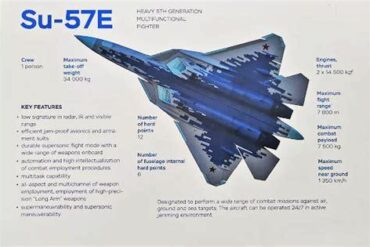
Key features of the Su-57E include:
- Twin AL-41F1 turbofan engines with 3D thrust vectoring for extreme agility
- Radar-absorbing materials and canted geometry to reduce radar cross-section
- Internal weapons bays for enhanced stealth
- Serpentine air intakes that reduce infrared signature
- N036 Byelka AESA radar suite offering 360-degree situational awareness
- Advanced EW suite and IRST system for enhanced survivability in contested airspace
The fighter is also reportedly compatible with hypersonic weapons like the Kh-47M2 Kinzhal, positioning it as a potent strategic platform. These features allow the Su-57E to operate in roles ranging from air superiority and electronic warfare to deep-penetration strike missions.
Integration with India’s Super-30 Upgrade Programme
India’s deep familiarity with Russian aircraft systems, especially its extensive Su-30MKI fleet, lays fertile ground for rapid integration of the Su-57E. The Super-30 upgrade programme, a joint initiative by HAL and UAC, is already infusing Su-30MKIs with GaN-based AESA radar, indigenous mission computers, and digital cockpit systems. The architecture of the Su-57E has been reportedly aligned to accommodate these upgrades, opening up synergistic possibilities.
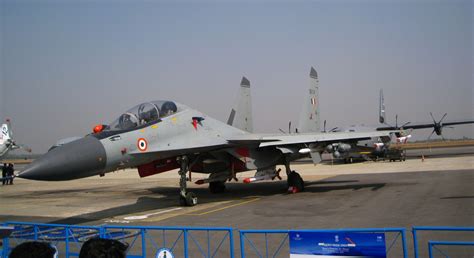
Such integration would allow seamless operation of:
- Astra Mk1 and Mk2 BVR missiles
- Rudram anti-radiation missiles
- Smart Anti-Airfield Weapons (SAAW)
- BrahMos-A supersonic cruise missiles
This interoperability underscores a significant doctrinal shift: India can now embed custom-built munitions and subsystems into its future airpower fleet without negotiating restrictive licensing or integration barriers from foreign OEMs.
The F-35 Versus Su-57E: Competing Visions for India’s Strategic Future
As Washington edges closer to offering the F-35A to India, the battlefield is no longer just technological—it’s geopolitical. The F-35, though unmatched in network-centric warfare and stealth, comes with heavy constraints. The U.S. does not grant source code access, nor does it permit integration of non-NATO certified munitions. Moreover, the F-35A’s complex maintenance ecosystem and centralized logistics chain increase operational dependency.
In contrast, the Su-57E, while slightly trailing the F-35 in stealth metrics, offers greater sovereignty. The absence of embedded kill-switches, lower logistical footprint, and willingness to transfer core software rights make it a more autonomous option.
Rewriting the Rules of Defense Procurement
India’s frustrating experience with the Rafale program, despite its formidable performance, serves as a cautionary tale. Without access to source codes, India has struggled to integrate even domestically developed munitions across Rafale squadrons stationed at Ambala and Hasimara. The April 2025 deal for 26 Rafale-M naval variants, while significant for India’s carrier airpower, has also sparked internal debates about strategic vulnerability through dependency.
With China’s J-20 and J-35 fighters entering mass production, and Pakistan reportedly procuring additional J-10C aircraft with AESA and PL-15 missiles, India faces increasing pressure to accelerate fifth-generation induction. The Su-57E could provide not just parity—but leverage.
Strategic Implications in the Indo-Pacific Power Matrix
Should India proceed with the Su-57E acquisition, the implications extend far beyond air dominance. It would signal a tectonic shift in India’s strategic posture, placing it squarely within a non-aligned but sovereign defense paradigm. It may also recalibrate India’s relations with Western powers, who have historically been reluctant to part with sensitive tech even for strategic allies.
Furthermore, this deal would strengthen the Indo-Russian military-industrial partnership, allowing for joint development of future combat platforms and AI-driven warfare solutions. Russia, in turn, gains a credible partner to commercially validate and refine the Su-57E for future export prospects.
Conclusion: The Future of Indian Airpower Hangs in the Balance
The Su-57E offer is not merely about aircraft. It is about control—over code, combat doctrine, and strategic autonomy. For India, it presents a fork in the road: continue down the path of conditional Western dependency, or embrace a technological leap anchored in sovereignty.
As India weighs the Su-57E against the F-35A and other Western offers, it must reconcile its aspirations for indigenous capability development with the operational exigencies of a two-front threat. The decision, likely to unfold over the coming year, could define the next era of Indian airpower and its role in the Indo-Pacific order.