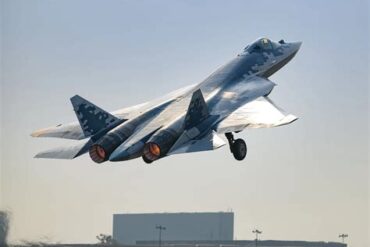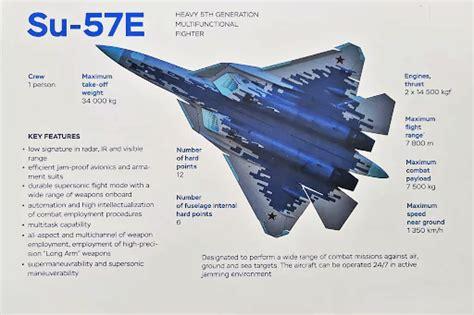
India and Russia have entered an advanced phase of negotiations that could fundamentally reshape New Delhi’s future airpower posture, as discussions intensify around local production of the Russian Su-57E fifth-generation stealth fighter. The talks come at a moment when India is also quietly evaluating the strategic implications of a potential U.S. F-35 Lightning II pathway, placing the country at the center of a rare great-power competition over next-generation combat aviation. What is unfolding is not merely a procurement debate, but a broader contest over industrial sovereignty, strategic autonomy, and long-term technological control.
According to disclosures made in late January 2026, Russian and Indian officials have moved beyond conceptual dialogue into what both sides describe as deep technical negotiations. These discussions now focus on licensed production, local assembly, and extensive integration of Indian systems within the Su-57E export variant. Executives from Russia’s United Aircraft Corporation (UAC) confirmed during Wings India 2026 that the emphasis has shifted decisively toward manufacturing architecture, supply-chain localization, and lifecycle sustainment inside India rather than simple aircraft delivery.
At stake is India’s ambition to secure indigenous fifth-generation fighter capability without surrendering control over upgrades, mission systems, or operational doctrine. The Su-57E proposal aligns directly with that objective, promising not just airframes but access to production know-how, integration authority, and long-term industrial participation. This approach resonates deeply with India’s “Make in India” defense strategy, which prioritizes domestic manufacturing over dependence on tightly controlled foreign supply pipelines.
Strategic Context Driving India’s Fifth-Generation Calculus
India’s air combat requirements are being shaped by a rapidly evolving regional environment. China’s accelerating deployment of J-20 stealth fighters, coupled with Pakistan’s expanding access to advanced sensors and long-range missiles, has compressed the Indian Air Force’s modernization timeline. While the Rafale has restored a measure of qualitative balance, it does not address the long-term need for a low-observable, sensor-fused platform capable of surviving in highly contested airspace.
The Su-57E discussions therefore represent an attempt to bridge the gap between near-term readiness and future autonomy. Unlike fourth-plus-generation fighters, fifth-generation aircraft derive much of their combat value from software-defined systems, electronic warfare integration, and data fusion. India’s insistence on local participation reflects an understanding that control over these domains is as decisive as aerodynamic performance.
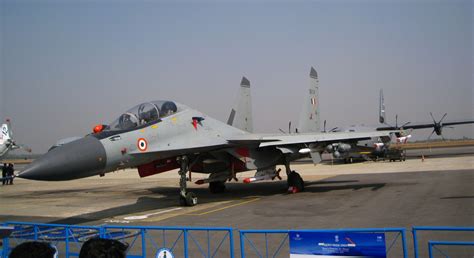
Russia, facing its own industrial pressures and seeking stable long-term partners, has responded with an unusually flexible offer. Officials have openly suggested that Su-57E production could be adapted to existing Indian aerospace infrastructure, particularly facilities currently supporting the Su-30MKI program. This continuity lowers barriers to entry while preserving a skilled workforce already familiar with complex Russian airframes.
The Su-57E: Export Stealth with Customization Leverage
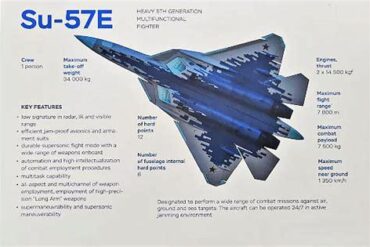
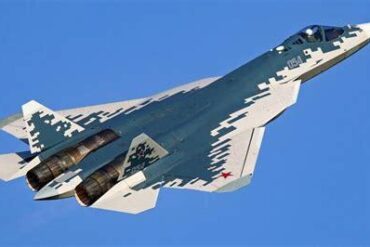
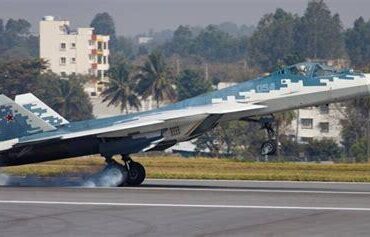
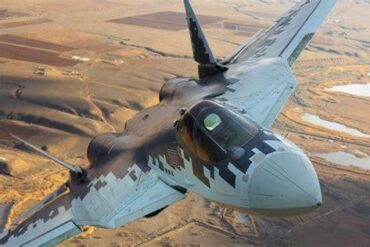
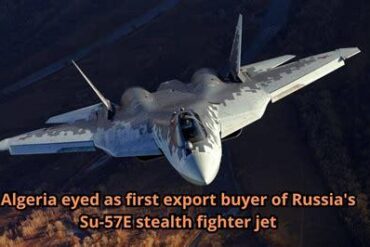
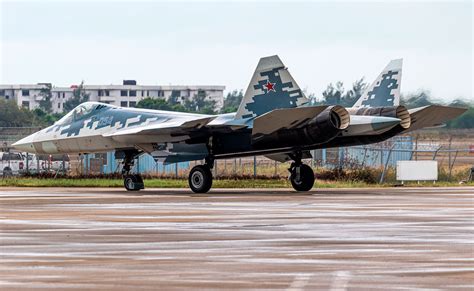
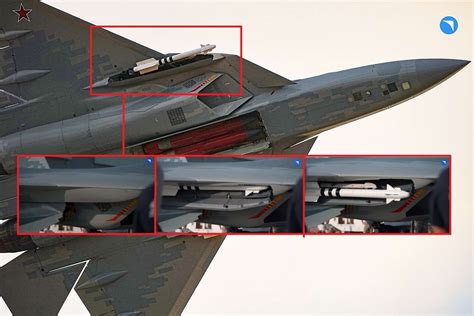
The Su-57E is the export-configured version of Russia’s Su-57 Felon, designed to balance advanced capability with international technology-transfer constraints. It retains hallmark fifth-generation attributes, including low radar cross-section shaping, internal weapons bays, advanced electronic countermeasures, and thrust-vectoring engines that enable extreme maneuverability. While certain sensor and signature-management features are expected to be moderated for export, the platform remains a formidable multirole fighter by global standards.
Crucially for India, the Su-57E is being marketed not as a fixed configuration but as a customizable architecture. Russian negotiators have emphasized flexibility in avionics integration, weapons compatibility, and mission-system tailoring. This opens the door for Indian-developed sensors, datalinks, and potentially even indigenous weapons to be incorporated over time, reducing dependence on external approvals.
From an operational standpoint, the Su-57E offers attributes that align with Indian Air Force doctrine. Its emphasis on kinematic performance, high-energy maneuvering, and long-range strike complements India’s preference for multi-role versatility across diverse geographic theaters, from high-altitude borders to maritime approaches.
Industrial Sovereignty at the Core of Negotiations
What differentiates the current talks from earlier initiatives is the scale of industrial participation under discussion. Russian officials have signaled willingness to support not only assembly but also subsystem manufacturing, maintenance ecosystems, and long-term upgrade pathways within India. This model mirrors, and potentially expands upon, the successful Su-30MKI licensed production program, which transformed Hindustan Aeronautics Limited into one of the world’s most experienced operators of heavy fighter manufacturing lines.
Such an arrangement would give India a rare status: a non-origin nation with domestic fifth-generation fighter production capacity. This carries strategic weight beyond immediate force structure, enabling India to cultivate design expertise, test integration concepts, and sustain its fleet independently during geopolitical disruptions.
The memory of the earlier FGFA program, which India exited in 2018, looms over current negotiations. That initiative faltered over disagreements on cost, workshare, and perceived capability gaps. The renewed Su-57E dialogue suggests that both sides have recalibrated expectations. Russia appears more open to technology sharing, while India is focusing on tangible production rights rather than joint design from scratch.
The F-35 Factor and Strategic Constraints
Running parallel to the Su-57E talks is the persistent, if unofficial, presence of the F-35 Lightning II in India’s strategic imagination. The United States has not formally offered the aircraft, but it remains part of broader defense conversations under frameworks such as the U.S.–India Initiative on Critical and Emerging Technologies. The F-35 represents a different philosophy: a deeply networked, combat-proven platform optimized for coalition warfare.
From a pure systems-integration perspective, the F-35 sets a high benchmark in sensor fusion, battlefield networking, and low observability. However, these advantages come with stringent political and operational conditions. The aircraft is not available for licensed production, and its software, mission data, and upgrade cycles are centrally controlled by the United States. For India, this raises fundamental questions about sovereignty and freedom of action.
India’s continued operation of Russian systems, including the S-400 air defense system, further complicates the F-35 equation. U.S. export policy demands strict end-use assurances and alignment with American strategic priorities, conditions that sit uneasily with India’s tradition of strategic non-alignment. Even if access were granted, India would face limited ability to integrate indigenous systems or modify the platform independently.
Capability Versus Control: The Deciding Equation
The emerging choice before India is not simply between two aircraft, but between two models of power projection. The F-35 offers immediate integration into a global combat network, but at the cost of autonomy. The Su-57E offers greater control over production, modification, and sustainment, even if some systems maturity questions remain.
From a lifecycle perspective, control often outweighs initial performance margins. Fifth-generation fighters are sustained through decades of incremental upgrades, software evolution, and sensor integration. India’s ability to manage these processes domestically could determine the platform’s true value over time. The Su-57E’s openness to adaptation aligns with this long-term view.
Russia’s willingness to localize production also has geopolitical implications. It signals Moscow’s intent to remain a central player in India’s defense ecosystem despite shifting global alignments. For India, maintaining diversified partnerships reduces vulnerability to external pressure while preserving leverage across competing powers.
Implications for Regional Airpower Balance
Should the Su-57E deal proceed, it would reverberate across Asia’s defense landscape. India would join a very small group of nations with indigenous stealth fighter manufacturing, altering regional perceptions of technological parity. This could influence deterrence calculations vis-à-vis China and shape future procurement decisions among regional partners watching India’s model closely.
The decision also intersects with India’s own Advanced Medium Combat Aircraft (AMCA) program. Experience gained through Su-57E production could feed directly into indigenous design efforts, accelerating timelines and reducing technical risk. Rather than competing, the two programs could form a layered pathway toward self-reliance.
A Defining Moment for India’s Aerospace Trajectory
As negotiations continue, the contours of India’s fifth-generation strategy are becoming clearer. The emphasis on local assembly, system integration, and long-term control suggests that industrial sovereignty is outweighing short-term prestige. The Su-57E, with all its complexities, is being positioned as a platform India can truly own, shape, and evolve.
The outcome will hinge on the final balance of technology transfer, cost, and operational confidence. Yet regardless of the specific aircraft selected, the process itself marks a maturation of India’s defense decision-making. The focus has shifted decisively from acquisition to capability stewardship, from buying power to building it.
In that sense, the Su-57E talks are less about choosing between Russia and the United States, and more about asserting India’s intent to stand as an autonomous aerospace power in its own right.