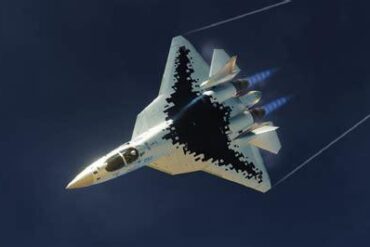
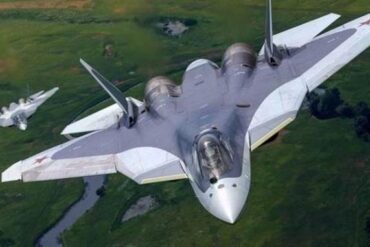
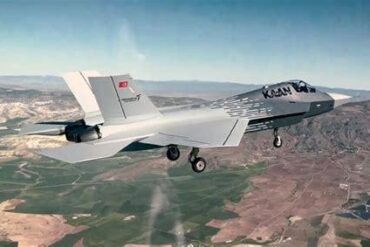
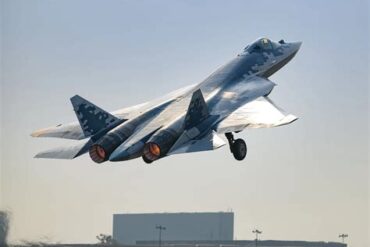
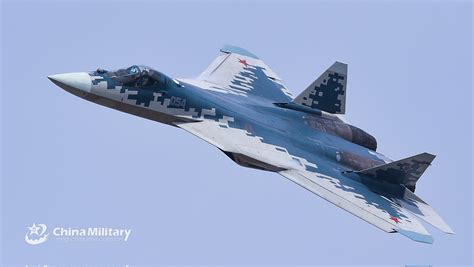
The Su-57 Felon is a fifth-generation stealth multirole fighter aircraft developed by Russia’s Sukhoi Design Bureau, under the broader umbrella of the United Aircraft Corporation (UAC). As Russia’s first operational stealth fighter, the Su-57 is designed to fulfill a dual mandate: air superiority and precision strike missions. This platform is emblematic of Russia’s ambition to match and counter Western stealth technologies, particularly the U.S. F-22 Raptor and F-35 Lightning II. It brings together cutting-edge stealth design, supermaneuverability, and supersonic cruise capability, underscoring its pivotal role in modernizing Russia’s aerospace forces.
Development History: A Strategic Collaboration
The genesis of the Su-57 traces back to the early 2000s under the PAK FA (Prospective Aviation Complex of Frontline Aviation) program. Conceived to replace aging Soviet-era aircraft like the MiG-29 and Su-27, the Su-57 was initially codenamed Stolitsa (Capital City). Its development was spearheaded by Alexander Davidenko, who orchestrated collaboration between the Novosibirsk Aircraft Production Association (NAPO) and the Komsomolsk-on-Amur Aircraft Production Association (KnAAZ). This division of labor expedited development while leveraging diverse technical expertise from Russia’s foremost aerospace facilities.
The avionics and sensor suites were designed through a national consortium, featuring stalwarts such as Tekhnokompleks, Tikhomirov NIIP, UOMZ, and the Central Scientific Research Radio Engineering Institute. Engine development was entrusted to NPO Saturn, which engineered the AL-41F1 engines (Izdeliye 117) to deliver superior thrust, agility, and supercruise performance.
Stealth and Aerodynamics: Engineering Precision
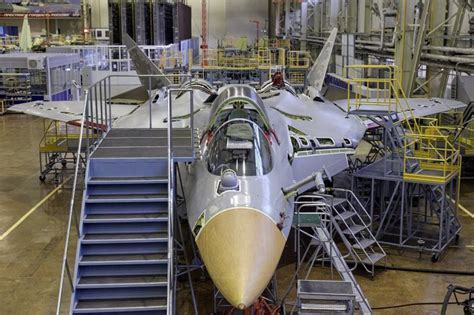
The Su-57’s twin-engine configuration and sleek airframe are meticulously optimized for stealth and aerodynamic superiority. Its 20.1-meter length, 14.1-meter wingspan, and 78.8 square meters of wing area give it a formidable silhouette, while the extensive use of composite materials and radar-absorbing coatings minimize radar cross-section. Integral internal weapon bays and sophisticated fuselage contours preserve its stealth profile across various combat configurations.
The aircraft is engineered for supercruise speeds of Mach 1.3 without afterburners and can achieve a maximum speed of Mach 2, making it both swift and elusive. Its high thrust-to-weight ratio and 3D thrust-vectoring nozzles grant it exceptional agility, enabling advanced aerial maneuvers critical in close-range dogfights and high-stakes missions.

Avionics and Electronic Warfare: A Digital Powerhouse
Central to the Su-57’s prowess is the Sh-121 multifunctional integrated radio electronic system (MIRES). The N036 Byelka AESA radar provides expansive multi-target tracking and engagement capabilities. The system integrates X-band frontal radar, L-band slat arrays for IFF (Identification Friend or Foe), and cheek-mounted radars, ensuring enhanced situational awareness.
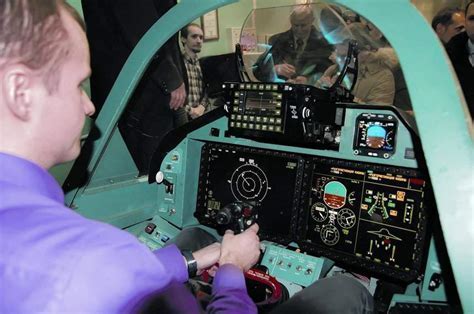
Defensive capabilities are bolstered by the L402 Himalayas ECM suite, which offers electronic countermeasures against radar-guided threats. The 101KS Atoll system delivers infrared search and track (IRST), laser countermeasures, and missile warning capabilities, empowering pilots to detect adversaries passively while maintaining stealth. The cockpit, equipped with a helmet-mounted display (HMD), ensures instantaneous access to flight and combat data, enhancing pilot situational awareness and reaction time.
Armament: Versatility in Combat Scenarios
The Su-57 is tailored to deliver devastating firepower across multiple mission profiles. It houses two large internal weapon bays and two smaller bays near the engine nacelles, allowing a seamless blend of stealth and firepower. For air-to-air missions, it wields:
- R-77M active radar-guided missiles
- R-74M2 infrared-guided missiles
- R-37 missiles for long-range strikes
For air-to-ground operations, the Su-57 can deploy:
- 4 × Kh-38M tactical missiles
- 4 × Kh-59MK2 stealth cruise missiles
- Kh-69 missiles for precision targeting
- KAB-250 and KAB-500 guided bombs
- 500 kg Drill anti-tank cluster bombs
The aircraft also excels in maritime strike roles, equipped to carry Kh-35U and Kh-31 anti-ship missiles, and to neutralize enemy radars with Kh-58UShK anti-radiation missiles. Close-range engagements are supported by the 30 mm GSh-30-1 internal cannon, providing formidable dogfighting capability.

Propulsion: Powering Supremacy
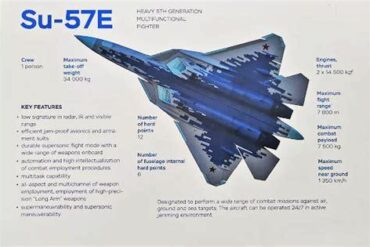
The Su-57’s dual Saturn AL-41F1 afterburning turbofan engines are the beating heart of its performance. Each engine delivers 88.3 kN of dry thrust and 142.2 kN with afterburner, with thrust-vectoring nozzles that enhance maneuverability. The aircraft boasts a service ceiling of 20,000 meters, a combat radius of 1,250 kilometers, and a ferry range of 4,500 kilometers with external fuel tanks. Its agility and reach make it a potent adversary in any theater of operations.
Variants: Expanding the Fleet’s Horizon
The Su-57 program has yielded several key variants:
- Su-57 (Baseline Variant): The primary combat-ready platform for the Russian Aerospace Forces.
- Su-57E (Export Variant): Tailored for international buyers, first unveiled at the MAKS-2019 airshow.
- Su-57M (Upgraded Variant): Future iteration expected to feature Izdeliye 30 engines and next-generation avionics.
- Su-75 Checkmate: A single-engine light fighter inspired by the Su-57’s design ethos, aimed at budget-conscious export markets.
- FGFA: A shelved joint Russia-India project that sought to customize the Su-57 for Indian requirements.
International Prospects and Export Ambitions
Russia’s vision for the Su-57 extends beyond its own borders. Notably, the Su-57E export variant has been showcased at international airshows such as MAKS-2019 and AirShow China 2024. In late 2024, Rosoboronexport revealed it had secured its first international customer, fueling speculation that Algeria—a long-time Russian defense partner—is the buyer. This strategic export move underscores Russia’s intent to establish the Su-57 as a competitive force in the global defense market, rivalling American and Chinese fifth-generation fighters.
Conclusion: A Stealth Powerhouse for Modern Air Warfare
The Su-57 Felon symbolizes a monumental leap in Russian aerospace capabilities. Fusing stealth, speed, agility, and cutting-edge avionics, it is poised to serve as the backbone of Russia’s air dominance strategy for decades to come. While development hurdles and international skepticism have shaped its journey, the Su-57 stands today as a testament to Russia’s enduring commitment to military aviation innovation and its quest for technological parity on the world stage.