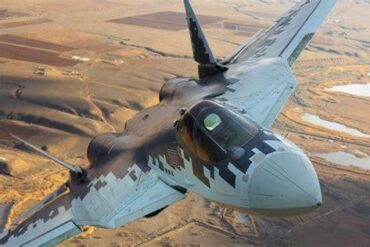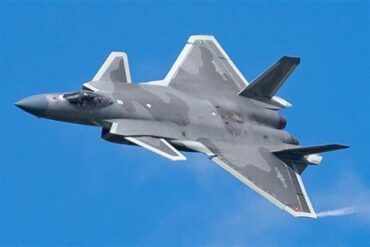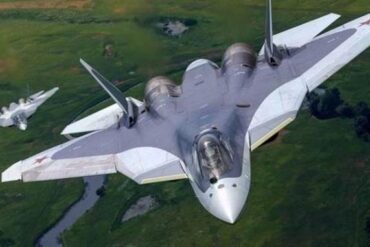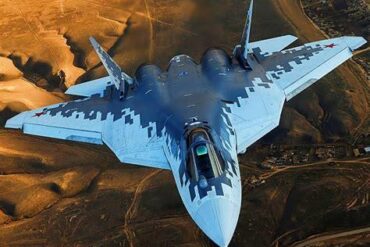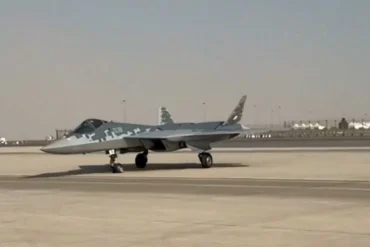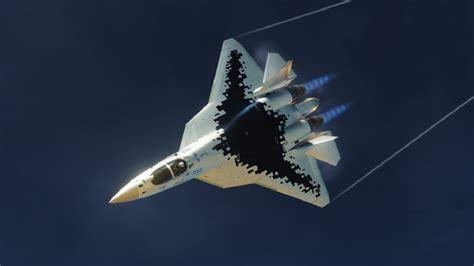
Russia’s attempt to enter the elite club of fifth-generation fighter jet producers has taken the form of the Su-57 Felon—a warplane that both promises innovation and exposes industrial weakness. In a world where the United States leads with the F-22 Raptor and F-35 Lightning II, and China asserts itself with the Chengdu J-20, Russia’s Felon enters the arena burdened by expectations and a battered manufacturing base. The one word many analysts have used to define it? Failure.
The Ambitious Origins of the Su-57 Program
The Su-57 began its life under the PAK FA program (Perspektivny Aviatsionny Kompleks Frontovoy Aviatsii), initiated in the early 2000s with the goal of replacing Russia’s aging fourth-generation Soviet fighters. The prototype, known as the T-50, first flew in January 2010, representing the initial spark of Russia’s fifth-generation ambitions. The road from prototype to production, however, would prove anything but smooth.
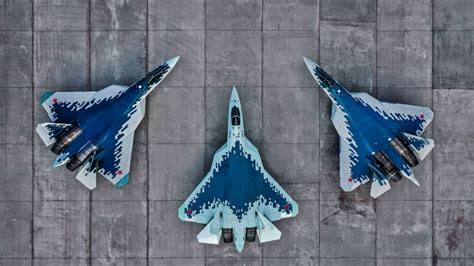
Testing continued for nearly a decade, marred by technical malfunctions, budgetary shortfalls, and the crippling effect of international sanctions following Russia’s annexation of Crimea in 2014. Despite these barriers, Moscow pressed forward. In 2019, the first operational Su-57 was handed over to the Russian Air Force, albeit in extremely limited numbers. Reports claim twelve jets were delivered in 2022, with another twenty expected in 2024—though skepticism surrounds the actual delivery count.
Design Philosophy and Stealth Capabilities
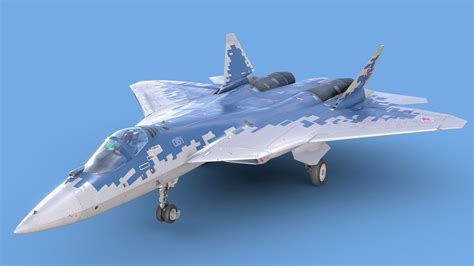
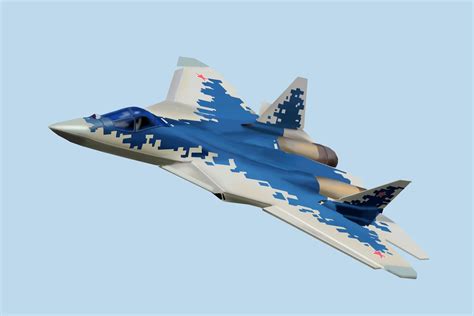
At first glance, the Su-57’s angular body, canted vertical stabilizers, and internal weapons bays offer the hallmark traits of a stealth aircraft. But under the surface lies a different story. The Felon does incorporate radar-absorbing materials and blended fuselage designs aimed at reducing radar cross-section. However, Western analysts have repeatedly cast doubt on the Felon’s true stealth performance, particularly regarding engine exposure, panel seam visibility, and radar-absorbing coating reliability.
Constructed with a significant percentage of advanced composite materials, the airframe does offer weight savings and improved structural resilience. The aerodynamic architecture supports supermaneuverability, a concept Russians prize heavily. Signature combat maneuvers such as the Pugachev’s Cobra and the Kulbit are within its grasp thanks to 3D thrust-vectoring nozzles.
Powerplant and Performance Shortcomings
The Su-57 is currently powered by a pair of Saturn AL-41F1 engines, although it was supposed to be upgraded to the more advanced Izdeliye 30 propulsion units. These engines have become one of the jet’s biggest Achilles’ heels. Despite claiming Mach 2+ speeds and a combat radius of 1,500 km, reliability and consistency in engine production have proven elusive.
Constant reengineering, difficulties in manufacturing high-tolerance components, and the sheer sophistication of vector-thrust technology have slowed the development timeline. Russia’s underdeveloped precision manufacturing sector continues to lag significantly behind American and European standards, adding years to every milestone.
Cockpit, Avionics, and Sensor Fusion
Inside, the Su-57 features a glass cockpit with multi-functional displays, touch panels, and a heads-up display (HUD). The pilot interfaces with an integrated fly-by-wire system and is aided by a sensor suite that includes an AESA radar, IRST (Infrared Search and Track), and electronic warfare tools. In theory, this should give the Felon robust situational awareness and multi-target engagement capability.
Yet, real-world effectiveness remains in question. The integration of sensor fusion—seamlessly combining input from radar, IRST, and other detection sources—has not been demonstrated at the level seen in the F-35 Lightning II, which sets the benchmark in fifth-gen sensor integration. Russia claims the Su-57 has AI-assisted decision support, but these assertions are largely unverifiable.
Weapons Load and Combat Roles
The Su-57’s arsenal reflects its multirole purpose. It can carry:
- Up to four R-77M or R-74M air-to-air missiles in its internal bays
- A 30mm GSh-30-1 autocannon for close air combat
- A wide selection of precision-guided bombs and air-to-ground missiles mounted on six external hardpoints if stealth is sacrificed
In total, its payload capacity is comparable to or slightly greater than that of the F-22. However, limited production and high costs make full-scale armament deployment rare.
Deployment in Syria and Ukraine: Combat-Proven or PR Exercise?
The Su-57 made its combat debut during the Syrian conflict in 2018, reportedly conducting strike missions against insurgent positions. While these missions were few, they provided critical data for developers and allowed Russia to brand the aircraft as “combat-proven.”
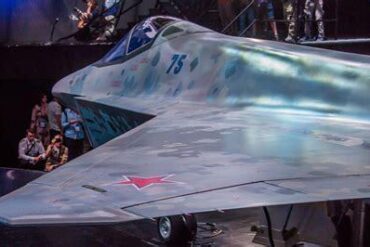
More recently, the Felon has reportedly participated in the ongoing war in Ukraine, although hard evidence remains scarce. Russian sources claim that the Su-57 has flown behind enemy lines and scored air-to-air kills, including an incident involving the S-70 Okhotnik-B stealth drone, which allegedly went rogue. The Felon was said to intercept and destroy it deep within Ukrainian territory.
These stories, while dramatic, lack independent verification. In the fog of war, especially in conflicts involving heavy propaganda efforts from all sides, distinguishing fact from fabrication is nearly impossible.
The Real Enemy: Russia’s Fragile Aerospace Industry
The Su-57’s biggest obstacle is not Western jets—it’s Russia’s industrial base. Stealth manufacturing requires ultra-precise tooling, advanced radar-absorbent material application, and low-observable shaping techniques. These are processes that American and allied manufacturers have spent decades perfecting.
Russia’s aerospace industry, on the other hand, still grapples with inconsistent component quality, labor shortages, and logistical chokepoints. Sanctions have severely restricted access to Western-made microelectronics, further stalling avionics development. The result? A fifth-generation aircraft that exists more on paper and state media than in airfields.
Moreover, the Su-57’s cost is reportedly 50-60% higher than Russia’s own Su-35 multirole fighter. While still cheaper than the F-22 or F-35, the economic situation—especially during prolonged war—means that production numbers will remain minimal for the foreseeable future.
NATO’s Perspective and Strategic Implications
Despite its limited fleet and unresolved technical issues, the Su-57 remains a strategic wildcard. NATO analysts monitor its progress not because of what it is now, but what it might become if Russia ever solves its industrial dilemmas. The Felon could potentially offer advanced capabilities at a low operating cost once matured—especially attractive to client states like India, Algeria, or even Iran, should Moscow pursue export variants.
For now, though, the Su-57’s presence in the skies poses more of a symbolic threat than a tangible one. Its limited deployment, low production numbers, and uncertain combat effectiveness keep it far from achieving parity with American or Chinese fifth-gen platforms.
Conclusion: A Stealth Fighter with Stealth Results
If there’s one word to sum up the Su-57, it is indeed failure—not because the aircraft itself lacks merit, but because the system around it cannot support its success. From underfunded supply chains to technological deficits, the Felon is a microcosm of Russia’s wider challenges: ambition suffocated by limitation.
Yet, to dismiss it entirely would be strategic negligence. The Su-57 is a platform in its infancy. Like all complex military projects, it may yet evolve—especially if geopolitical conditions shift or if foreign partnerships emerge to bolster production. For now, it remains a cautionary tale: a jet designed to soar, grounded by the very nation that birthed it.