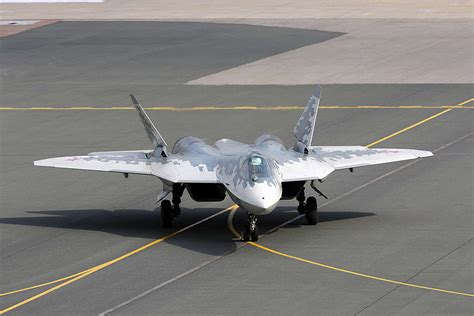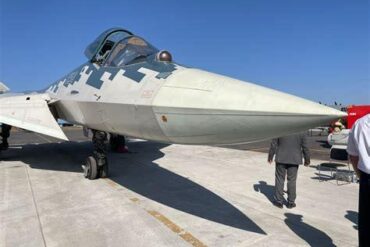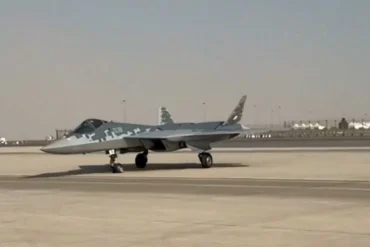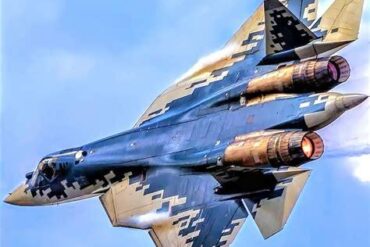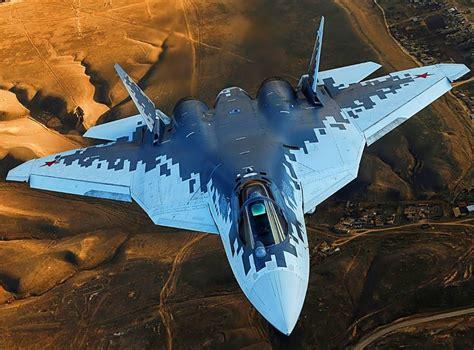
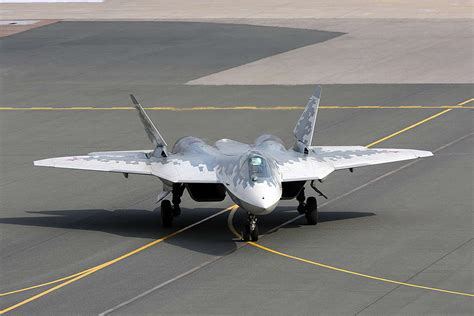
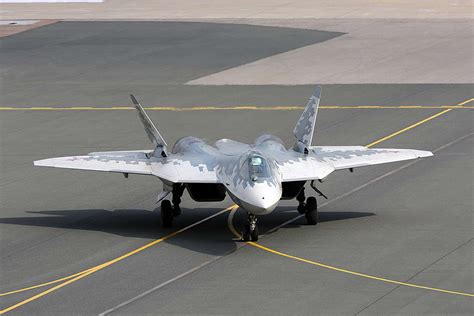
Russia has officially introduced the Su-57M1, a cutting-edge evolution of its fifth-generation stealth fighter platform, through the Sukhoi Design Bureau under the umbrella of United Aircraft Corporation (UAC). Presented in Moscow on May 15, 2025, the aircraft represents a bold stride forward in Russia’s aerospace ambitions. Designed for air superiority, precision strike, and maritime engagement, the Su-57M1 integrates artificial intelligence, enhanced stealth geometry, and upgraded propulsion systems, marking a pivotal moment in the modernization of the Russian Aerospace Forces.
A New Chapter in the PAK FA Program
The Su-57M1 builds on the legacy of the original Su-57, itself a product of the Prospective Aeronautical Complex of Front-Line Aviation (PAK FA) initiative launched in 1999. While the baseline Su-57 faced setbacks due to international sanctions and production delays, the M1 variant addresses these limitations through major upgrades. The aircraft reflects the objectives of the Megapolis program, aiming to place Russian aviation on par with global leaders such as the F-22 Raptor and F-35 Lightning II.
Redesigned Airframe and Stealth Architecture
The Su-57M1’s airframe has been reengineered for optimal aerodynamic performance. Its wider fuselage, extending 14.8 meters in length and 9.8 meters in wingspan, enhances lift and supersonic stability. Constructed from advanced composite materials, including polymer composites and aluminum honeycomb structures, the jet achieves a delicate balance between structural integrity and radar absorption. The reduced radar cross-section (RCS)—reportedly 0.1 square meters from the frontal aspect—enhances its survivability against modern air defenses.
The aircraft’s supercruise capability allows it to maintain speeds of Mach 1.6 without afterburners, a benchmark few fifth-generation fighters meet. Although the Su-57M1’s rear-aspect stealth remains less refined than some of its Western counterparts, the frontal stealth and electronic countermeasures compensate effectively for most modern threats.
Next-Generation Propulsion System
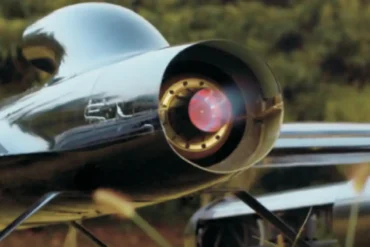
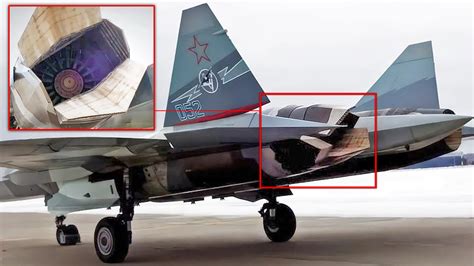
Powering the Su-57M1 are twin NPO Saturn AL-51F-1 (Izdeliye 30) engines. These provide 107.9 kN of dry thrust and 167 kN with afterburners—around 20% more than the AL-41F1 engines used in earlier models. The AL-51F-1s incorporate serrated nozzles and glass-fiber plastic inlet vanes, contributing to both radar and infrared signature reduction.
This engine configuration enables a maximum speed of Mach 2.0 (approximately 1,500 mph) and an unrefueled range of 3,500 km. Notably, a non-axisymmetric flat nozzle variant was tested in late 2024, potentially improving stealth even further without major airframe changes.
AI-Enhanced Avionics and Situational Awareness
A major leap in the Su-57M1 comes from its AI-integrated cockpit systems. Test pilot Sergei Bogdan highlighted how a single-button system initialization streamlines flight readiness, drastically cutting pre-flight time. The onboard AI manages mission-critical tasks, assisting in navigation, target acquisition, and system diagnostics, reducing pilot cognitive load and optimizing response time during combat.
At the core is the Sh121 integrated avionics suite, featuring the N036 Byelka AESA radar on the nose, supplemented by cheek-mounted side radars for full 360-degree situational coverage. The radar can detect air targets at up to 400 km, track 60 targets, and simultaneously engage eight. It also supports low-probability-of-intercept modes, vital for stealth operations.
Advanced Weapons Integration
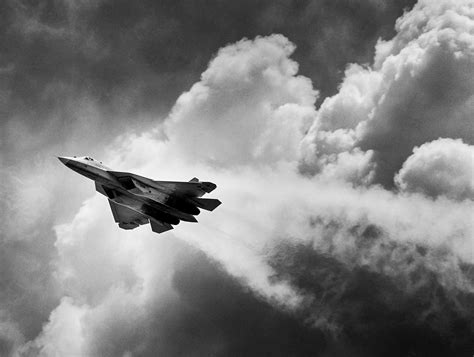
The Su-57M1 is outfitted with a formidable weapons package stored in internal bays to preserve stealth. Each of the two main tandem bays measures 4.4 meters in length, accommodating four K-77M long-range AAMs each, capable of engaging targets at distances up to 200 km. Side bays near the wing roots typically house R-74M short-range IR-guided missiles.
For ground and maritime strikes, the Su-57M1 carries KAB-250/KAB-500 precision bombs, Kh-38 missiles, and even the hypersonic Kinzhal on external pylons when stealth is not a primary concern. With a payload capacity of 7,400 kg, its versatility spans multiple combat roles.
Cutting-Edge Electronic Warfare and Passive Targeting
The fighter’s L402 Himalayas EW suite significantly improves survivability. It includes radar warning receivers, active jamming pods, and missile approach warning systems. Complementing this is the 101KS Atoll infrared search-and-track (IRST) system, capable of detecting stealth aircraft at up to 100 km without emitting radar signals—crucial for passive engagements.
Operational Experience and Strategic Outlook
The original Su-57 platform has seen limited but valuable deployment. It conducted combat evaluation missions in Syria in 2018 and was reportedly used for standoff missile strikes during the Ukraine conflict in 2022, avoiding direct exposure to contested airspace. These experiences fed directly into the Su-57M1’s design refinements.
With its enhanced stealth and AI-assisted operations, the Su-57M1 is expected to take on deeper penetration missions, engage high-value air targets, and operate across vast, remote theaters like the Arctic and Central Asia.
Overcoming Production Challenges
Despite its capabilities, the Su-57M1’s future hinges on Russia’s industrial resilience. Western sanctions have choked access to critical avionics and microelectronics, necessitating reliance on domestic solutions. UAC’s Komsomolsk-on-Amur plant, historically slow in scaling output, began facility expansions in 2024, with mass production now slated for late 2025.
The aircraft’s open systems architecture allows for future-proofing, including potential integration with UAVs like the S-70 Okhotnik. This UCAV, sharing the Su-57’s stealth coating and AL-51F-1 engine, is expected to serve as a loyal wingman for high-risk operations.
Comparing Global Fifth-Gen Platforms
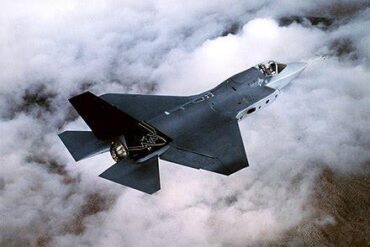
When measured against its Western counterparts, the Su-57M1 holds distinctive advantages. The F-22 Raptor remains unmatched in frontal stealth (RCS < 0.0001 m²) and beyond-visual-range capabilities but is limited by its production cap of 187 units. The F-35, with over 1,000 deployed globally, excels in network warfare, but sacrifices speed and agility.
The Su-57M1 offers superior supermaneuverability, courtesy of 3D thrust-vectoring, and can reach speeds up to 2,600 km/h, far exceeding the F-35’s Mach 1.6. While it lags behind in data-link capabilities, its radar and EW systems are highly competitive with the F-35’s AN/APG-81 and AN/ASQ-239 suites.
Export Ambitions and Geopolitical Impact
Russia is actively marketing the Su-57M1 abroad. While no confirmed buyers have been publicly disclosed, Rosoboronexport CEO Alexander Mikheev revealed in 2024 that initial contracts have been signed. At Aero India 2025, Russia offered India co-development of the Su-57E export variant, though India’s focus on the AMCA suggests limited interest.
Algeria has long been speculated as a potential buyer, yet official confirmation remains absent. At an estimated unit cost of $50 million, the Su-57M1 undercuts the F-35’s $110 million price tag, offering high-end capabilities to nations facing Western embargoes or budget constraints. However, long-term exports depend on Russia’s ability to meet delivery timelines under strained manufacturing conditions.
Legacy and Future Trajectory
Sukhoi’s legacy in producing superior dogfighters, from the Su-27 to the Su-35S, continues with the Su-57M1. Drawing from lessons learned in Syria and Ukraine, and embracing AI-era design principles, the aircraft redefines what a modern Russian fighter can achieve. It is both a technological statement and a strategic instrument, signaling Russia’s intent to remain a dominant force in global air combat.
As the aerospace world watches, the Su-57M1’s operational rollout and export viability will shape Russia’s strategic posture in the coming decades. Whether it fulfills its promise will depend not only on its impressive specifications but on the nation’s capacity to maintain technological innovation under isolation.