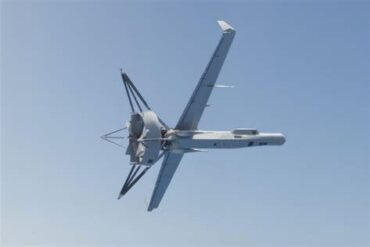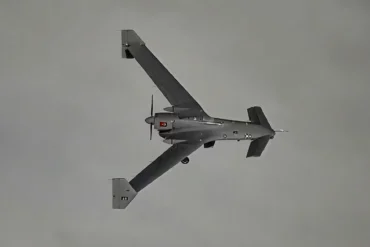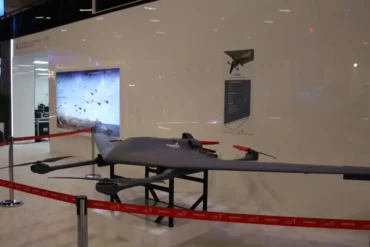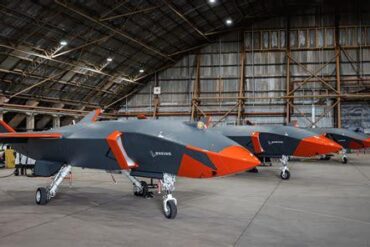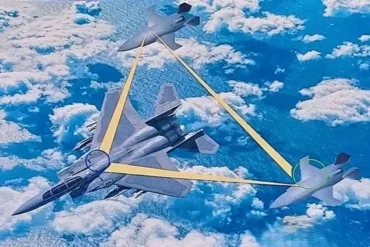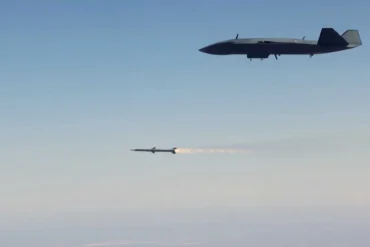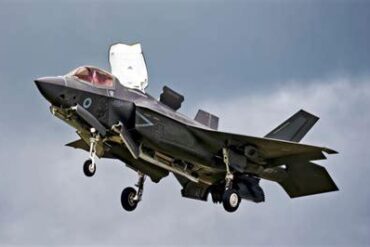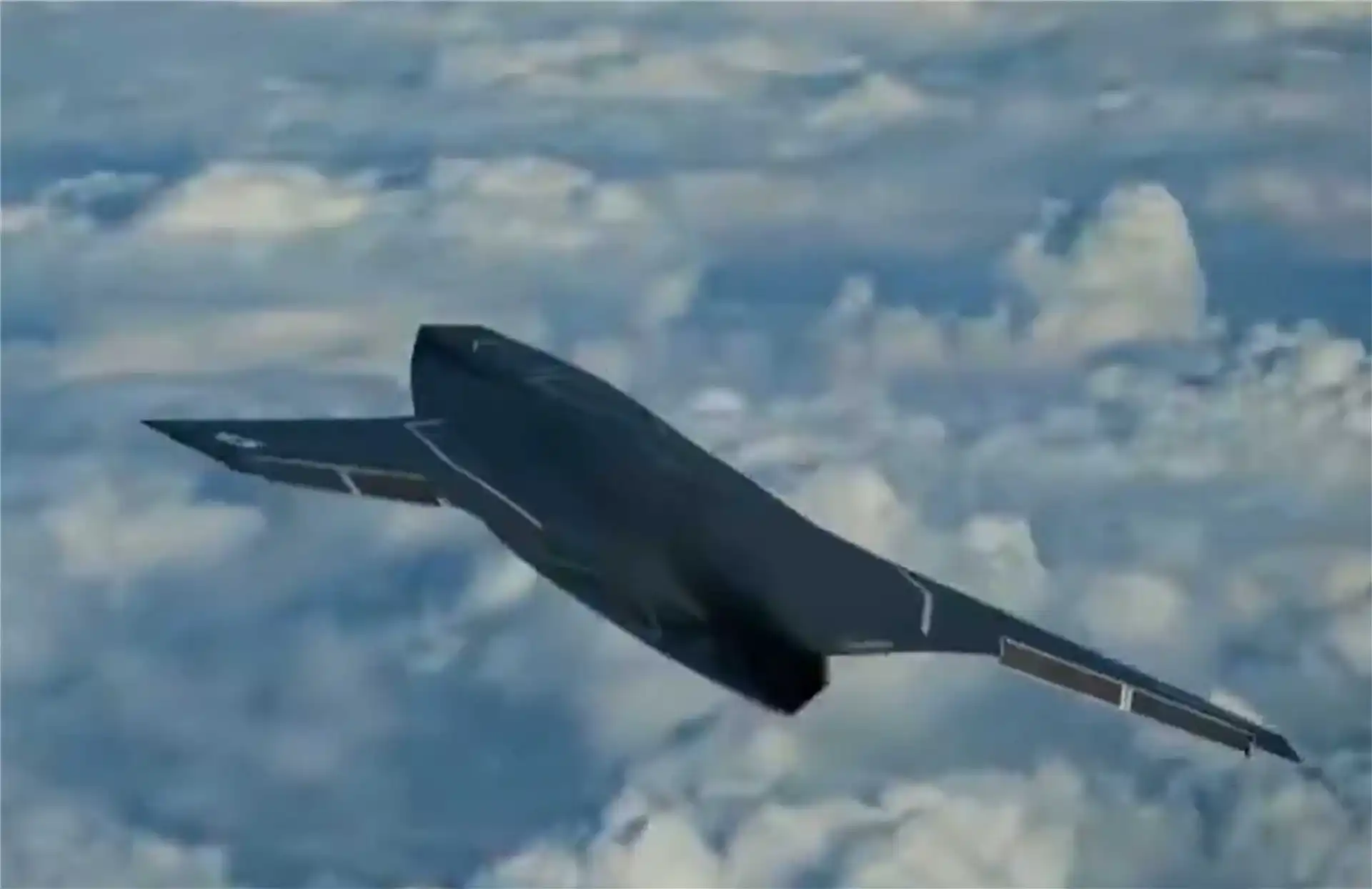
The unveiling of the X-BAT autonomous fighter jet marks a decisive shift in how the United States envisions future airpower. Developed by U.S.-based Shield AI, the aircraft represents a bold step beyond unmanned surveillance platforms and into the realm of fully autonomous combat aviation. Designed to take off and land vertically without a pilot onboard or reliance on conventional runways, the X-BAT signals the accelerating integration of artificial intelligence into high-end tactical warfare.
Shield AI’s announcement positions the X-BAT as a next-generation AI-piloted vertical takeoff and landing (VTOL) fighter, engineered and manufactured entirely in the United States. First flight is targeted within two years, with operational capability projected before the end of the decade. The timeline reflects the Pentagon’s growing urgency to field systems capable of surviving and operating in contested, communication-denied environments, where traditional remotely piloted aircraft may be vulnerable.
The company’s move into the fighter segment builds upon its operational credibility established through the V-BAT unmanned aerial system, already fielded for intelligence, surveillance, and reconnaissance (ISR) missions. While the V-BAT validated Shield AI’s autonomy software in real-world conditions, the X-BAT represents a structural leap: from surveillance drone to AI-enabled strike and air combat platform.
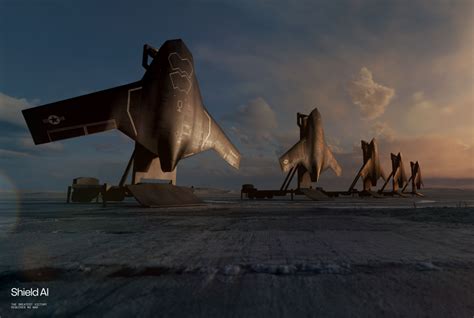
Transition from ISR Drone to Autonomous Combat Aircraft
The progression from V-BAT to X-BAT is not merely an increase in size or speed. It reflects a deliberate strategic repositioning. Shield AI is attempting to transfer its proven Hivemind autonomy architecture into a higher-performance airframe capable of maneuvering, striking, and surviving in environments traditionally dominated by piloted fighters.
Historically, the fighter aircraft sector has been controlled by major aerospace primes with decades of experience in complex manned platforms. Shield AI’s entry introduces a disruptive dynamic: a technology-driven company applying software-first principles to combat aviation. This approach aligns with broader defense acquisition trends favoring rapid prototyping, modular architectures, and compressed development cycles.
The X-BAT’s architecture suggests that autonomy is not an add-on feature but the core of the aircraft’s identity. Unlike conventional drones dependent on satellite control links, the X-BAT processes mission data onboard, enabling it to navigate, identify threats, and execute engagements within human-approved parameters. This “human-on-the-loop” framework ensures compliance with Department of Defense doctrine while leveraging machine-speed decision-making.
Technical Specifications: Performance in the Tactical Envelope
The X-BAT’s published performance metrics place it firmly within a credible tactical profile. Engineered to sustain maneuver loads exceeding 4g, the aircraft is designed to endure combat-relevant aerodynamic stresses. Its wingspan measures approximately 11.9 meters, with a fuselage height near 7.9 meters and a compact width of about 1.5 meters, indicating a streamlined configuration optimized for speed and agility.
For deployment flexibility, the aircraft can be stored within a transport envelope of roughly 12.2 meters in length, 4.3 meters in width, and 1.8 meters in height. This design supports compatibility with strategic airlift assets, reinforcing its expeditionary intent.
Perhaps most striking is the range capability. With a maximum reach of 2,000 nautical miles (3,700 kilometers), the X-BAT can conduct extended missions without immediate refueling support. Its operational ceiling surpasses 50,000 feet (15,200 meters), placing it above many medium-range air defense systems and expanding sensor and engagement horizons. These figures suggest a platform capable not only of localized tactical support but of theater-level operational reach.
Vertical Takeoff and Landing: Operational Flexibility Without Runways
The VTOL capability fundamentally reshapes deployment concepts. Traditional fighters require long, prepared runways—fixed assets that are increasingly vulnerable in high-intensity conflicts. The X-BAT eliminates that dependency.
By enabling vertical takeoff and landing from austere or dispersed sites, the aircraft aligns with the U.S. military’s Agile Combat Employment (ACE) doctrine. In potential Indo-Pacific scenarios, where adversaries possess precision strike capabilities targeting fixed airbases, distributed operations become essential. A VTOL autonomous fighter could operate from improvised forward locations, temporary pads, or naval platforms, complicating enemy targeting cycles.
This operational flexibility extends beyond survivability. It reduces infrastructure demands, shortens response times, and enhances adaptability in rapidly shifting combat environments. The ability to reposition quickly without runway constraints could prove decisive in contested theaters.
Hivemind Autonomy Architecture: AI at the Core
At the center of the X-BAT program lies Hivemind, Shield AI’s proprietary autonomy software. Unlike remotely piloted systems reliant on constant external guidance, Hivemind enables the aircraft to operate even if communication links are degraded or severed.
The system integrates onboard sensors, real-time threat analysis, and predefined mission rules to make rapid tactical decisions. While humans retain command authority, the AI executes within established boundaries. This approach addresses a key vulnerability in modern drone warfare: susceptibility to electronic warfare and signal disruption.
In contested airspace, where milliseconds can determine survival, onboard autonomy offers a critical advantage. The X-BAT’s design philosophy acknowledges that future conflicts may involve intense electronic interference, rendering remote control impractical. By embedding decision-making capability directly into the aircraft, Shield AI seeks to ensure operational continuity under duress.
Accelerated Development Timeline and Strategic Implications
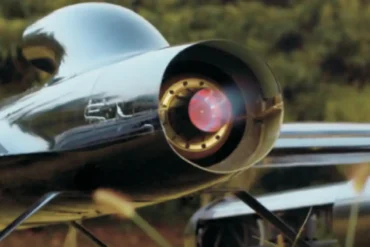
The development tempo of the X-BAT underscores a broader transformation in U.S. defense procurement culture. Within approximately 18 months, the program advanced through wind-tunnel testing, pole testing, and engine trials. A structural pathfinder airframe is already in fabrication, with first VTOL flights scheduled for 2026 and mission-capable status projected for 2028.
Such compressed timelines contrast sharply with traditional fighter development cycles that often span decades. Shield AI’s approach reflects a software-centric methodology, emphasizing iterative testing and rapid refinement. This model aligns with the Pentagon’s push toward AI-enabled tactical airpower that can be fielded quickly to counter emerging threats.
If the X-BAT achieves its milestones, it could become one of the earliest operational examples of a vertically capable, AI-piloted fighter jet. Its success would signal not merely a new aircraft, but a paradigm shift in how air superiority platforms are conceptualized, developed, and deployed.
A Structural Transformation in Combat Aviation
The X-BAT embodies more than technical innovation; it represents a structural evolution in combat aviation strategy. By combining long-range performance, high-altitude capability, VTOL flexibility, and full onboard autonomy, the platform challenges long-standing assumptions about fighter aircraft design and deployment.
Shield AI’s entry into this domain suggests that the future of air combat may be shaped as much by software architecture as by airframe engineering. In an era where distributed operations, electronic warfare resilience, and rapid decision-making define survivability, the X-BAT positions autonomy not as a supplement, but as the foundation.
As flight testing approaches and integration milestones unfold, the X-BAT will serve as a tangible indicator of how rapidly autonomous systems are reshaping modern warfare. The trajectory of this program reflects a broader reality: the next generation of airpower will be defined not only by speed and altitude, but by the intelligence embedded within the machine.