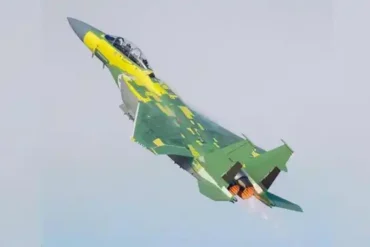
The future of aerial warfare is rapidly evolving, and at the forefront of this transformation stands a compelling union between the F-15EX Eagle II multirole fighter and the MQ-28 Ghost Bat unmanned combat aircraft. Boeing’s latest unveiling at the Dubai Airshow 2025 demonstrated a critical pivot in air combat doctrine — one where manned-unmanned teaming (MUM-T) becomes a foundational pillar in how wars will be fought and won in the skies.
F-15EX Eagle II: The Digital Quarterback of the Skies
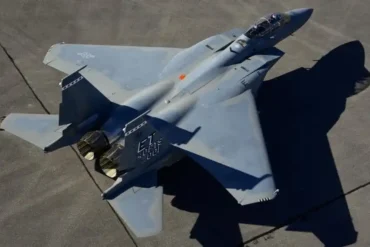
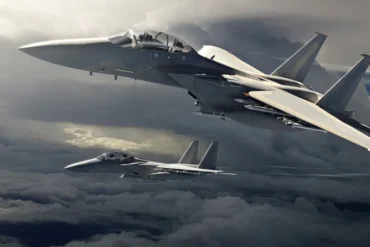
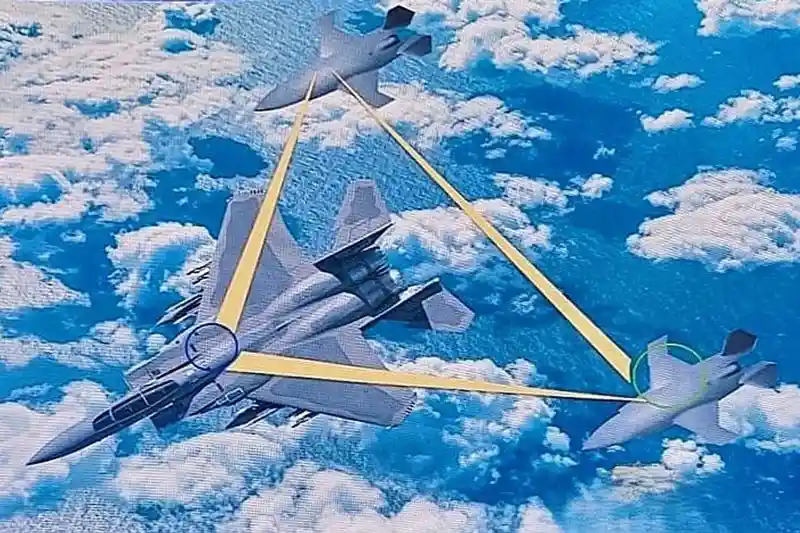
At the heart of Boeing’s vision lies the twin-seat F-15EX, an advanced derivative of the legendary F-15 platform. The Eagle II is not merely a fighter; it is being sculpted into a forward battle-management node, capable of serving as the brain of a networked formation of Collaborative Combat Aircraft (CCA). Boeing’s Dubai presentation positioned this powerful jet as the command center in a triangular data-sharing network that integrates several unmanned systems.
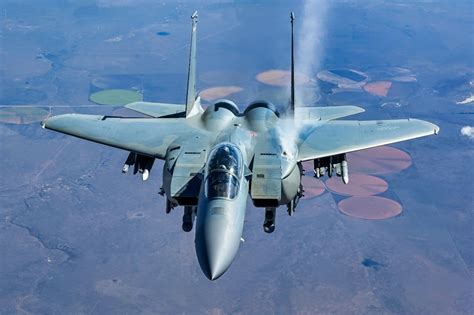
The two-seat configuration of the F-15EX is a strategic asset. While the pilot in the front cockpit focuses on navigation, flight safety and survivability in hostile environments, the Weapon Systems Officer (WSO) seated in the rear becomes the mission coordinator, orchestrating drone formations, managing sensor data, and retasking autonomous assets in real-time. This system enables true distributed lethality and maximizes situational awareness without overwhelming the pilot.
Critically, the F-15EX features an open-architecture avionics suite, expanded onboard power generation and an enhanced payload capacity — allowing it to not only carry more weapons, but also serve as a host platform for AI-driven data links and targeting systems. In Boeing’s strategy, it is the “quarterback” of the sky: not necessarily in the stealthiest forward position, but situated just far enough back to control, analyze, and strike through its loyal unmanned wingmen.
MQ-28 Ghost Bat: A Loyal, Modular Wingman with Combat Teeth
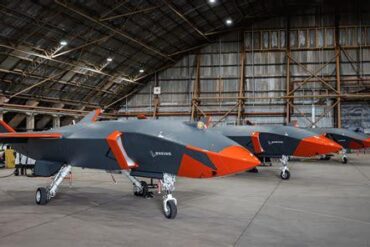
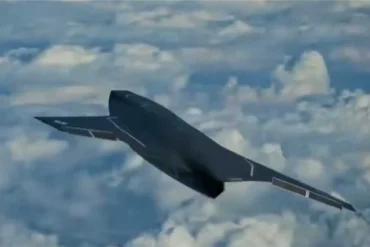
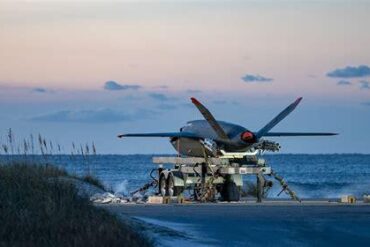
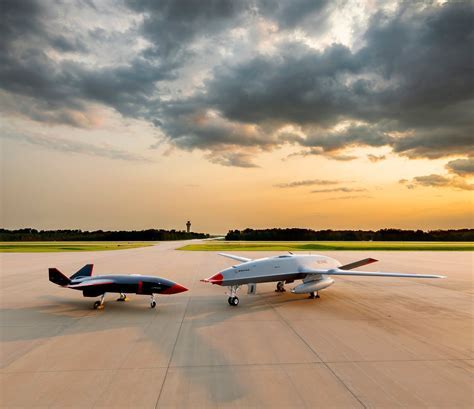
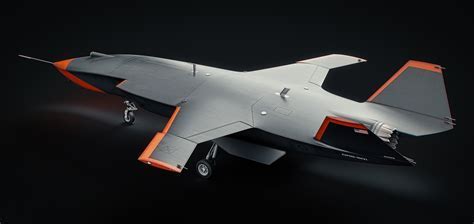
Enter the MQ-28 Ghost Bat, Australia’s groundbreaking entrant into the field of collaborative combat aircraft. Originally developed by Boeing Australia for the Royal Australian Air Force (RAAF), the Ghost Bat represents a modular, affordable, and attritable platform designed to accompany manned aircraft into battle.
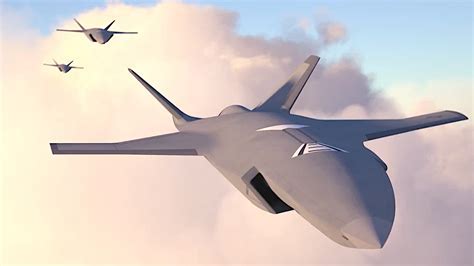
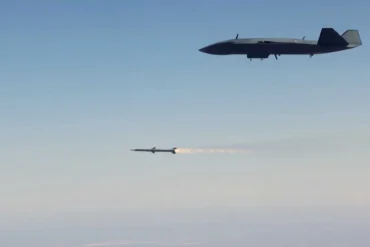
The Ghost Bat has already flown over 100 test flights since its maiden voyage in 2021 and has exceeded expectations during Capability Demonstration 2025. Now approaching its first live-fire test with an AIM-120 AMRAAM missile, the aircraft is transitioning from technology demonstrator to an operational tool of war.
What makes the MQ-28 particularly suited for MUM-T integration with the F-15EX is its modular nose cone (allowing mission-specific payloads), long-range capability, and a unit cost reportedly one-tenth of a modern crewed fighter. These characteristics render it ideal for roles such as:
- Forward sensor picket, extending the F-15EX’s radar and targeting capabilities
- Stand-in electronic jammer, disrupting adversary sensors and communication
- Missile magazine, carrying and launching ordnance under remote or autonomous control
Each Ghost Bat acts as a sensor–shooter node, complementing its manned teammate by taking on the riskiest forward operations. This division of labor dramatically increases both survivability and mission efficiency.
The Concept of MUM-T: From Concept to Combat-Ready Doctrine
For years, manned–unmanned teaming remained an abstract idea found primarily on PowerPoint slides. But Boeing’s latest briefing marked a tangible shift toward real-world implementation. At Dubai, the company introduced a four-pillar framework that underpins its MUM-T strategy:
- Collaborative – Real-time control and tasking of drones by F-15EX operators
- Connected – A scalable, secure communications architecture across platforms
- Capable – Multi-role engagement capacity including ISR, EW, and kinetic operations
- Provisioned – Operational safeguards to maintain compliance with rules of engagement and safety protocols
These pillars are not aspirational. They are grounded in the F-15EX’s proven hardware and the MQ-28’s rapidly maturing systems. Boeing’s messaging was clear: this is not about replacing manned aircraft, but augmenting them with expendable, networked, AI-enhanced force multipliers.
The F-22/MQ-20 vs. F-15EX/MQ-28 Paradigm: Complementary Visions
Boeing’s MUM-T unveiling came on the heels of another major U.S. milestone — an F-22 Raptor pilot recently controlled an MQ-20 Avenger drone over the Nevada Test and Training Range. That demo confirmed that fifth-gen stealth jets can also act as drone controllers.
But the two approaches diverge in key ways:
- F-22/MQ-20 pairing emphasizes stealthy CCA leadership, where the controller is in contested airspace.
- F-15EX/MQ-28 concept prefers a non-stealth quarterback at standoff range managing multiple semi-autonomous drones operating in the danger zone.
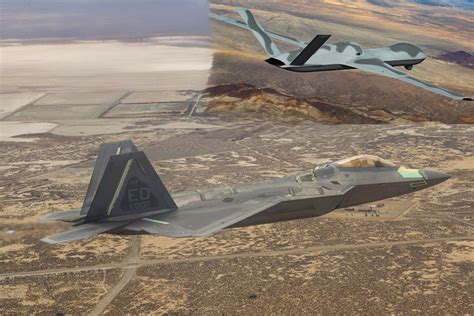
These models are not competitive — they are complementary tactics. By having both stealth-forward controllers and standoff command nodes, the U.S. and allied forces gain operational flexibility across varying threat environments.
Coalition Interoperability and Export Implications
Strategically, Boeing’s F-15EX/Ghost Bat combination serves as an accelerator for allied interoperability. While fifth-generation fighters like the F-35 offer unmatched stealth and strike precision, they come with high entry costs and complex supply chains. By contrast, many U.S. allies already fly F-15 variants, and Boeing’s pitch is clear:
“Buy the F-15EX now, integrate drones like Ghost Bat later — scale your capabilities at your own pace.”
For Middle Eastern air forces, this opens a fast-track pathway to fielding networked combat airpower without waiting for domestic CCA programs. Nations such as Saudi Arabia, Qatar and the UAE — all operators of the F-15 family — can plug into this model with minimal transition. This approach also lowers the threshold for participation in next-generation air operations among partner nations.
Air Combat Doctrine Disrupted: Tactical & Operational Shifts
Integrating MQ-28s under the command of an F-15EX significantly alters the air combat calculus:
- Fighters no longer operate in isolation but as hubs in a distributed sensor/shooter network.
- Attritable drones can conduct risk-heavy missions, such as probing Integrated Air Defense Systems (IADS).
- Air presence becomes more persistent, with drones loitering forward while manned aircraft manage from safety.
- Adversaries are forced to target multiple independent nodes, raising defensive complexity.
This concept also addresses a global pilot shortage. By multiplying the effects of each pilot through intelligent swarms, air forces can achieve mass without proportional manpower expansion.
Budget and Procurement: Anchoring the Future Force
On the financial side, both platforms are finding firm footing in their respective budgets:
- F-15EX: The U.S. Air Force ordered 8 aircraft in 2020 at a cost of $1.2 billion including support. The program of record now covers 104 aircraft, with per-unit costs ranging from $90–97 million. An additional $3.1 billion is allocated in the FY2026 budget, and GE received a $1.58 billion contract to supply engines.
- MQ-28 Ghost Bat: Canberra has committed over A$1 billion, including funding for 10 Block 1 and 3 Block 2 units. Boeing asserts that each drone costs around 10% of a manned fighter, positioning the Ghost Bat as a cost-effective force multiplier. Currently, Australia is the sole customer, with interest growing in the United States and Poland.
With program momentum building, the cost-per-effect ratio of F-15EX/Ghost Bat operations could outclass traditional formations, especially when viewed through the lens of survivability, flexibility, and battlefield persistence.
Conclusion: Networked Airpower Is the Future of Combat Aviation
Boeing’s pairing of the F-15EX and MQ-28 Ghost Bat has evolved beyond concept. It is now an executable strategy — one built on proven airframes, real test flights, and live-fire demonstrations. This model of manned-unmanned integration represents more than technological synergy; it is a doctrinal leap forward that shifts the center of gravity from the aircraft to the network.
As global threats grow more sophisticated and the cost of losing a crewed fighter rises, air forces will need scalable, survivable, and intelligent solutions. Boeing’s vision suggests a future where the sky is no longer dominated by the lone warrior jet, but by a symphony of manned and unmanned systems working in perfect orchestration.
The age of the networked air combat ecosystem has begun — and at its core flies the F-15EX Eagle II, leading its Ghost Bat swarm into tomorrow’s battlespace.