In a groundbreaking shift that marks a new era of aerial warfare, the United States Air Force has successfully tested manned fighter jets controlling stealth drones in real-time combat scenarios. The event, held at Eglin Air Force Base, Florida, showcased a high-stakes integration of human pilots and autonomous systems, signaling a decisive step toward next-generation warfare tactics.
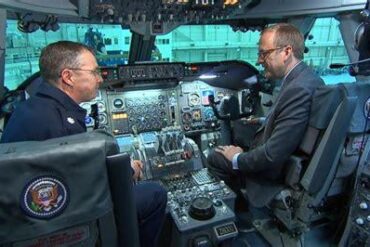
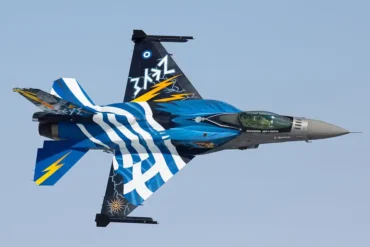
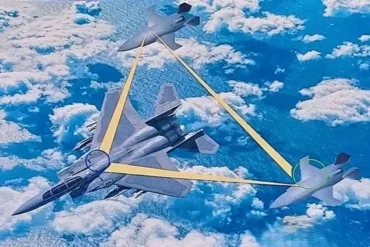
Pilots in the F-16C Fighting Falcon and the F-15E Strike Eagle commanded two XQ-58A Valkyrie stealth drones each, in a demonstration that melded human instincts with machine efficiency. This is not just a tech demo—it is the embodiment of the Collaborative Combat Aircraft (CCA) and Autonomous Collaborative Platforms (ACPs) vision, a core element in the Air Force’s evolving Next-Generation Air Dominance (NGAD) strategy.
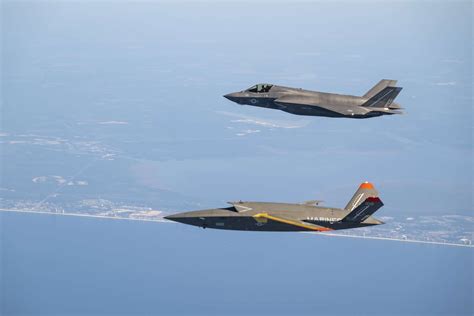
The Valkyrie: A New Kind of Wingman
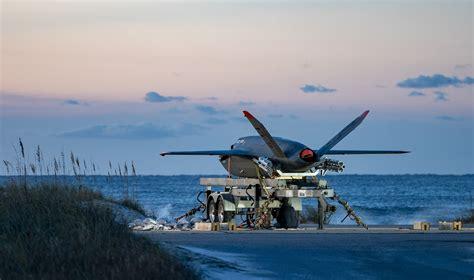
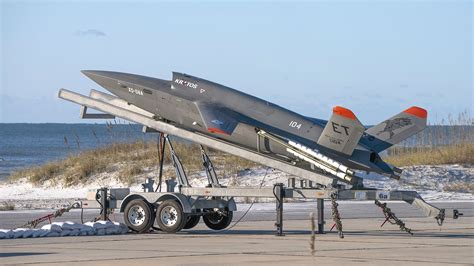
The XQ-58A Valkyrie, developed by Kratos Defense & Security Solutions, is a low-cost, stealthy, unmanned combat aerial vehicle (UCAV) born from the Low-Cost Attritable Strike Demonstrator (LCASD) program. The aircraft is designed to operate with minimal ground support and without reliance on traditional runways, offering deployment flexibility in hostile or austere environments. It is distinct from—but complementary to—the CCA program, offering versatility in roles ranging from surveillance to high-risk strike missions.
At the heart of the Valkyrie’s mission profile is its semi-autonomous AI—capable of making real-time decisions based on mission parameters while under the command of a human pilot. It is not simply a drone; it is a “loyal wingman,” supporting human operators with precision and agility, all while maintaining ethical and strategic oversight.
Why Human-Machine Teaming Matters
The concept of human-machine teaming is emerging as a force multiplier in 21st-century air combat. With adversaries increasingly leveraging asymmetric tactics, electronic warfare, and rapid-response missile systems, the ability to deploy semi-autonomous platforms becomes crucial to mission survivability and effectiveness.
By integrating drones like the Valkyrie into combat formations, pilots can push the tactical envelope without exposing themselves to direct threats. The result is a system that increases operational flexibility, situational awareness, and lethality, while drastically lowering the risk to high-value human assets.
Combat Simulation at Eglin AFB: Inside the Test
During the Eglin AFB exercise, each pilot controlled two Valkyries through advanced human-machine interfaces designed to enable real-time tasking, retasking, and coordination. This wasn’t a scripted flight; it was a live combat simulation involving decision-making under pressure—exactly the kind of scenario the Air Force envisions for future conflicts.
The ACP drones executed coordinated maneuvers, acted as decoys, performed reconnaissance, and simulated offensive strikes—all directed via secure communication links from the cockpits of the F-15 and F-16.
Gen. Ken Wilsbach, commander of Air Combat Command, noted the significance of the test: “This test with ACPs directly addresses the evolving requirements of modern warfare and the needs articulated by our warfighters.”
This wasn’t just a technology test. It was an operator-driven evaluation, one that prioritized real-world utility, adaptability, and mission relevance. The test was coordinated under the Department of Defense’s Rapid Defense Experimentation Reserve program, bringing together the Air Force Research Laboratory (AFRL), Air Force Test Center, and the U.S. Navy—a fully joint approach to modern capability development.
Implications for Force Structure and Cost
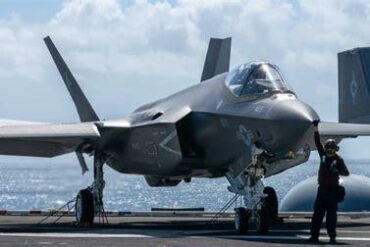
As the U.S. Air Force invests billions in fewer but more advanced aircraft, affordability becomes a pressing concern. The F-35 Lightning II costs nearly $80 million per unit, while the upcoming Boeing F-47—the flagship of the NGAD program—is expected to cost significantly more.
By contrast, the XQ-58A Valkyrie is designed with attritability in mind. The drone is inexpensive enough to be expendable but smart and stealthy enough to make a strategic impact. This approach allows commanders to field mass at scale without diluting effectiveness. It addresses a critical challenge: the dwindling size of the U.S. Air Force fleet, many of whose aircraft, like the B-52 bombers, have outlived multiple generations of pilots.
ACPs and CCAs: Complementary but Distinct Roles
While both ACPs and CCAs serve to enhance human-machine collaboration, they are tailored for distinct mission sets. The XQ-58A, currently used as an ACP, emphasizes flexible support roles such as:
- Stand-off surveillance
- Electronic warfare decoys
- Forward air controller extensions
- First-strike engagement in high-risk zones
CCAs, by contrast, are being developed to integrate even more closely with future sixth-generation manned aircraft like the F-47. These drones will be optimized for seamless data sharing, mission coordination, and tactical autonomy within larger “system of systems” air dominance networks.
Together, they provide a spectrum of capabilities—from expendable decoys to elite tactical AI teammates—that allow the U.S. Air Force to design agile force packages suitable for both peacetime deterrence and wartime escalation.
The Ethical and Strategic Balancing Act
While the promise of AI-powered drones is vast, the Air Force remains clear: humans remain in control. This is not a wholesale shift to autonomous warfare. Instead, it is an enhancement of human capabilities through smart automation. The ethical, legal, and strategic oversight of these missions stays in the hands of trained pilots and commanders.
Brig. Gen. Jason E. Bartolomei, commander of the AFRL, emphasized the significance: “By developing and integrating autonomous platforms with manned systems, we can quickly adapt, increase combat effectiveness and reduce risk to our aircrews in contested environments.”
The data harvested from the Eglin demonstration will now inform future testing, development cycles, and eventual deployment doctrine. It represents a dynamic feedback loop—pilots shape the evolution of drone capabilities, and drone capabilities, in turn, reshape how pilots approach combat.
What Comes Next: Scaling Toward War Readiness
The successful test flight is far from the final chapter. As tensions rise in key regions such as the Indo-Pacific, the urgency to field flexible, survivable, and scalable airpower solutions grows. The Air Force aims to deploy both ACPs and CCAs across multiple platforms, squadrons, and theaters.
The Valkyrie may become the standard bearer for loyal wingmen, especially as the Air Force expands its experimentation to include swarming behaviors, multi-domain tasking, and integrated AI decision loops.
Ultimately, the goal is to build a fleet where every fighter is backed by a team of smart, mission-adaptable drones, each capable of taking on unique roles based on the threat environment, pilot workload, and operational goals.
Conclusion: Enter the Age of Algorithmic Air Combat
This isn’t the future—it’s already airborne. The integration of stealth drones like the XQ-58A Valkyrie with frontline fighter jets represents a revolution in tactical airpower. It’s a turning point that leverages AI, automation, and human ingenuity to forge a hybrid fighting force capable of overwhelming enemies in speed, scale, and strategy.
As the U.S. Air Force presses forward with its NGAD blueprint and allied innovations, the sky is no longer the limit—it’s the launchpad for a future where humans and machines fight side-by-side in defense of global air superiority.
![Big Drones & Heavy Lift Drones: A Comprehensive Guide for Drone Pilots [New for 2025]](https://boltflight.com/wp-content/uploads/2025/05/big-drones-heavy-lift-drones-comprehensive-guide-drone-pilots-new-2025-370x247.jpg "Big Drones & Heavy Lift Drones: A Comprehensive Guide for Drone Pilots [New for 2025]")