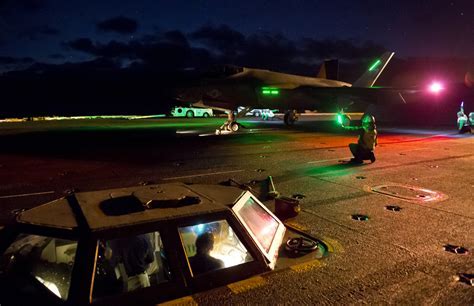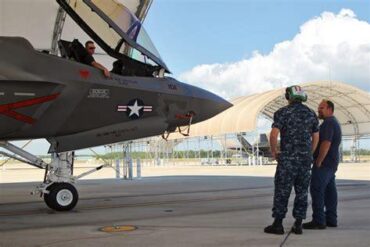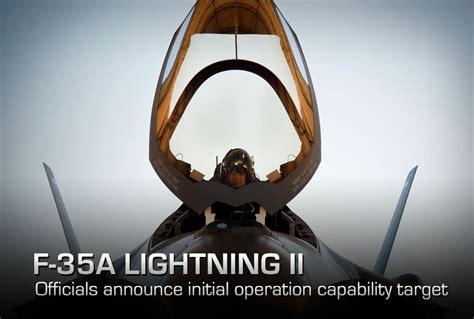
On May 1, 2025, Eglin Air Force Base took a historic step by officially establishing the first-ever F-35 Lightning II Combined Test Force (CTF). This transformative development signals a powerful shift in how the United States Air Force integrates and evaluates fifth-generation fighter aircraft, placing the reserve component at the core of developmental and operational testing for the most advanced air combat systems in service.
This groundbreaking initiative is a strategic expansion of Eglin’s fighter test complex, embedding the Air National Guard Air Force Reserve Command Test Center (AATC) more deeply into critical mission innovation and evaluation processes. The formation of the CTF not only advances the performance validation framework for the F-35 platform but also expands the Total Force’s capability to deliver combat-ready technologies more efficiently and affordably.
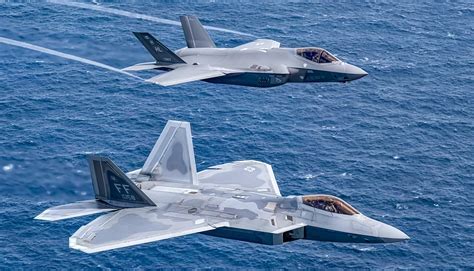
The Rise of the Combined Test Force: A New Era in Fighter Jet Testing
The Combined Test Force represents a paradigm shift in how the U.S. Air Force approaches flight testing and platform validation. Traditionally, the Air Reserve Component (ARC) has operated primarily with legacy fighter aircraft, often in support and supplementary roles. However, the introduction of the CTF positions the ARC as a frontline participant in global air dominance missions, capable of influencing critical decisions on weapons development, deployment readiness, and advanced avionics evaluation.
The collaboration between AATC, the 96th Test Wing, and the 53rd Wing consolidates developmental testing (DT) and operational testing (OT) efforts. These integrations streamline complex assessment procedures and ensure that the latest iterations of the F-35’s software and hardware packages are validated under real-world, warfighter-centric conditions.
Strategic Imperatives: Why the CTF Matters Now
The timing of the CTF’s formation is deliberate and critical. As geopolitical threats become more agile and technologically sophisticated, maintaining air superiority hinges on the ability to deploy fifth-generation capabilities with unprecedented speed and efficiency. According to Maj. Gen. Duke Pirak, acting director of the Air National Guard, the vision behind the CTF is clear:
“Coordinating and streamlining across the Total Force by tirelessly testing, evaluating, and extrapolating our capabilities is how we bring the future faster.”
This focus on rapid iteration and integrated feedback loops accelerates the Air Force’s capacity to deploy, adapt, and evolve F-35 capabilities in line with battlefield demands. The CTF stands as the embodiment of this mission, consolidating command structures and eliminating bottlenecks that traditionally delay combat readiness improvements.
Cost Efficiency and Operational Relevance: The AATC Testing Model
At the heart of the Combined Test Force’s philosophy is the AATC’s agile testing model, which aims to deliver what is often referred to as the “80% solution at 20% of the cost.” Rather than striving for unattainable perfection in prototype phases, the model emphasizes cost-effective, high-impact modifications that can be deployed swiftly and refined through continuous feedback.
Col. Daniel J. Wittmer, commander of the AATC, underscored this purpose:
“We are primarily accountable to the warfighter. Our weapons and tactics process creates a bottom-up approach to solving critical capability gaps for warfighters across all mission sets in all areas of responsibility.”
The CTF’s mission is to move beyond traditional bureaucratic cycles and instead foster a direct, iterative relationship with the warfighter. In doing so, it aligns technological advancement with the real-world needs of combat personnel.
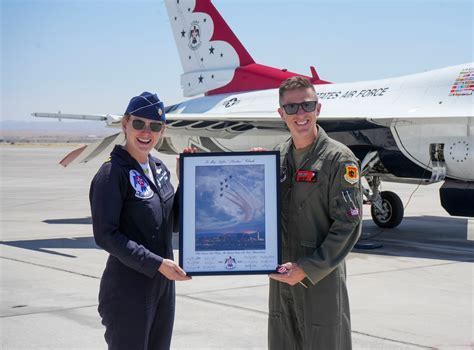
Breaking Down the F-35 Lightning II’s Strategic Edge
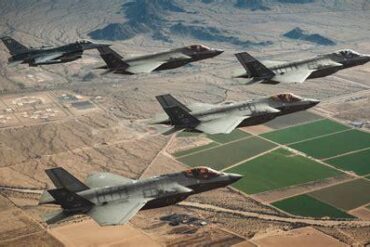
The F-35 Lightning II is not just another aircraft. It is a multi-role, stealth-enabled, sensor-fused fighter platform that serves as a cornerstone of U.S. and allied airpower. Its advantages are derived from a convergence of technologies:
- Stealth Design: Advanced radar-absorbing materials and aerodynamic shaping.
- Sensor Fusion: A centralized system that merges data from radar, infrared, and communications sensors.
- Network-Centric Warfare Integration: Ability to connect with other platforms, increasing joint force situational awareness.
- Electronic Warfare Capabilities: Active suppression and deception of enemy radar and tracking systems.
- Multirole Versatility: Capable of performing air-to-air, air-to-ground, and intelligence, surveillance, and reconnaissance (ISR) missions.
These attributes make the F-35 a strategic multiplier for U.S. defense posture, and the Combined Test Force will play a critical role in ensuring these capabilities continue to evolve and remain operationally dominant.
The Total Force Integration Strategy in Action
The establishment of the F-35 CTF is a tangible representation of the Total Force Integration (TFI) strategy. By aligning active duty, Guard, and Reserve components, the U.S. Air Force capitalizes on the unique strengths of each entity. The Guard brings continuity, operational experience, and local insight. The Reserves offer strategic depth and cost-effective scaling. Active duty units provide full-time readiness and rapid deployment capabilities.
This synergy is fully activated in the CTF model. Pilots and test engineers from different branches of the Total Force are now embedded in one cohesive unit, creating an environment of shared knowledge, distributed risk, and accelerated innovation.
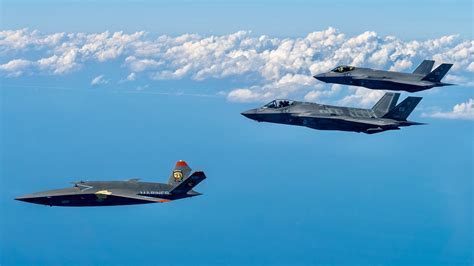
Implications for Global Air Superiority and Coalition Readiness
As other nations race to develop or acquire fifth-generation aircraft, the CTF enhances the United States’ ability to maintain tactical and technological superiority. The new test unit strengthens interoperability with allied forces also operating the F-35, including the UK, Australia, Italy, and Japan. The ability to share tested modifications, software upgrades, and mission playbooks in near real-time creates an interconnected global readiness network.
Additionally, by equipping ARC personnel with fifth-generation platform expertise, the Air Force ensures greater deployment elasticity during high-intensity operations. This prepares the force for both peer and near-peer engagements by expanding the pool of experienced fifth-gen operators, capable of standing toe-to-toe with any adversary.
Streamlining the Future of Combat Aviation
The Eglin Combined Test Force also serves as a blueprint for how future combat systems should be tested and validated. It signals a shift away from traditional stovepipe development, where technology passes slowly through linear validation stages, toward a more integrated, feedback-rich, agile development cycle. This model reduces lead times for new weapons integration and significantly enhances battlefield adaptability.
Moreover, the CTF’s success will likely influence the testing doctrines of next-generation platforms, including sixth-generation aircraft currently in classified development stages. Its scalable testing frameworks and real-world warfighter feedback mechanisms provide a foundation for how future air combat systems will be built, tested, and deployed.
Conclusion: A Force Multiplier Forged Through Integration
The creation of the F-35 Lightning II Combined Test Force at Eglin Air Force Base is more than an administrative milestone — it is a signal of operational evolution. It merges innovation, cost-efficiency, and Total Force synergy to ensure that the United States Air Force remains both agile and dominant in an increasingly volatile global arena.
By empowering the Air Reserve Component to take a leading role in fifth-generation testing, the Air Force is not just closing capability gaps — it is reshaping how national defense is imagined and executed. This is the future of airpower: integrated, adaptive, and relentlessly focused on the needs of the warfighter.