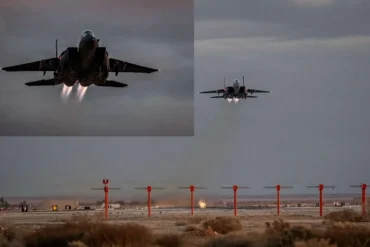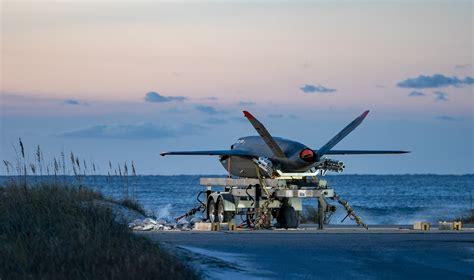
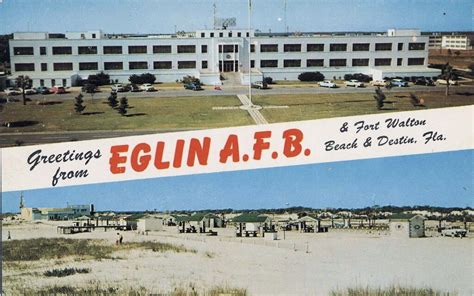
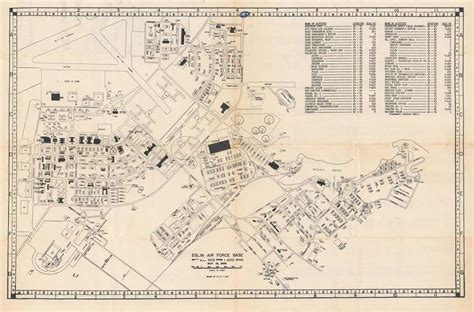
Eglin Air Force Base is one of the most critical and expansive military installations in the United States. Located near Valparaiso, Florida, Eglin operates as a central hub for air-delivered non-nuclear weapons testing, development, and training. Covering 463,128 acres and supporting thousands of military and civilian personnel, Eglin is not merely a base—it is an entire operational ecosystem that serves both the U.S. Air Force and allied forces globally.
Strategic Foundation and Early Growth During World War II
The origins of Eglin trace back to 1935, when it was established as the Valparaiso Bombing and Gunnery Base on 137 acres cleared from the Choctawhatchee National Forest. As global conflict loomed, the War Department significantly expanded the base in October 1940, acquiring 340,000 additional acres. This massive land acquisition would allow Eglin to evolve into a pivotal site for air combat readiness.
Between 1941 and 1945, Eglin operated the USAAF Fixed Gunnery School, training more than 1,000 officers, 10,000 enlisted men, and 4,000 civilians in essential aerial gunnery techniques. These early years positioned Eglin as a training powerhouse and testing ground for the rapidly evolving tactics of modern warfare.
Post-War Innovation and Guided Missile Research
Following World War II, Eglin transitioned into a technological frontier for aerial weaponry. In 1946, it became the launch site for the 1st Experimental Guided Missiles Group at Auxiliary Field 3. This unit was later replaced by the 550th Guided Missiles Wing in 1950, employing then-cutting-edge aircraft like the B-17, B-29, and F-80 as drone platforms.
The arrival of the Air Munitions Development Laboratory in 1955—transferred from Wright-Patterson Air Force Base—ushered in a golden era of munitions research. Here, engineers developed advanced guns, rockets, fuses, and warheads (excluding nuclear ordnance), laying the groundwork for the U.S. Air Force’s modern precision strike capabilities.
Eglin’s Evolution in the Cold War Era
By the 1960s, Eglin took on a new role as a doctrinal testing ground for counter-insurgency and special warfare. The formation of the USAF Special Air Warfare Center and the 1st Combat Applications Group in 1962 reinforced the base’s position as a cornerstone of unconventional warfare development.
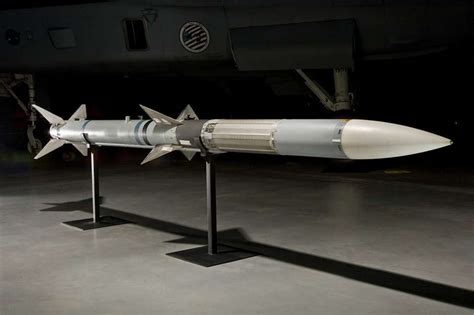
In 1968, the Armament Development and Test Center—previously the Air Proving Ground Center—was tasked with designing precision-guided munitions and missiles like the Advanced Medium-Range Air-to-Air Missile (AMRAAM). These innovations would change the landscape of modern aerial combat.
Community Integration and Post-Cold War Restructuring
Beyond its military function, Eglin played a vital humanitarian and community role. In 1975, it processed over 10,000 Vietnamese refugees, highlighting its logistical capacity and civic integration. That same year saw the founding of the Air Force Armament Museum, preserving the base’s deep historical legacy.
The construction of Bob Hope Village in 1984–85 further underscored Eglin’s commitment to its service members, offering retirement housing for enlisted personnel. By the 1990s, structural shifts within the Air Force led to the base’s alignment under Air Force Materiel Command (AFMC) and the rise of the 46th Test Wing as host unit.
Modern Role in National Defense and Technological Superiority
Today, Eglin Air Force Base serves as the armament epicenter of the AFMC. The 96th Test Wing, Eglin’s host unit, oversees a wide array of missions involving air-delivered weapons, navigation, guidance, and command and control systems. Facilities such as the McKinley Climatic Laboratory simulate extreme weather conditions, allowing for environmental testing of aircraft and equipment.
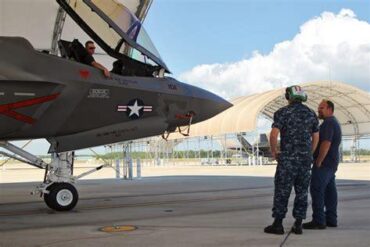
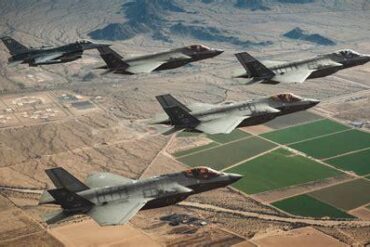
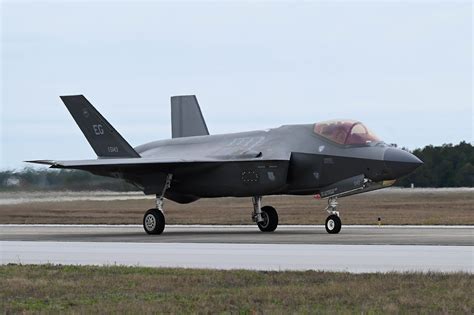
In addition to hosting the 33d Fighter Wing, Eglin is a key training ground for F-35A Lightning II pilots through the 58th Fighter Squadron, which maintains a fleet of 24 F-35As. This ensures combat readiness for fifth-generation aircraft operations.
Complex Web of Tenant and Allied Units
Eglin is more than just an Air Force facility—it’s a joint and international defense complex. Key tenants include:
- 53rd Wing: Responsible for operational test and evaluation, including drone-based targets (QF-4 FSAT).
- 49th Test and Evaluation Squadron: Specializes in bomber and nuclear readiness testing.
- 7th Special Forces Group (Army): Relocated to Eglin in 2011, enhancing inter-service operational synergies.
- 20th Space Control Squadron (USSF): Operates the AN/FPS-85 radar, detecting and tracking orbital debris and space objects.
- Royal Netherlands Air Force’s 323 Squadron: Trains with two F-35As in partnership with U.S. forces.
- 486th Flight Test Squadron: Supports classified missions with C-32B aircraft.
- 919th Special Operations Wing (Duke Field), AFOTEC Detachment 2, and NAVSCOLEOD.
Dual Civilian and Military Operations at Destin–Fort Walton Beach Airport
Eglin’s runway is also shared with Destin–Fort Walton Beach Airport (VPS), a commercial terminal serving Northwest Florida. This co-location of civilian and military operations reflects Eglin’s unique integration into the regional transportation and economic infrastructure.
Auxiliary Fields and Cultural Legacy
The base operates ten WWII-era auxiliary airfields, each named after fallen aviators, including Wagner, Pierce, Duke, Peel, Piccolo, Biancur, Epler, Baldsiefen, Hurlburt, and Dillon Fields. These outposts are used for training, drone testing, and even film production, having hosted scenes from Thirty Seconds Over Tokyo, Bay of Pigs, and Thunderball.
Environmental Stewardship and Biodiversity
Despite its vast military operations, Eglin is a guardian of some of North America’s most biodiverse habitats. The base contains over 200,000 acres of longleaf pine forests, with 6,795 acres of old growth. It also provides refuge for over 50 threatened species, including sea turtles and the red-cockaded woodpecker.
This dual commitment to defense and conservation positions Eglin as a model of environmental sustainability among military installations.
National Recognition and Historic Preservation
Eglin is home to two National Historic Landmark districts: Camp Pinchot and Eglin Field. Additionally, the McKinley Climatic Laboratory, registered in 1997, is recognized for its unique capability to test full-sized aircraft under simulated global weather conditions.
Notable Residents and Pop Culture Appearances
Eglin’s influence extends beyond military significance. Notable figures such as Hunter S. Thompson (who served at Eglin in the late 1950s), MLB player Jay Bell, NASCAR driver Aric Almirola, and cyclist Neilson Powless have all been connected to the base.
In popular media, Eglin has appeared in films such as Twelve O’Clock High (1949), Thunderball (1965), and Air Force One (1997). It is also featured in the Prepar3D flight simulator, preserving its image in digital aviation culture.
Climate and Living Conditions
Eglin’s climate is humid subtropical, with annual rainfall between 25 and 60 inches. Summer highs can reach 98°F, while winters remain mild with lows around 42°F. The region averages 50 to 60 rainy days annually, but its coastal location allows for rich ecological diversity and outdoor training capability.
On-base housing supports 2,359 family units and seven dormitories, creating a self-sustaining military community that reflects both readiness and stability.
Conclusion: A National Asset for Security and Innovation
Eglin Air Force Base stands not just as a symbol of America’s aerial warfare legacy, but as a living, evolving institution of defense innovation. With its unmatched scale, technological edge, and environmental foresight, Eglin remains at the forefront of safeguarding U.S. and allied air superiority in an increasingly complex global theater.