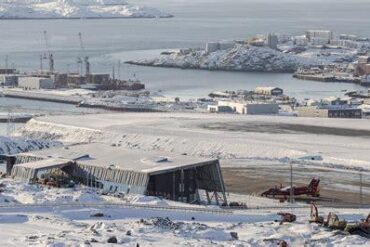
The northern reaches of the planet have long been perceived as remote, frozen, and strategically marginal. That perception is no longer valid. In the High Arctic, where ice, atmosphere, and orbital pathways converge, the United States maintains one of its most consequential military installations. Known today as Pituffik Space Base, this facility anchors American and NATO defense posture at the top of the world, silently shaping missile defense, space surveillance, and Arctic power projection.
Formerly called Thule Air Base, Pituffik is not merely a legacy Cold War outpost. It is a living, evolving strategic asset whose relevance has grown rather than faded. Its role spans nuclear deterrence, early missile warning, satellite command and control, Arctic logistics, and alliance diplomacy. In an era defined by renewed great-power competition, Pituffik’s location and capabilities place it at the center of global security calculations.
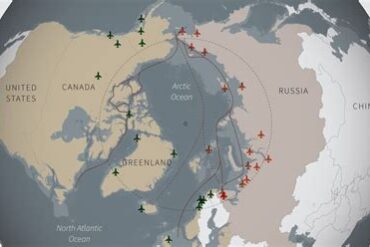
The base’s importance is rooted in geography. Greenland sits astride the shortest flight paths between North America and Eurasia, a reality that has shaped military planning since the dawn of intercontinental bombers and ballistic missiles. From this vantage point, Pituffik provides something no other installation can replicate: persistent awareness of air and space approaches across the Arctic corridor, where reaction time is measured in minutes and strategic surprise is unacceptable.
As climate change opens new sea lanes and intensifies interest from rival powers, the Arctic has shifted from periphery to priority. Pituffik Space Base stands as the United States’ most forward sentinel in this contested domain, blending Cold War infrastructure with modern space-age missions.

Pituffik Space Base: From Thule to the Space Age
The renaming of Thule Air Base to Pituffik Space Base in 2023 marked more than a symbolic change. It reflected a deeper transformation in mission focus, aligning the installation explicitly with the United States Space Force and the realities of modern warfare. While air operations remain vital, space has become the decisive domain, and Pituffik is one of its most critical ground nodes.
The base is the northernmost military installation operated by the US Department of Defense. Its remoteness is not a drawback but a strategic advantage. In an era of hypersonic weapons and orbital congestion, early detection and uninterrupted sensor coverage are essential. Pituffik’s polar location allows radar systems and satellite tracking stations to monitor trajectories that bypass traditional mid-latitude defenses.
Despite its isolation, the base is anything but static. Infrastructure upgrades, personnel rotations, and multinational cooperation keep it integrated into global command networks. The 821st Space Base Group manages daily operations, supporting both military missions and scientific activity that surges during the Arctic summer.
Pituffik’s evolution underscores a fundamental truth of modern defense: space and Arctic security are inseparable, and Greenland sits at their intersection.
The First Line of Defense in Missile Warning
At the heart of Pituffik’s strategic value lies its role in ballistic missile early warning. The base is a cornerstone of the North American Aerospace Defense Command (NORAD) missile warning architecture, serving as a forward sensor that extends detection horizons and compresses decision timelines.
The 12th Space Warning Squadron operates the AN/FPS-132 Upgraded Early Warning Radar (UEWR), a massive, solid-state phased-array system embedded into the Arctic landscape. This radar can detect and track ballistic missile launches from more than 3,000 miles away, whether originating from land or sea. Its two-sided configuration provides broad coverage across critical polar approaches.
This capability is not theoretical. In a missile launch scenario, Pituffik’s radar feeds data directly into NORAD’s command centers, enabling rapid threat assessment and response coordination. The few additional minutes of warning it provides can mean the difference between interception and catastrophe.
Beyond deterrence, the radar contributes to stability. By reducing uncertainty and the risk of miscalculation, Pituffik reinforces credible nuclear deterrence while lowering the chance of accidental escalation.

NORAD Operations and Total Domain Awareness
Pituffik is not a passive sensor site; it is an operational hub. Through exercises such as Operation Noble Defender, US and Canadian forces use the base to demonstrate rapid deployment and sustained operations in the Arctic. These exercises are designed to validate NORAD’s ability to maintain what it calls “Total Domain Awareness” across air, land, sea, space, and cyber domains.
Situated in the Arctic’s “center sector,” Pituffik closes gaps that adversaries might otherwise exploit. The base supports command and control functions, logistics staging, and coordination between allied forces operating in extreme environments. Its presence signals resolve and capability, discouraging rival behavior without firing a shot.
As Arctic activity increases, these operations have taken on heightened significance. Russia’s military modernization in the north and China’s growing interest in polar access have sharpened NATO’s focus on Greenland. Pituffik provides the physical and technological foundation for allied awareness in this evolving theater.
Space Surveillance and Satellite Control
One of Pituffik’s most understated but critical missions is its contribution to space domain awareness. The base is integrated into a global network of satellite tracking stations that monitor thousands of objects orbiting Earth. In an increasingly congested and contested space environment, knowing what is overhead, where it is going, and who controls it is vital.
Detachment One of the 23rd Space Operations Squadron operates a Remote Tracking Station as part of the Satellite Control Network (SCN). This facility provides telemetry, tracking, and commanding services for US and allied satellites, ensuring continuity of communication, navigation, intelligence, and early warning capabilities.
From polar orbits to highly elliptical trajectories, many satellites pass over or near Greenland. Pituffik’s latitude allows it to support missions that lower-latitude stations cannot, making it indispensable for resilient space operations.

A Forward Operating Location for Arctic Airpower
Despite its growing space focus, Pituffik remains a formidable air base. It serves as a Forward Operating Location (FOL) for NORAD air defense missions, offering one of the few High Arctic runways capable of supporting modern fighter aircraft.
The base’s 10,000-foot asphalt runway can accommodate platforms such as the F-35 Lightning II and F-16 Fighting Falcon, enabling rapid air defense responses and extended patrols over Arctic airspace. This capability is crucial in a region where distances are vast, infrastructure is sparse, and weather can close windows of opportunity without warning.
Pituffik’s runway, hangars, and support facilities provide NATO with flexibility, allowing forces to operate closer to potential threat vectors while maintaining secure lines of communication and logistics.
Arctic Engineering at the Edge of Human Limits
Operating at Pituffik means confronting one of the harshest environments on Earth. Winter temperatures can plunge below -85°F, and the ground beneath the base is locked in hundreds of meters of permafrost. Survival, let alone sustained operations, depends on specialized engineering solutions.
All permanent structures are elevated at least three feet above ground to prevent heat transfer from melting the permafrost. Utilities such as water, sewage, electricity, and heating are routed above ground, insulated and accessible for maintenance in extreme cold. The base operates its own closed-loop power and heating plants, ensuring self-sufficiency even during prolonged isolation.
This engineering discipline is not only about durability. It reflects a strategic commitment to long-term presence in the Arctic, regardless of environmental challenges.

Logistics, Ports, and Arctic Access
Pituffik’s logistical capabilities extend beyond air operations. The base hosts the northernmost deep-water port in the US Armed Forces’ global network. This port is essential for resupply and heavy cargo delivery, especially during the brief summer window when sea ice retreats.
Large supply vessels, including the Pacer Goose, make annual voyages to deliver fuel, equipment, and construction materials. This maritime access reduces reliance on airlift and enhances the base’s sustainability.
As Arctic shipping routes become more viable due to climate change, Pituffik’s port infrastructure positions it as a key logistical node for future operations and contingency planning across the region.
Strategic Real Estate and the GIUK Gap
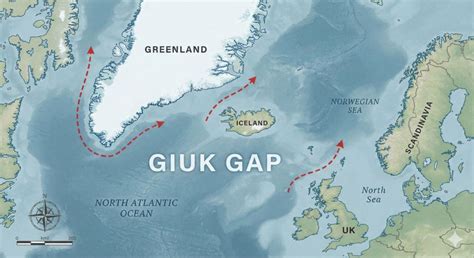
Geopolitically, Pituffik occupies some of the most valuable real estate in the world. It sits near the GIUK Gap—the Greenland-Iceland-United Kingdom corridor that has long been a focal point for monitoring Russian naval movements between the Arctic and the North Atlantic.
Control and surveillance of this gap are essential for protecting transatlantic sea lines of communication and reinforcing NATO’s maritime posture. Pituffik’s sensors, airfield, and communications infrastructure contribute directly to this mission, extending allied awareness deep into the High North.
The base’s relevance has only increased as Russia invests heavily in Arctic bases, icebreakers, and undersea capabilities, and as China declares itself a “near-Arctic state.”
Legal Foundations and the US–Denmark Alliance
Pituffik operates under a robust legal framework established by the 1951 defense agreement between the United States and the Kingdom of Denmark. This treaty grants the US authority to construct, maintain, and operate military installations in Greenland while explicitly recognizing Danish sovereignty.
Under Article V, US forces enjoy unrestricted freedom of operation across Greenland’s territory, airspace, and territorial seas, while Denmark retains overarching authority. The agreement also grants the US exclusive jurisdiction over its military personnel and defense areas, exempting them from certain local laws and fees.
This arrangement has endured for decades because it serves mutual interests. Denmark benefits from enhanced security and investment in Arctic defense, while the United States secures access to a strategically irreplaceable location. Both flags flying over defense areas symbolize this shared responsibility within NATO.
Cold War Legacy and Enduring Relevance
Pituffik’s modern mission is inseparable from its Cold War past. During the early decades of East-West confrontation, Thule Air Base supported the Strategic Air Command, hosting infrastructure for heavy bombers such as the B-36 and B-47. It played a central role in nuclear airborne alert operations like Operation Chrome Dome, where B-52 bombers patrolled continuously over the Arctic.
The installation of the Ballistic Missile Early Warning System (BMEWS) radar in 1961 marked a turning point, shifting the base’s focus from bomber staging to missile detection. That transition anticipated today’s emphasis on sensors, data, and rapid decision-making.
Historic events, including the 1968 B-52 crash and subsequent cleanup, highlighted both the risks and the stakes of Arctic nuclear operations. Yet even controversies underscored the base’s strategic necessity rather than diminishing it.

Greenland, Politics, and the Future of Arctic Security
Pituffik does not exist in isolation from local and global politics. The construction of the base in the early 1950s displaced Greenlandic communities, a legacy that continues to shape local perceptions. At the same time, Greenland’s growing autonomy and international attention have elevated its role in Arctic governance.
Recent political debates, including proposals by US figures to purchase Greenland, have drawn headlines but missed the strategic reality. The existing defense agreements already provide sweeping military access without altering sovereignty. In 2023, a new Defense Cooperation Agreement further expanded US access to Danish territory, reinforcing the alliance framework.
Denmark’s announcement of major Arctic defense investments in 2025 reflects a shared recognition that the region’s security environment is changing rapidly. Surveillance, situational awareness, and infrastructure development are now urgent priorities.
Why Pituffik Space Base Matters More Than Ever
In a world defined by missile proliferation, space competition, and Arctic accessibility, Pituffik Space Base stands at the convergence of multiple strategic frontiers. Its radars watch the skies for existential threats. Its antennas guide satellites that underpin modern life. Its runway and port anchor NATO’s presence in a region once considered unreachable.
Pituffik’s enduring value lies not only in what it does today, but in what it enables tomorrow. As technology evolves and geopolitical competition intensifies, the base provides the United States and its allies with time, awareness, and options—the most precious commodities in national defense.
Far from being a relic of the Cold War, the US Air Force base in Greenland has become a cornerstone of 21st-century security. In the silent Arctic night, Pituffik continues to watch, warn, and safeguard the balance of power.