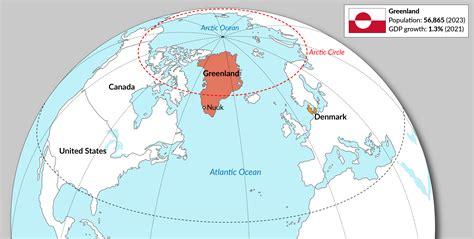
Greenland is no longer a frozen footnote at the edge of the map. It has become a frontline geopolitical asset, where Arctic ice loss, missile defense, space surveillance, and great-power competition collide. Against that backdrop, Washington and Copenhagen are preparing to re-negotiate the 1951 Greenland Defense Agreement, a Cold War pact that still governs America’s military presence on the world’s largest island. The objective is blunt and modern: prevent Russia and China from gaining strategic access to Greenland while updating the legal framework to match today’s security realities.
The talks gained momentum after discussions involving U.S. President Donald Trump and NATO Secretary General Mark Rutte, with officials confirming that revisiting the agreement has become an active “work stream.” The language may sound bureaucratic, but the intent is anything but. Greenland sits astride critical Arctic routes, hosts irreplaceable early-warning infrastructure, and is increasingly attractive to external powers seeking influence, resources, or leverage over NATO’s northern flank.
The original 1951 deal was designed for a different era, when the overriding concern was Soviet bombers crossing the polar region. Today, the Arctic has transformed into a contested theater defined by hypersonic missiles, space assets, undersea cables, and dual-use infrastructure investments. Renegotiation is less about tearing up history and more about sharpening it for a harsher, faster world.
Why Greenland Matters More Than Ever
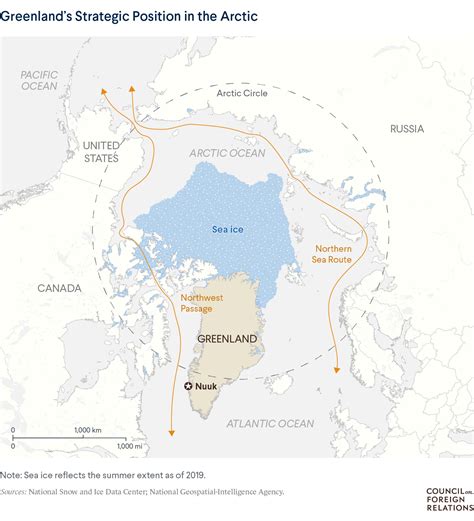
Greenland’s strategic value is not theoretical. Its location provides the shortest path between North America and Eurasia, making it indispensable for missile warning and space tracking. As Arctic ice retreats, new shipping lanes and access to rare earths amplify its importance. Russia has been expanding military infrastructure across its Arctic coast, while China, branding itself a “near-Arctic state,” has pursued scientific stations, port access, and investment opportunities across the region.
For NATO, allowing either power to gain a foothold in Greenland would create an intelligence and surveillance nightmare. For the United States, Greenland is a non-negotiable node in continental defense, especially as missile threats grow more complex. Denmark, meanwhile, faces the delicate task of balancing alliance commitments, Greenlandic autonomy, and environmental stewardship.
This is why NATO leadership has been explicit. Keeping Chinese and Russian access out of Greenland “in any way” is no longer a quiet assumption; it is a stated strategic goal.
The 1951 Defense Agreement: A Cold War Artifact With Modern Weight
The 1951 Defense Agreement allowed the United States to establish military facilities in Greenland under Danish sovereignty. It was a classic Cold War compromise: Washington provided protection and infrastructure, while Copenhagen retained formal control. At the time, Greenland was still a Danish colony, and the agreement reflected that imbalance.
Two years later, in 1953, Greenland’s status changed dramatically when it became an equal part of the Kingdom of Denmark under the constitution. Home Rule followed in 1979, further strengthening Greenlandic self-governance. Yet the 1951 agreement remained the legal backbone of U.S. operations, even as political realities evolved around it.
By the end of the Cold War, America’s footprint shrank. Dozens of remote outposts were abandoned, and by the early 2000s, the once-vast U.S. presence had contracted to a single installation. That contraction set the stage for a crucial update.
The 2004 Amendment: Modernizing Without Starting Over
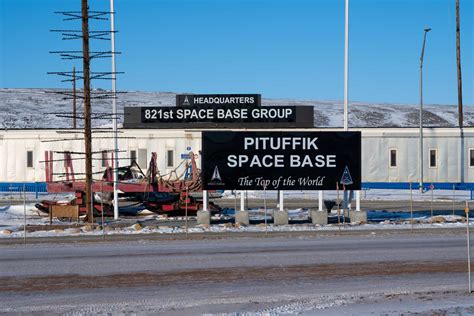
In 2004, the United States, Denmark, and Greenland signed an amendment and supplement to the original pact. Formally, it did not replace the 1951 agreement. Practically, it redefined how the partnership worked. The amendment made one fact explicit: Pituffik Air Base, now known as Pituffik Space Base, would be the only defense area in Greenland.
That clarity mattered. Pituffik is not a relic; it is a centerpiece of modern defense. Its radar systems support missile warning, space surveillance, and tracking of orbital debris, feeding data into U.S. and NATO networks that protect North America and allied territory. While Danish and Greenlandic authorities assist with security and oversight, operational control rests firmly with Washington.
At the same time, the 2004 deal emphasized cooperation rather than dominance. U.S. commanders are required to engage with local representatives on issues affecting Greenlandic communities, from environmental impact to land use. The framework leaned heavily on NATO’s Status of Forces Agreement, ensuring that U.S. personnel operate under a blend of American, Danish, and alliance law.
Strengthening Greenland’s Voice in Arctic Security
One of the most significant shifts in 2004 was political rather than military. The amendment formally recognized Greenland as a stakeholder, not merely a host. The Home Rule Government gained the right to appoint a representative to liaise directly with the Pituffik commander, alongside the existing Danish liaison officer.
Disputes over noise, land access, or environmental concerns were no longer afterthoughts. The agreement created mechanisms to resolve them quickly, escalating issues to a Permanent Committee or diplomatic channels if necessary. The preamble explicitly acknowledged Greenland’s role in sharing the “risks and responsibilities” of collective defense.
This mattered as climate change accelerated. Melting ice increased accessibility but also vulnerability, making transparency and trust essential to sustaining long-term military operations in the Arctic.
Beyond Bases: Economics, Environment, and Influence
The 2004 framework extended beyond defense. Two joint declarations, signed alongside the amendment, broadened cooperation into economic, technical, and environmental domains. While not legally binding, they reshaped the relationship’s tone.
Economic and technical cooperation focused on Arctic research, renewable energy, education exchanges, tourism, aviation links, and trade. A Joint Committee was established to meet annually, aligning U.S. investment with Greenland’s development goals. The logic was simple: strategic presence is more sustainable when it delivers visible local benefits.
Environmental cooperation was equally critical. The Arctic is warming faster than any other region, and Greenland’s ecosystems are exceptionally fragile. The United States committed to stricter pollution controls, compliance with Greenlandic environmental law, and updated governing standards for military operations. Greenlandic authorities gained access to Pituffik for monitoring, and environmental impact became a mandatory factor in any operational changes.
Why Re-Negotiation Is Back on the Table
The current push to re-negotiate reflects external pressure and internal evolution. Russia has revitalized Arctic bases, deployed advanced air defenses, and signaled its intent to dominate northern sea routes. China has pursued influence through research, infrastructure financing, and diplomatic outreach, often blurring civilian and military lines.
Against this backdrop, the existing framework, while robust, shows its age. It was not designed for space warfare, cyber threats, or strategic competition with a technologically sophisticated China. Nor does it fully address Greenlanders’ demands for environmental cleanup of legacy U.S. sites or a larger share of economic benefits.
For Washington, renegotiation offers a chance to lock in long-term access and modernization rights. For Denmark, it reinforces sovereignty while anchoring NATO’s northern defense. For Greenland, it is leverage to secure stronger environmental protections, greater transparency, and tangible development gains.
The Arctic Balance of Power at Stake
Any updated pact will ripple far beyond Nuuk and Copenhagen. Pituffik’s sensors are woven into global defense architectures, tracking missiles and space objects that could threaten multiple continents. Control over that data flow is strategic gold.
At the same time, renegotiation sends a signal. It tells Moscow and Beijing that the Arctic is not an open invitation. It tells allies that NATO’s northern flank is being taken seriously. And it tells Greenlanders that their island is not merely a chessboard square, but a partner whose consent and interests matter.
The 1951 agreement was born in an age of propeller bombers and bipolar rivalry. Its successor must operate in a world of satellites, hypersonic glide vehicles, and climate-driven change. Updating it is not about nostalgia or politics; it is about ensuring that Greenland remains a pillar of transatlantic security, rather than a vulnerability waiting to be exploited.