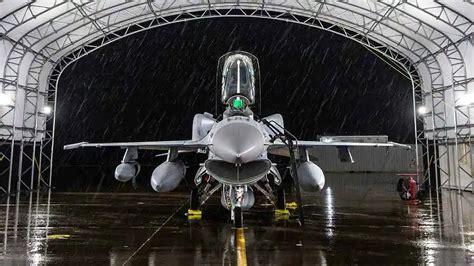
Denmark’s decision to retire its last F-16 Fighting Falcons unfolded as a carefully choreographed farewell, rich in symbolism and timing, as the aircraft that defined the Royal Danish Air Force for nearly half a century made a final, thunderous appearance in the skies above southern Jutland. The flypast was not simply a nostalgic salute to aging metal and veteran pilots. It arrived at a moment when Denmark’s sovereignty, particularly over its autonomous territory of Greenland, has become a focal point of renewed geopolitical friction involving the United States.
The timing was impossible to ignore. As the F-16s bowed out in formation over Skrydstrup Air Force Station, diplomatic tensions between Copenhagen and Washington were escalating, driven by President Donald Trump’s revived insistence that Greenland’s future security required direct American control. Against that backdrop, the retirement ceremony became a quiet but potent reminder of Denmark’s long-standing role as a reliable NATO ally, even as the strategic ground beneath the Arctic ice continues to shift.
For Denmark, the farewell marked the end of an era that began in the late 1970s, when the country joined a European consortium with Belgium, the Netherlands, and Norway to acquire the F-16 as the backbone of its air combat capability. For the alliance, it symbolized the passing of one of NATO’s most proven multirole fighters, an aircraft that carried Danish markings through Balkan wars, Middle Eastern campaigns, and persistent Arctic patrols.
The last operational F-16s flew on January 18, 2026, closing a chapter defined by adaptability, combat credibility, and a reputation far larger than Denmark’s modest air force size might suggest. That closing chapter now sits uncomfortably close to an open question about Greenland’s future and the balance of power in the High North.
A Farewell Forged in Five Decades of Service
At Skrydstrup Air Force Station, the mood was celebratory rather than somber. The final flypast brought together aircraft, crews, and maintainers who had spent decades refining the F-16 into a uniquely Danish instrument of airpower. General Christian Hvidt, former Danish Chief of Defence and once commander of the 727 Squadron, underscored that longevity was not a weakness but a testament to exceptional maintenance and training standards.
The 727 Squadron, the last unit to operate the F-16, had carried the type through its final years with the same operational tempo expected of a front-line NATO force. The aircraft’s age was almost beside the point. Continuous upgrades under the Mid-Life Update program in the 1990s transformed early F-16A/B variants into the AM/BM standard, equipping them with modern avionics, improved sensors, secure data links, and compatibility with precision-guided munitions.
Those improvements allowed Danish F-16s to remain relevant well into the 21st century, bridging the gap between Cold War design and networked, coalition warfare. The farewell ceremony honored not just the jets, but a generation of pilots and technicians who kept them sharp, credible, and deployable at short notice.
From European Skies to Global Battlefields
Denmark’s F-16s earned their reputation far from home. In 1999, they deployed to Italy during NATO’s Operation Allied Force, flying combat air patrols over the former Yugoslavia alongside Norwegian counterparts. The mission tested Denmark’s ability to integrate seamlessly into complex alliance operations under combat conditions, a test the F-16s passed without qualification.
A few years later, the aircraft were again called upon during Operation Enduring Freedom, logging more than 700 sorties over Afghanistan in 2002 and 2003. These missions involved demanding close air support and strike roles against Taliban and Al Qaeda targets, often in harsh environments that punished both airframes and crews.
The defining moment came in 2011 during Operation Unified Protector over Libya. Danish F-16s were among the first coalition aircraft to conduct combat strikes, enforcing a no-fly zone and carrying out precision attacks. Their effectiveness earned them the informal nickname “rock stars” within NATO circles, a reflection of both performance and reliability under pressure.
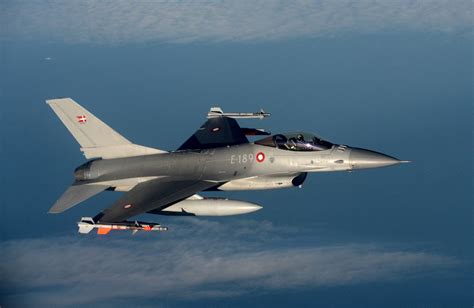
Subsequent deployments against ISIS targets in Iraq and Syria reinforced that reputation. Even outside active combat zones, Danish F-16s played a persistent role in Baltic Air Policing, safeguarding NATO airspace against incursions and signaling alliance resolve along its eastern flank.
Arctic Duties and the Greenland Connection
Beyond high-profile combat operations, the F-16 quietly served Denmark’s Arctic responsibilities. Regular deployments to Greenland underscored Copenhagen’s commitment to monitoring and defending its vast northern territory, where distances are extreme and infrastructure sparse. Surveillance missions over ice-clogged seas and remote coastlines demanded reliability above all else, a trait the F-16 delivered consistently.
These Arctic operations are now central to the political context surrounding the aircraft’s retirement. Greenland’s strategic location between North America and Eurasia has made it a linchpin of transatlantic security since the early Cold War. Denmark’s stewardship of the island, paired with defense cooperation agreements allowing a significant U.S. military presence, has long been accepted as mutually beneficial.
That balance is now under strain. President Trump’s renewed rhetoric about Greenland reflects a broader recalibration of Arctic priorities, driven by concerns over Russian and Chinese activity in the region. The retirement of Denmark’s F-16s, coinciding with this diplomatic turbulence, has amplified scrutiny of how Copenhagen intends to assert its sovereignty while remaining aligned with NATO’s evolving strategy.
Transition to the F-35 Era
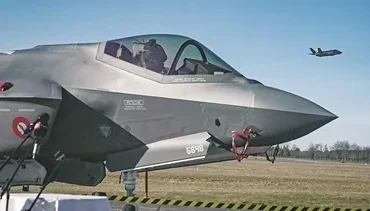
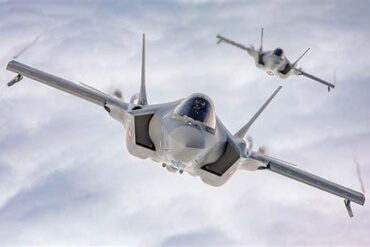
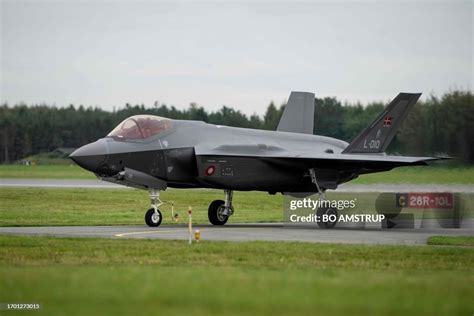
Denmark’s answer lies partly in its transition to the F-35A Lightning II. The decision, finalized in 2016 with an order for 27 aircraft and later expanded by 16 more, represents a decisive shift toward fifth-generation capabilities. The first Danish F-35 arrived at Skrydstrup in 2023, and by April 2025 the type was declared ready for Quick Reaction Alert duties.
The F-35’s stealth, sensor fusion, and networked warfare capabilities offer Denmark a qualitative leap in air defense and coalition operations. In the Arctic context, these attributes matter. Situational awareness over vast, sparsely monitored regions is critical, and the F-35’s ability to act as a sensor node as much as a shooter aligns with NATO’s emphasis on integrated deterrence.
Yet the transition also underscores a paradox. As Denmark invests in advanced aircraft to secure its airspace and territories, its autonomy over Greenland is being publicly questioned by its most powerful ally. The symbolism of retiring a proven workhorse while fielding a cutting-edge successor has not been lost on observers across Europe.
F-16s Reborn Abroad
While Denmark’s F-16s have left national service, their story continues elsewhere. Copenhagen’s decision to donate 19 aircraft to Ukraine in January 2024 marked one of the most significant Western contributions to Kyiv’s air combat capability. Beyond the aircraft themselves, Denmark played a pivotal role in training Ukrainian pilots, accelerating the integration of Western tactics and systems.
Another chapter opened in South America, where Argentina signed a $300 million deal in 2024 to acquire 24 second-hand Danish F-16s. The choice surprised many analysts, as Buenos Aires opted for used Western fighters over brand-new alternatives from China and Pakistan. The decision signaled Argentina’s intent to realign more closely with the United States and NATO partners, reinforcing the F-16’s enduring geopolitical value.
For Denmark, these transfers extended the aircraft’s operational life while strengthening strategic relationships. They also highlighted how a platform designed in the 1970s continues to shape security dynamics across continents.
Greenland at the Center of a Diplomatic Storm
As the F-16s faded from Danish skies, Greenland surged into global headlines. President Trump’s assertion that the island could fall under Russian or Chinese influence without direct U.S. control marked a sharp departure from decades of diplomatic convention. His remarks framed Greenland not merely as a partner territory, but as a strategic asset to be secured by any means necessary.
The United States already operates the Pituffik Space Base in northern Greenland under a 1951 defense agreement. The base’s advanced radar systems, including the AN/FPS-132, form a critical component of U.S. missile warning and space surveillance architecture. Trump’s vision of incorporating Greenland into a broader “Golden Dome” defense shield goes further, implying a redefinition of sovereignty itself.
European reactions have been swift. Denmark, backed by multiple NATO allies, has reaffirmed Greenland’s status as an integral part of the Danish realm. Joint military exercises and modest troop deployments to the island were framed as defensive and cooperative, but they triggered an aggressive response from Washington, including tariff threats against allied economies.

An Ending That Signals a Beginning
The retirement of Denmark’s F-16s was never going to be a purely technical milestone. It encapsulated the end of a platform that carried Danish pilots through some of NATO’s most consequential operations while anchoring the country’s role in Arctic security. The flypast at Skrydstrup was a farewell, but also a signal that Denmark is stepping into a more complex strategic era.
As F-35s assume the mantle of air defense and deterrence, Copenhagen faces a delicate balancing act. It must reassure allies of its continued commitment to collective security while firmly asserting sovereignty over Greenland in the face of unprecedented pressure. The echoes of the F-16s’ final roar linger as a reminder that airpower, politics, and geography remain inseparable, especially where ice, ambition, and alliance interests collide.