The Greenland crisis has moved from diplomatic curiosity to strategic emergency, forcing NATO into an unusually public effort to contain tensions between two of its own members. We are witnessing a moment where alliance cohesion, Arctic security, and the post–World War II transatlantic order intersect under extreme pressure. Reports emerging from Washington and Brussels suggest that NATO leaders now regard the risk of escalation not as theoretical, but as operationally credible.
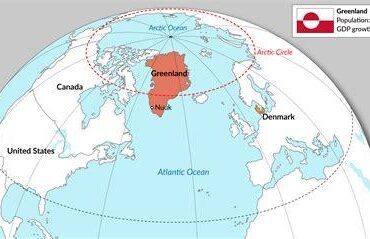
At the center of the crisis is U.S. President Donald Trump’s renewed fixation on Greenland, an autonomous Danish territory whose strategic value has surged alongside melting Arctic ice and intensifying great-power competition. What was once dismissed in European capitals as rhetorical provocation is now treated as a live contingency, following recent U.S. actions abroad that demonstrated a willingness to act decisively and unilaterally. NATO’s response reflects a sudden and sobering reassessment of intent.
According to diplomatic sources, alliance officials are pursuing a two-track strategy. We see active engagement in Washington aimed at de-escalation, coupled with concrete military planning in Brussels designed to remove any pretext for unilateral action. The logic is blunt: if Greenland is visibly secure under NATO’s existing framework, the argument for a separate American intervention collapses.
NATO’s Emergency Calculus in the Arctic
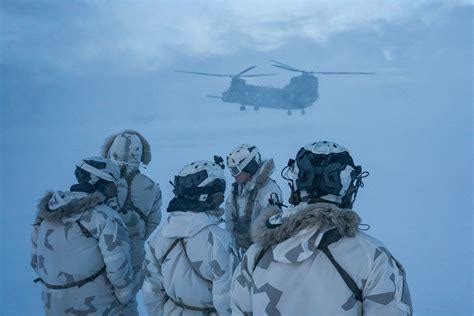
NATO’s internal discussions have reportedly focused on rapid reinforcement of the Arctic, increased defense spending among northern members, and a sharp expansion of joint military exercises. We understand these measures are intended less as deterrence against Russia or China, and more as reassurance within the alliance itself. The message to Washington is that Greenland is already defended, monitored, and integrated into collective security planning.
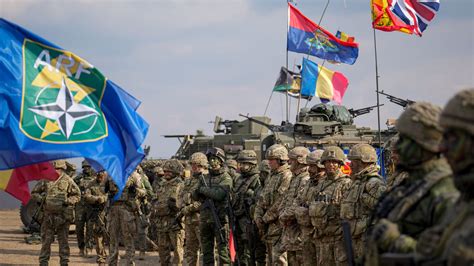
The urgency of these talks marks a decisive shift. For months, European officials privately categorized Trump’s statements about acquiring Greenland—even by force—as political theater. That assumption evaporated after recent U.S. overseas operations demonstrated that rhetorical threats could translate into action. In response, some European governments are now openly preparing for scenarios that would have been unthinkable just a year ago: a direct political or military standoff with the United States.
Denmark’s Red Line and the NATO Paradox
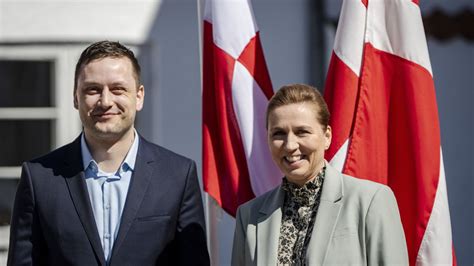
Danish Prime Minister Mette Frederiksen has been unequivocal. We note her warning that any attempt to seize Greenland would effectively end NATO as it has existed since 1949. The paradox is severe. Denmark is a founding member and one of Washington’s most reliable allies, yet now finds itself preparing defensive measures against its principal security partner.
This is not a symbolic dispute. Greenland’s legal status, affirmed repeatedly by Copenhagen and Nuuk, leaves no ambiguity: the island is not for sale, nor is it open to coercion. A forced transfer would shatter the legal and moral foundations of the alliance, transforming NATO from a collective defense pact into a hollow framework incapable of resolving internal aggression.
Why Greenland Matters to Washington
From Washington’s perspective, Greenland represents a strategic keystone in the Arctic. We recognize the argument advanced by President Trump that Russia and China’s expanding military footprint in polar regions demands a more assertive American posture. Greenland sits astride key air and missile trajectories between Eurasia and North America, a reality that has shaped U.S. military planning since the early Cold War.
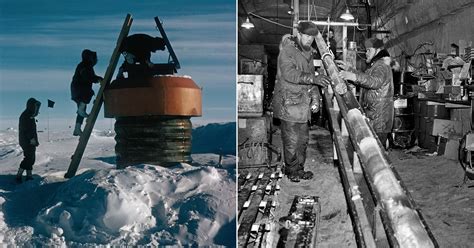
The United States already maintains a presence at Pituffik Space Base, a legacy installation dating back to World War II. Roughly 150 personnel are permanently stationed there today, a fraction of the Cold War peak when as many as 6,000 U.S. troops operated across the island. Under a 1951 defense agreement, Washington retains the right to increase its troop levels with minimal procedural barriers.
Law, Leverage, and the Limits of Consent
Experts caution that the legal framework gives the United States considerable latitude to expand its military footprint without Danish approval, but not to alter sovereignty. We must distinguish between presence and possession. As analysts at the German Marshall Fund have observed, a larger troop deployment could occur almost overnight, yet such a move would still fall short of annexation.
The Trump administration’s rhetoric, however, suggests that military logic may not be the primary driver. References to a revived “Manifest Destiny” and an aggressive reinterpretation of the Monroe Doctrine point toward a worldview shaped by symbolism, geography, and legacy rather than narrow defense requirements. In this reading, Greenland becomes less a base and more a map-altering prize.
Historical Precedents and Their Limits
History offers precedents, though none fit cleanly. The United States purchased the Virgin Islands from Denmark in 1917 under the shadow of implied force and wartime urgency. President Harry Truman quietly explored buying Greenland after World War II and was firmly rebuffed. We emphasize that these episodes occurred in vastly different legal and geopolitical environments, long before NATO codified mutual defense and alliance solidarity.
Today, Greenland’s own leaders have made clear they reject incorporation into the United States, whether through purchase, compact association, or coercion. Even proposals offering economic incentives or autonomous arrangements face overwhelming political resistance locally, in Copenhagen, and in the U.S. Congress.
A Crisis Testing the Transatlantic Order
We are left with a confrontation that is as much ideological as it is strategic. NATO’s consideration of troop deployments and expanded drills is not aimed at escalation, but at preservation—of credibility, legality, and alliance unity. The Greenland crisis exposes the fragility of assumptions that have governed transatlantic relations for decades.
If NATO succeeds, Greenland will remain a symbol of collective security in a rapidly changing Arctic. If it fails, the alliance risks proving that its greatest vulnerability lies not on its external frontiers, but within its own ranks.