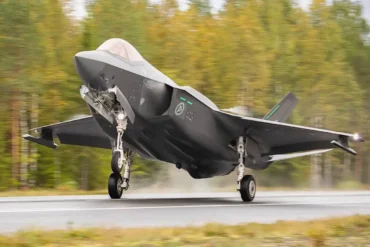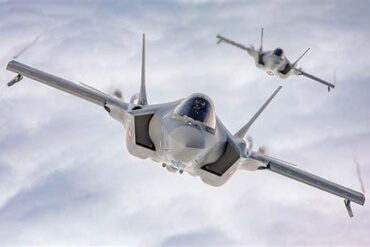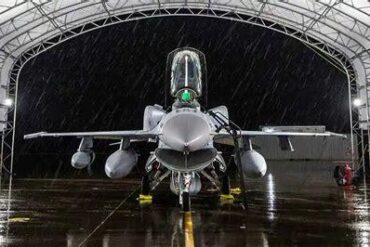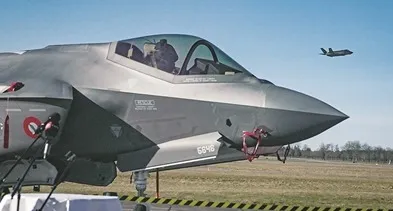
The Royal Danish Air Force (RDAF) has embarked on a transformative journey with the integration of the F-35A Lightning II, signifying a decisive modernization of its defense posture. This ambitious undertaking involves replacing its aging fleet of F-16 Fighting Falcons and positioning Denmark as a significant player in Arctic security and NATO’s strategic theater. The deployment of the F-35 is not merely a technical upgrade—it is a declaration of Denmark’s geostrategic intent amid growing regional competition and global defense realignments.
As of April 2025, Denmark has received 17 out of the 27 F-35A jets it ordered. Eleven of these are now operational at Skrydstrup Air Base on Danish soil, while the remaining six are stationed at Luke Air Force Base in Arizona, where they facilitate advanced pilot training under a transatlantic partnership.
This carefully sequenced rollout reflects Denmark’s calculated approach to ensuring a seamless transition from its legacy F-16s, with joint operational duties scheduled until full F-35 delivery is completed by 2027. The deployment strategy is intentionally paced to ensure that Denmark’s airspace remains well-guarded while operational doctrines are revised to match the new aircraft’s cutting-edge capabilities.
Strategic Upgrade: Capabilities Beyond the F-16 Legacy
The introduction of the F-35A marks a quantum leap in air superiority, multirole precision strike, and network-centric warfare. Equipped with fifth-generation stealth technology, the F-35A dramatically reduces radar visibility, granting Danish pilots the edge in contested airspaces. Its AN/APG-81 AESA radar, fused with advanced electro-optical sensors and AIM-120 AMRAAM missiles, forms a tightly integrated weapons suite designed for high-threat environments.

More than just a fighter aircraft, the F-35 functions as a force multiplier, acting as an airborne sensor hub that feeds real-time intelligence to allied assets. This aligns seamlessly with NATO’s integrated air and missile defense architecture, ensuring that Denmark’s contributions to collective security are both credible and interoperable.
Arctic Focus: Greenland as the Northern Sentinel
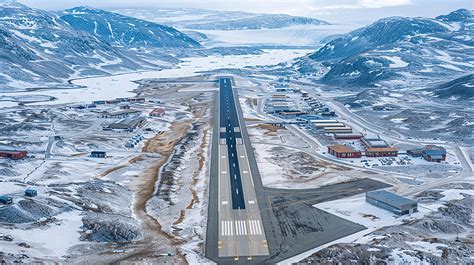
A crucial aspect of Denmark’s F-35 strategy lies in the Arctic theater, particularly its interest in Greenland. The northern island’s geostrategic importance has grown exponentially amid melting ice, emerging shipping lanes, and increased militarization by Russia. Denmark’s response includes a plan to upgrade Kangerlussuaq Airport, transforming it into a forward deployment hub capable of supporting F-35 operations in high-latitude conditions.
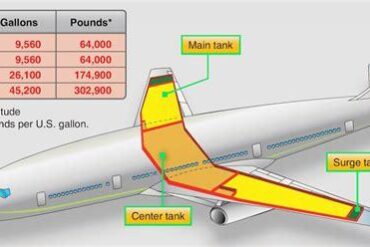
This forward-basing capability is crucial for conducting long-range patrols, ISR missions, and rapid air intercepts across the Greenlandic and North Atlantic airspace. Additionally, Denmark is in the process of procuring two A330 MRTT (Multi Role Tanker Transport) aircraft to support extended operations across the vast Arctic expanse, ensuring its F-35s can maintain persistent presence far from mainland bases.
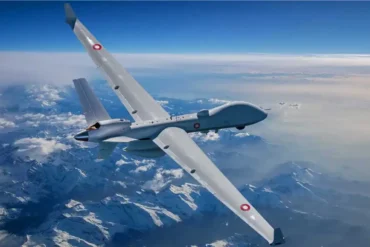
Moreover, Denmark plans to bolster its Arctic surveillance with $400 million earmarked for drone reconnaissance systems and investments in patrol ships and sled dog teams—a blend of traditional and modern security paradigms designed to monitor and respond to northern incursions.
Industrial Cooperation and Dependency Dilemmas
The F-35 acquisition is also emblematic of Denmark’s deeper integration into a transatlantic defense industrial ecosystem. As part of the Joint Strike Fighter (JSF) program, components of the F-35 are manufactured across European partner nations. Denmark benefits from this arrangement via access to shared maintenance, pilot training, and logistics infrastructure. Notably, the RDAF has joined NATO’s Multinational MRTT Fleet (MMF) and collaborates with Norway on a shared F-35 maintenance facility, promoting operational sustainability and cost-sharing.
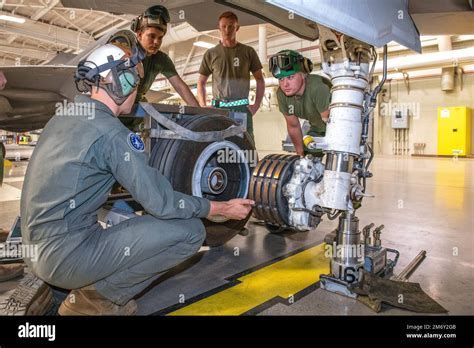
However, this growing interdependence with the United States has not gone unchallenged. Former Danish Economic Minister Rasmus Jarlov publicly raised concerns about the potential for technological coercion, warning that Denmark’s combat readiness could be jeopardized if the U.S. were to withhold critical components or remotely restrict system access during a political dispute.
Such concerns are not unfounded. The software-driven nature of the F-35 means that the U.S. retains significant control over aircraft operations, including data sovereignty and system updates. While Denmark benefits from unparalleled capabilities, it also faces a new form of strategic vulnerability—dependency on a single foreign supplier.
The Greenland Controversy: Sovereignty Under Pressure
Perhaps the most politically charged dimension of Denmark’s F-35 deployment lies in its intersection with U.S. interest in Greenland. The Trump administration’s 2019 proposal to buy Greenland was dismissed by Danish Prime Minister Mette Frederiksen as “absurd,” reinforcing Denmark’s commitment to Greenlandic sovereignty. Nevertheless, the U.S. has sought to assert influence in the Arctic through expanded operations at Thule Air Base, including occasional F-35 deployments designed to project strength and test Denmark’s strategic alignment.
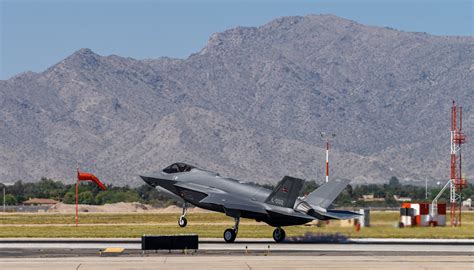
This subtle pressure campaign reveals a delicate balance Denmark must navigate: on one hand, defending Greenland’s status as a Danish autonomous territory; on the other, maintaining close defense ties with the United States, whose Arctic strategy often diverges from European consensus.
Domestic Political Fractures and Budgetary Pressures
Domestically, the F-35 program has become a lightning rod in Danish politics. Opposition parties argue that over-reliance on American platforms undermines national defense autonomy and advocate for greater investment in European-developed systems. They also question the long-term sustainability of Denmark’s escalating defense budget, especially given the broader economic context.
The projected $2.6 billion investment into Greenland’s military infrastructure, which includes F-35 upgrades, drones, naval patrols, and airport refurbishments, has sparked heated debate over its affordability amid stagnant economic growth. The Danish government now faces the formidable task of ensuring that its defense ambitions are financially grounded and politically defensible.
Balancing NATO Loyalty with Sovereign Imperatives
The broader challenge for Denmark is strategic equilibrium—how to remain a credible NATO member while preserving its foreign policy independence. The F-35 acquisition undeniably strengthens Denmark’s contributions to NATO airpower and Arctic deterrence. Yet, its cost, dependency implications, and political ramifications demand a nuanced approach to alliance dynamics.
Looking ahead, Denmark must reconcile its dual identity: a loyal NATO ally that supports transatlantic security, and a sovereign nation that resists undue external influence, particularly in regions as sensitive as Greenland and the Arctic Circle.
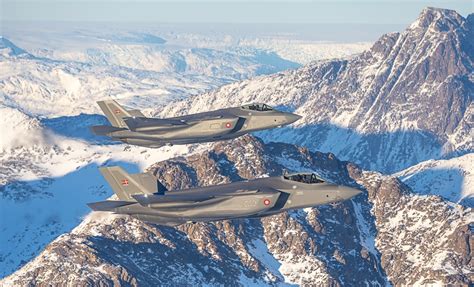
The F-35A Lightning II may be a marvel of modern aerospace engineering, but in the Danish context, it is far more than that. It is a symbol of modernization, a tool of deterrence, and a lever in geopolitical negotiations—all wrapped in a stealth frame that embodies the complexities of 21st-century warfare.
Frequently Asked Questions
What is the current status of Denmark’s F-35 fleet?
As of April 2025, Denmark has received 17 out of the 27 F-35A fighter jets it ordered. Eleven are stationed at Skrydstrup Air Base in Denmark, while six remain at Luke Air Force Base in the U.S. for pilot training. Full delivery is expected by 2027.
Why is Greenland strategically important to Denmark’s F-35 deployment?
Greenland provides critical geostrategic value in the Arctic, offering a launch and surveillance platform against northern threats, particularly from Russia. Denmark plans to upgrade Kangerlussuaq Airport and establish refueling and monitoring capabilities to support extended F-35 operations in the region.
What concerns exist regarding Denmark’s dependence on the U.S. for the F-35 program?
Critics warn that Denmark’s reliance on U.S. technology could be exploited during political disagreements. Concerns include the possibility of parts embargoes, remote system restrictions, and the erosion of defense sovereignty, particularly in light of U.S. pressure related to Greenland.