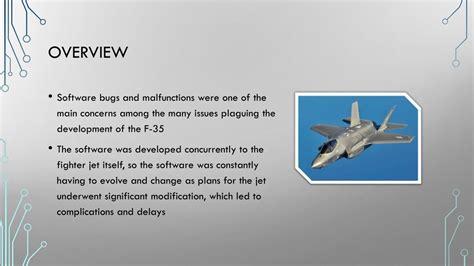
The question sounds almost absurd at first glance: Can the F-35’s software really be jailbroken? The phrase conjures images of teenagers sideloading apps onto smartphones, not sovereign nations attempting to modify the most sophisticated combat aircraft ever built. Yet the debate is not science fiction. It sits at the uneasy intersection of software sovereignty, military dependence, and geopolitical trust.
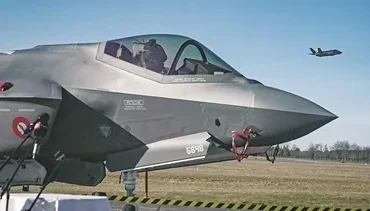
The Lockheed Martin F-35 Lightning II is not merely a jet. It is a flying network node. It is an airborne server farm wrapped in stealth coatings and powered by the most powerful fighter engine ever fielded. Its lethality is defined less by thrust and more by code. That distinction changes everything.
From the program’s inception, partner nations accepted a paradox. They would gain access to unmatched fifth-generation capabilities—stealth, sensor fusion, data sharing—but they would surrender meaningful control over the software core. Updates to mission systems, including the crucial Mission Data Files (MDFs), are managed under U.S. authority, with critical infrastructure tied to American facilities such as Eglin Air Force Base. That architecture was designed for security and consistency. It also created anxiety.
The Software-Defined Fighter Jet
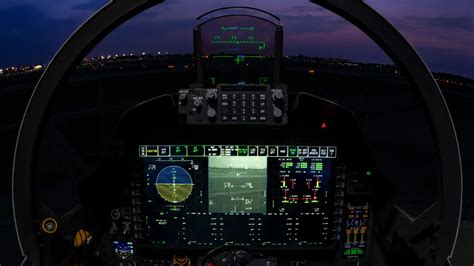
The F-35 is sometimes described as an aircraft. That description is technically correct in the same way calling a data center “a building” is correct. Its combat power flows from roughly eight million lines of code, governing everything from radar fusion to electronic warfare libraries. Unlike earlier fighters such as the General Dynamics F-16 Fighting Falcon, which were delivered as largely self-contained machines, the F-35 operates within a persistent digital ecosystem.
That ecosystem originally revolved around ALIS—the Autonomic Logistics Information System—now replaced by ODIN (Operational Data Integrated Network). These systems monitor aircraft health, manage spare parts, and authenticate updates. They also reinforce centralized oversight.
To “jailbreak” such a system would not mean flipping a cartoonish “freedom switch.” It would mean bypassing authentication protocols, exploiting privilege escalation vulnerabilities, or modifying encrypted firmware to permit unsigned software loads. In plain language: gaining root access to the aircraft’s digital nervous system.
In theory, any sufficiently complex software contains vulnerabilities. Complexity is entropy’s favorite playground. But theoretical possibility is not operational plausibility.
The ‘Kill Switch’ Narrative and Political Theater
Concerns about a hidden American “kill switch” have circulated for years. The idea is simple: Washington could remotely disable allied F-35 fleets during political disputes. Industry experts widely dismiss this as technically improbable. The jet is not connected to some omnipotent remote off-button in the Pentagon.
Still, dominance over updates and mission libraries creates leverage without theatrics. Without updated threat data, the F-35’s effectiveness against emerging air defenses diminishes. That is not sabotage. That is dependency.
Recent commentary by Dutch officials amplified the jailbreak analogy. The Netherlands, now operating the F-35 as its sole fighter after retiring its F-16 fleet, has publicly voiced concerns about strategic autonomy. The messaging is less about hacker fantasy and more about bargaining power.
The F-35 program is multinational in production but hierarchical in authority. The United Kingdom enjoys deeper access as a top-tier partner. Israel negotiated even more.
Israel’s Exception: The F-35I ‘Adir’
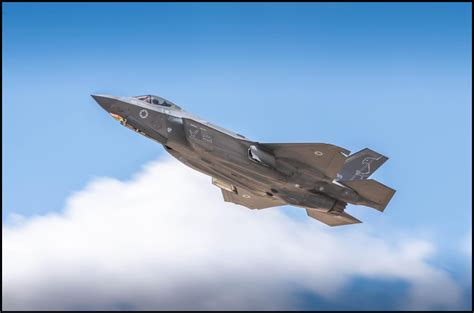
Israel’s variant, the F-35I Adir, is the program’s most telling anomaly. Unlike other operators, Israel secured the right to integrate indigenous electronic warfare systems and software modifications. This was not achieved through hacking brilliance. It was negotiated politically.
That distinction matters. The only nation to meaningfully customize the F-35 did so with formal authorization. The path to autonomy ran through diplomacy, not digital rebellion.
If jailbreaking were trivial, such negotiations would be unnecessary. Instead, Israel’s arrangement underscores how tightly controlled the core architecture remains.
What Jailbreaking Would Technically Require
Let’s step into a controlled thought experiment. Suppose a partner nation with full physical access to its airframes sought deeper autonomy. What would it need?
First, it would need to reverse engineer secure boot processes—mechanisms ensuring that only cryptographically signed software loads at startup. Second, it would need to bypass encryption keys embedded in hardware modules. Third, it would have to maintain these modifications without triggering integrity checks during maintenance cycles connected to ODIN infrastructure.
Each step carries massive risk. A failed exploit could ground aircraft, void support agreements, and fracture alliances. More critically, altering mission software in a combat aircraft is not like installing a custom smartphone theme. Subtle bugs could degrade radar interpretation or weapons integration under stress. In air combat, milliseconds and data fidelity decide survival.
The risk calculus is brutal: Is sovereignty worth compromising reliability in a platform that costs upward of $80 million per unit before sustainment?
The Price of Centralized Power
The F-35 is projected to cost over two trillion dollars across its lifetime when development and sustainment are included. Its base variants—the F-35A, F-35B, and F-35C—serve air forces, marines, and navies across the alliance network. Lockheed Martin has delivered over a thousand aircraft globally.
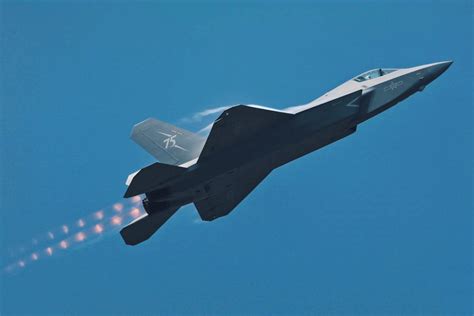
This scale creates interoperability unmatched in military aviation history. Allied jets can share targeting data seamlessly. In a conflict with a peer adversary, distributed sensor fusion could create a collective combat web spanning continents.
Yet scale also creates vulnerability. If trust erodes, the entire architecture weakens. Nations such as Canada and Portugal have publicly reconsidered procurement decisions amid political tension. When alliances strain, software control becomes a symbol of sovereignty.
The irony is sharp. The F-35 was designed to bind NATO forces together technologically. The same integration now fuels suspicion when political winds shift.
Trust, Article 5, and Strategic Memory
The North Atlantic Treaty Organization invoked Article 5 only once—after the September 11 attacks. European allies deployed forces to Afghanistan in solidarity with the United States. More than a thousand non-U.S. coalition soldiers died in that conflict.
That history shapes today’s debate. Defense procurement is not merely transactional. It is relational. When allied leaders question software control, they are questioning the durability of political commitments.
The F-35 debate therefore transcends code. It reflects a recalibration of confidence in long-term American leadership. When trust is abundant, centralized updates feel like efficiency. When trust frays, the same mechanism feels like dependency.
Can It Actually Be Done?
Technically, no complex software system is immune to exploitation. Given enough time, expertise, and resources, vulnerabilities can surface. Nation-states possess formidable cyber capabilities. Physical access to hardware expands potential attack vectors.
But feasibility is not inevitability.
The F-35’s architecture includes hardware-based encryption, secure firmware layers, compartmentalized mission data, and constant update cycles. Any attempt to jailbreak would confront multiple defensive rings. Even if root access were achieved, sustaining that access across software updates would be a continuous arms race.
More importantly, the political cost would likely exceed the technical gain. Discovery would jeopardize maintenance pipelines and parts supply chains. The aircraft’s effectiveness depends on global sustainment infrastructure. Severing that link in pursuit of autonomy could degrade readiness.
In short: possible in theory, punishing in practice.
The Subscription Model of Warfare
Unlike legacy fighters that were sold and largely left to national modification, the F-35 embodies a subscription model of defense. Continuous updates, centralized logistics, and integrated supply chains define its lifecycle.
Critics view this as digital dependency. Supporters argue it ensures uniform security standards and rapid vulnerability patching. Both interpretations contain truth.
Modern warfare increasingly resembles cybersecurity. Aircraft are nodes in a network, not solitary platforms. Controlling the network core is strategic power.
Strategic Autonomy vs. Collective Security
European leaders advocating software sovereignty are not fantasizing about pirated jet firmware for amusement. They are responding to a shifting geopolitical climate. Strategic autonomy has become a policy buzzword in Brussels and beyond.
Yet autonomy has trade-offs. If each nation customized its F-35 software independently, interoperability would erode. Shared data links could fragment. The very advantage of a common platform would diminish.
The debate therefore hinges on balance: How much centralized control is acceptable in exchange for unparalleled integration?
The Reality Beneath the Rhetoric
The viral metaphor of jailbreaking an F-35 “like an iPhone” oversimplifies a labyrinthine technical reality. Smartphones tolerate experimentation because failure rarely costs lives. Fighter jets operate in domains where software errors are catastrophic.
The smarter framing is not whether the F-35 can be hacked. It is whether allied nations can renegotiate governance structures to ensure confidence without dismantling cohesion.
Israel demonstrated that customization is achievable through agreement. Other partners may pursue similar concessions. The conversation is less about cracking encryption and more about recalibrating trust.
Conclusion: Myth, Leverage, or Future Flashpoint?
The F-35’s software cannot be casually jailbroken. It is shielded by layered security, political agreements, and economic interdependence. A rogue modification campaign would be extraordinarily complex and strategically self-defeating.
Yet the anxiety driving the question is real. The aircraft symbolizes a broader transformation: warfare has become software-defined, and software control equals strategic leverage.
In the end, the jailbreak debate reveals less about hacking feasibility and more about alliance psychology. The F-35 remains the most advanced fighter ever fielded, but its true strength lies not only in stealth geometry or sensor fusion. It lies in the network of nations willing to trust one another with its code.
As global power dynamics evolve, that trust may prove more critical than any line of software buried within the jet’s encrypted core.