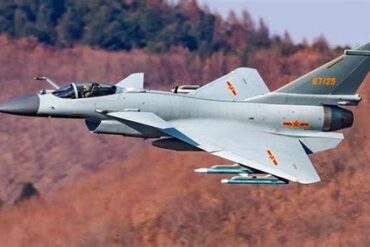
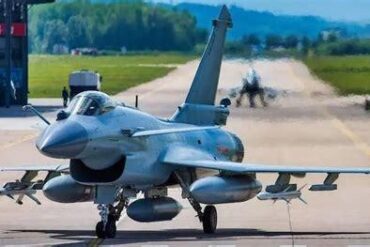
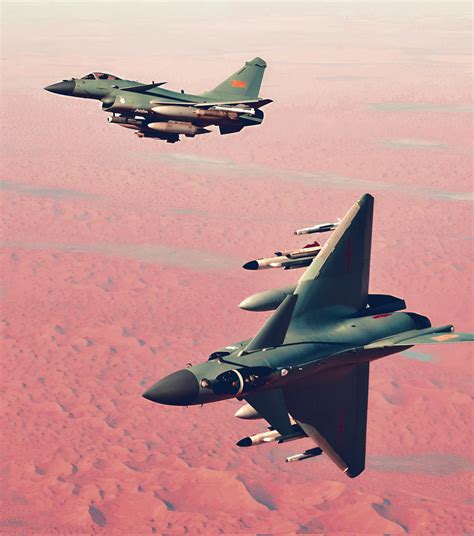
Amid ongoing regional recalibrations and shifting aerial power balances, China’s J-10C multirole fighter has surged into the spotlight—not merely as a symbol of indigenous aviation capabilities but as a case study in modern air combat evolution. Recent tensions between India and Pakistan have drawn attention to the aircraft’s operational record, especially Pakistan’s acquisition and claimed use of the J-10C in a high-stakes encounter that allegedly led to multiple Indian Air Force (IAF) losses.
The Fog of Combat: Conflicting Claims and Cold Evidence
In the aftermath of Pakistan’s recent military engagements near the Line of Control, officials in Islamabad have made sweeping claims: five Indian aircraft downed, including three Dassault Rafales. Yet, apart from the widely circulated wreckage of one IAF aircraft and fragments of a PL-15 missile, no conclusive visual or forensic evidence corroborates these shootdowns. As social media platforms teemed with speculative footage, analysts at the Royal United Services Institute (RUSI) urged caution.
Justin Bronk, a prominent airpower analyst, emphasized the ambiguity inherent in such situations. “A destroyed airframe doesn’t automatically imply a J-10C victory,” Bronk noted. Engine failures, friendly fire, or long-range ground-based missile engagements remain viable explanations. Moreover, the mere presence of PL-15 debris only confirms missile employment—not impact.
A Combat Laboratory for Chinese Systems
Despite the murkiness of combat claims, China has reason to view these engagements as a valuable live-fire proving ground for the J-10C. From radar lock reliability to EW resistance, real-world usage provides insights simulations and drills cannot. For Beijing, whose strategic priorities now tilt increasingly toward Taiwan and the Western Pacific, data harvested from Pakistan’s encounters can feed into doctrine revisions and upgrade cycles.
The People’s Liberation Army Air Force (PLAAF) will scrutinize the performance of onboard radars, missile guidance links, and electronic warfare countermeasures, comparing intended specifications with field data. Notably, such data acquisition requires the kind of operational transparency that is unlikely to be publicly disclosed—but within military circles, even partial results can inform tactical refinements.
From Ambition to Execution: The J-10’s Developmental Trajectory
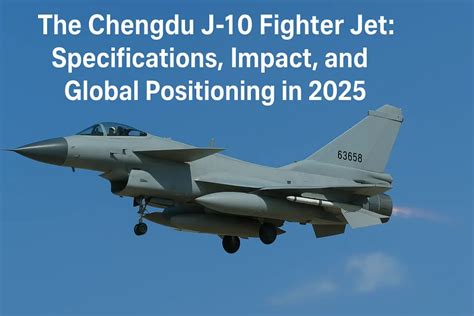
The J-10 program began in the 1980s as a successor to aging platforms like the J-7 and Q-5, with an early emphasis on multirole flexibility. Development was slowed by persistent engine problems, forcing reliance on Russian AL-31FN turbofans. A prototype first took to the skies in 1998, and by 2004, the platform entered service.
Several iterations emerged:
- J-10A introduced improved avionics and radar capabilities.
- J-10AS/ASH focused on training and limited naval utility.
- J-10B integrated a diverterless supersonic inlet (DSI) and passive electronically scanned array (PESA) radar, alongside infrared search and track (IRST) features.
Each step brought the platform closer to parity with contemporary Western fighters, but it was the J-10C variant that marked a genuine technological leap.
Core Advancements in the J-10C
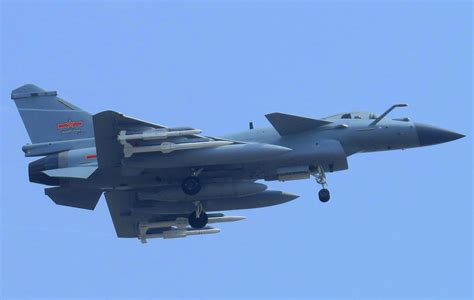
The J-10C’s standout feature is its active electronically scanned array (AESA) radar, granting extended detection range, improved resistance to ground and electronic clutter, and better survivability in jammed environments. While precise performance metrics remain classified, even partial analysis confirms its elevation over earlier variants.
Key enhancements include:
- Radar: AESA with theoretical low-probability-of-intercept (LPI) and low-probability-of-detection (LPD) modes.
- Missiles: Access to the PL-10 short-range and PL-15 long-range AAMs.
- Networking: Integrated data link systems, though their robustness under adversarial jamming remains untested in public domain.
- Engine: The transition to the WS-10 turbofan, a domestic design, signals improved production confidence and mechanical reliability.
Battlefield Effectiveness: How Does It Compare?
According to Bronk, the J-10C compares favorably with the F-16 Block 50/52 in terms of airframe size, thrust-to-weight ratio, and agility. However, where it potentially outshines its Western counterparts is in radar sophistication and missile reach. The PL-15 missile, believed to possess a range well beyond the AIM-120 AMRAAM, grants the J-10C a deadly edge in beyond-visual-range (BVR) engagements.
If these performance margins hold under combat stress, Pakistan’s use of the J-10C near contested airspace offers it a significant long-range strike advantage. However, superiority on paper rarely translates seamlessly into battlefield dominance. Real-world kill probabilities depend not only on weapon systems but also on pilot proficiency, command-and-control synchronization, and battlefield awareness.
The PL-15: Game-Changer or Mirage?
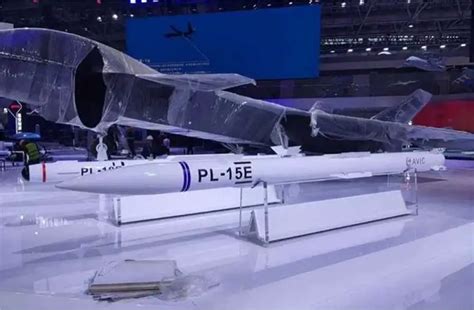
At the heart of the J-10C’s presumed lethality lies the PL-15 missile, a symbol of China’s evolution from importer to innovator. The missile is reportedly powered by a dual-pulse motor and guided by an active radar seeker, offering consistent lock-on even in high ECM environments. If estimates of its range exceeding 200km are accurate, the PL-15 not only surpasses Russian R-77s and American AIM-120Cs, but challenges the status quo of BVR air superiority.
This development has sparked a Western response. The United States is accelerating work on the AIM-260 Joint Advanced Tactical Missile (JATM)—a clear acknowledgment of the PL-15’s disruptive presence. Moreover, the rise of long-range missiles has recalibrated fighter doctrine, placing a premium on AEW&C support, third-party target acquisition, and multi-node battlefield integration.
Gaps in the Armor: Network Integration Unknowns
Yet for all its promise, the J-10C’s true potential remains contingent on broader systemic integration. Its performance depends heavily on real-time coordination with AEW&C platforms, resilient data links, and an environment rich in satellite and electronic warfare support. At present, China’s and Pakistan’s ability to integrate these platforms in wartime conditions is untested.
We must also consider the aircraft’s electronic warfare suite. While touted as capable, little is known about its counter-stealth capabilities, jamming thresholds, and capacity for third-party tracking. In a modern battlespace saturated with electronic decoys, radar emissions, and drone reconnaissance, no fighter operates in isolation. Its worth lies in networked synergy—a factor still in shadow where the J-10C is concerned.
What’s Next for the J-10C?
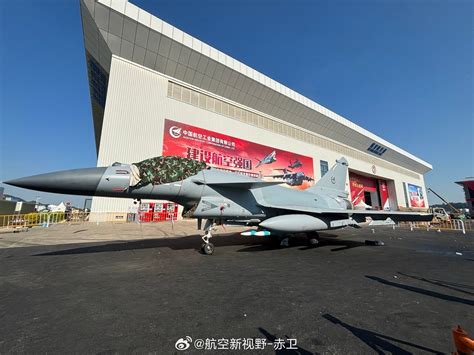
From an industrial standpoint, China is unlikely to continue developing new J-10 variants. The future lies with the J-35 stealth fighter and eventual sixth-generation designs. As such, the J-10C will likely transition into an export-focused platform, marketed to nations seeking near-peer capability without Western alignment.
At an estimated $50–60 million per unit, the J-10C offers a compelling mix of affordability and firepower. Its main rival in this tier remains the Lockheed Martin F-16, but with PL-15 missiles in its arsenal and AESA radar onboard, the J-10C presents an intriguing alternative to countries looking for performance without political strings.
As geopolitical blocks crystallize and arms markets fracture along ideological lines, the J-10C is more than a jet—it is a strategic instrument. Its success or failure will ripple beyond airfields, shaping defense policies, alliances, and battlefield doctrines for years to come.
Final Thoughts: Between Reality and Rhetoric
The J-10C is neither an unstoppable force nor an overhyped relic. It exists in the grey zone between cutting-edge technology and operational mystery. While its performance in real-world combat remains inconclusive, the aircraft’s design philosophy reflects China’s ambition to dominate not just in numbers, but in next-generation capability.
Claims of aerial victories in South Asia remain embroiled in ambiguity. Yet, what is clear is that the J-10C has forced airpower theorists and militaries alike to recalibrate their assumptions. In an era where range, radar, and electronic warfare define supremacy, this fighter may very well be China’s most influential aerial export to date.