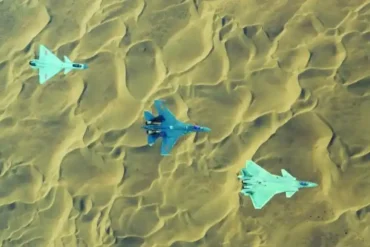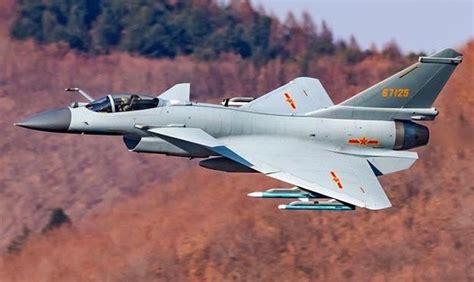
The aftermath of the 2025 Iran-Israel conflict exposed a devastating truth about Iran’s aerial vulnerability. Despite Iran’s successful ballistic missile retaliation, it was Israeli air superiority — led by the F-35 Lightning II — that revealed the complete inadequacy of Iran’s aging air force. Tehran’s search for a credible countermeasure has now turned eastward, with growing interest in the Chinese J-10C fighter jet. While not a direct competitor to the F-35, the J-10C could offer Iran something it desperately needs: a technologically relevant, multirole combat platform.
Iran’s Crumbling Air Force: A Need for Modernization
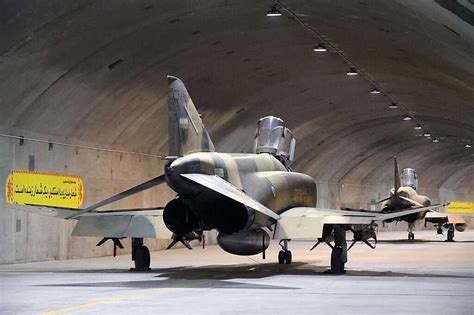
Iran’s current air fleet resembles a Cold War museum more than a modern fighting force. Decades of U.S.-led sanctions, lack of spare parts, and political isolation have left Iran reliant on outdated aircraft including the F-4 Phantom II, Su-24 Fencer, MiG-29, F-14 Tomcat, and Chengdu J-7. Most of these platforms, many procured before the 1979 Islamic Revolution, are now severely limited in their operational readiness and combat viability.
With most Western suppliers off the table due to sanctions and international pressure, Iran’s options are few. Russia’s Su-35, once seen as the most viable contender for Iran’s next-gen fighter fleet, has been delayed or derailed entirely by Moscow’s commitments in Ukraine. That narrows Tehran’s choices considerably — leaving China’s J-10C as perhaps the only practical alternative.
J-10C: Beijing’s Multirole Solution
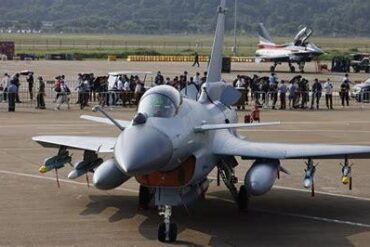
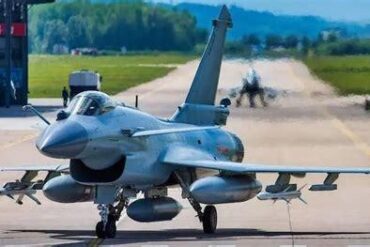
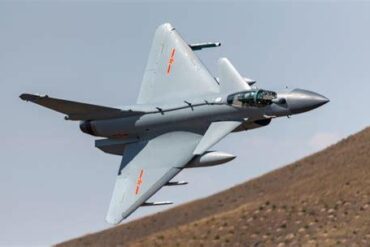
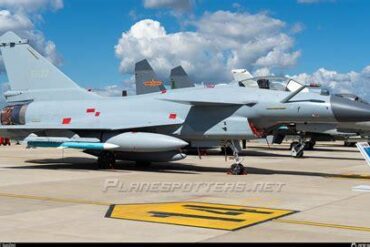
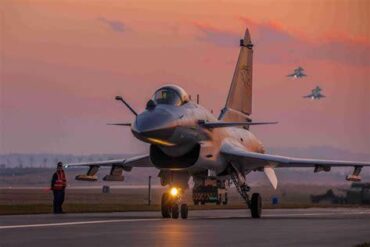
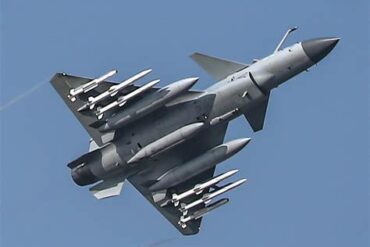
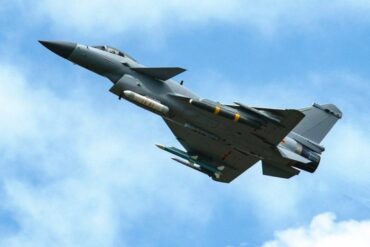
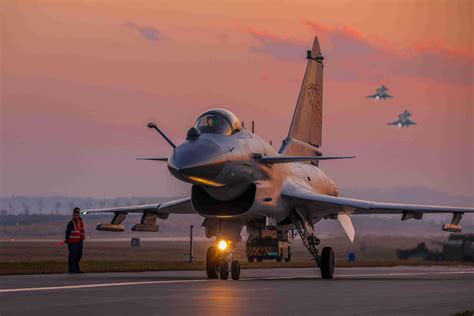
The Chengdu J-10C represents the latest iteration of China’s indigenous single-engine multirole fighter program. First introduced in 2018, the J-10C comes with 4.5-generation features, including an Active Electronically Scanned Array (AESA) radar, reduced radar cross-section, and the ability to employ long-range PL-15 air-to-air missiles.
The aircraft is powered by the WS-10B engine, and though it lacks the stealth and sensor fusion of fifth-generation fighters, it excels in agility, avionics, and BVR (Beyond Visual Range) engagement capability. China has increasingly exported this aircraft, most notably to Pakistan, making it a proven, export-ready system. For Iran, the J-10C’s capabilities represent a massive upgrade over its current lineup.
Operational Gains: What the J-10C Offers Iran
Iran’s interest in the J-10C is not rooted in the illusion that it can match the F-35 one-on-one. Rather, it lies in the ability to:
- Extend patrol range with newer engines and higher service ceiling.
- Integrate modern radar for more precise early warning and fire control.
- Deploy BVR-capable missiles like the PL-15, giving Iran a new edge in engagement reach.
- Bridge network gaps with datalink capabilities that allow better coordination with ground systems and other aircraft.
The J-10C’s arrival would mark the first time since the 1970s that Iran fields a platform capable of real-time threat detection and high-speed interception. While not invisible to radar like the F-35, the J-10C still provides the essential backbone for a layered air defense strategy — something Iran sorely lacked in the recent war.
F-35 vs J-10C: A Tale of Generational Divide
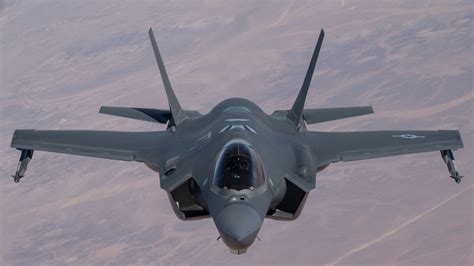
The F-35 Lightning II, built by Lockheed Martin, is a 5th-generation multirole stealth fighter with capabilities far beyond those of the J-10C. It’s designed for air dominance, electronic warfare, ground attack, and intelligence gathering, all tied into a network-centric warfare ecosystem. The aircraft’s stealth profile, sensor fusion, and mission versatility put it in a class of its own.
In contrast, the J-10C, while advanced by 4th-gen standards, lacks the radar-evading silhouette and deep penetration capability of the F-35. It is not designed to operate in heavily contested airspace bristling with integrated air defense systems (IADS) or next-gen SAMs. The F-35 can act as both a sword and shield in contested airspace — the J-10C cannot.
But here’s the nuance: Iran doesn’t need the J-10C to be an F-35 killer. It needs it to be good enough to complicate Israel’s calculus. By introducing modern fighters with AESA radars and BVR capability, Iran could force enemy aircraft to maintain higher standoff distances, limit their freedom of movement, and reduce the effectiveness of long-range strike campaigns.
Geopolitics: Why China Is Likely to Say Yes
Iran’s alignment with the Shanghai Cooperation Organization (SCO) and increased cooperation with China’s Belt and Road Initiative (BRI) strengthen the likelihood of a J-10C deal. China, seeking to expand its influence in the Gulf and undermine U.S. strategic dominance, may view Iran as a valuable partner in balancing regional power.
Furthermore, China’s aviation industry stands to gain by establishing itself as a reliable supplier of fourth-gen fighters to sanctioned or semi-isolated regimes. The Pakistan Air Force’s operational success with the J-10CE gives the model credibility as an export platform.
That said, China is unlikely to sell its fifth-generation fighters such as the Chengdu J-20 or the under-development J-35 to Iran. These jets are closely held for the People’s Liberation Army Air Force (PLAAF) and not available for international sale.
Limitations and Strategic Caveats
While the J-10C represents a clear step up, it comes with limitations. Iran’s infrastructure will require upgrades to support new data link systems, weapons integration protocols, and pilot training. Iran’s current logistics and maintenance network are outdated and tailored to Soviet-era and U.S.-legacy systems.
There’s also the question of supply chain reliability. China would likely provide spare parts and limited support, but comprehensive after-sales support may be hampered by Iran’s economic constraints and the potential political backlash from Western nations. Additionally, if Iran wishes to employ indigenous upgrades or modifications, it may struggle due to limited access to compatible avionics and subsystems.
Tactical Outlook: A Defensive Rather Than Offensive Move
If Iran does proceed with the acquisition of the J-10C, it will be a defensive reinforcement, not an offensive platform aimed at parity. The aircraft could be deployed to:
- Intercept hostile aircraft within Iranian airspace more effectively.
- Conduct deep patrols over critical infrastructure such as nuclear sites.
- Serve as a deterrent by raising the cost of Israeli or U.S. air incursions.
By reshaping its tactical doctrine around air denial instead of air dominance, Iran can create a less permissive environment for its adversaries. This would force Israel to expend more resources in electronic warfare, SEAD (Suppression of Enemy Air Defenses), and long-range standoff munitions — all of which have political and financial costs.
Final Analysis: A Game Changer, But Not a Balance Tipper
The introduction of the J-10C into Iran’s air force would be a major milestone in Tehran’s efforts to modernize its military. It would not give Iran parity with Israel or the U.S., but it would narrow the gap enough to complicate future conflict scenarios. The aircraft’s modern radar, weapons, and agility would mark a qualitative leap from Iran’s Cold War-era assets.
Still, this is not a stealth revolution, and it doesn’t usher in a new era of air dominance. The J-10C is not the Islamic Republic’s answer to the F-35 — but it may be its answer to strategic irrelevance.
In modern warfare, perception matters as much as capability. And for Iran, a J-10C squadron may send the clearest signal yet that it refuses to be outpaced without a fight.