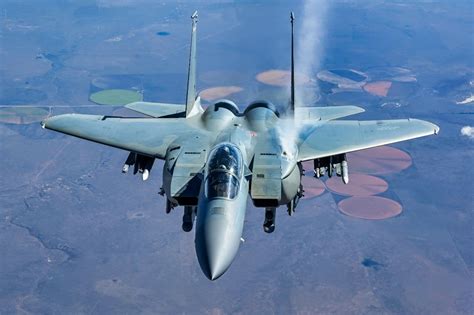
Indonesia’s decision to step away from Boeing’s F-15EX Eagle II campaign marks a quiet but consequential shift in Southeast Asia’s fighter jet landscape. After years of negotiations, incentives, and diplomatic signaling, the American aerospace giant has formally closed its pursuit of Jakarta, even as China’s J-10C multirole fighter edges closer to becoming a serious contender in Indonesia’s modernization calculus. The move reflects more than a stalled contract; it reveals how cost, geopolitics, industrial policy, and operational realities now outweigh prestige platforms in regional defense planning.
For Boeing, the end of the Indonesia campaign is a strategic retreat after sustained engagement that once promised to anchor the F-15EX as a cornerstone of Indonesia’s air power. For Indonesia, it is another data point in a broader, carefully calibrated effort to diversify arms suppliers while stretching limited defense budgets across an increasingly complex security environment.
A Long Courtship That Never Became a Contract
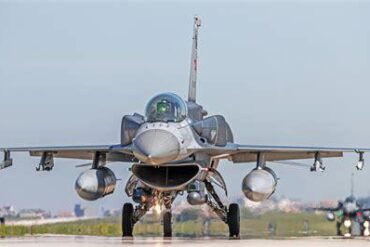
The F-15EX story in Indonesia began with optimism. In 2023, Jakarta signed a non-binding memorandum of understanding with Boeing to acquire up to 24 aircraft, provisionally designated F-15IDN. The announcement, made during President Prabowo Subianto’s visit to the United States, framed the jet as a future guardian of Indonesian sovereignty, combining long range, heavy payload capacity, and cutting-edge avionics.
Yet optimism gradually gave way to hesitation. The MoU lacked contractual force, and financing challenges lingered from the outset. Indonesia’s defense budget, already stretched across multiple acquisition programs, struggled to accommodate the high lifecycle costs associated with operating a heavyweight fighter like the F-15EX. As months turned into years, the deal remained unsigned, and momentum quietly drained away.
Boeing’s Local Industry Gamble Falls Short
In April 2025, Boeing attempted to reset the narrative by dramatically enhancing its offer. The company pledged 85 percent local content, promising deep involvement for Indonesian firms across manufacturing, maintenance, training, and sustainment. The proposal aligned neatly with Jakarta’s industrial ambitions and its desire to build domestic aerospace capability rather than remain a perpetual importer.
Despite the appeal, the offer failed to overcome structural constraints. Local production offsets reduce political friction, but they do not erase upfront acquisition costs, long-term maintenance expenses, or the financial burden of integrating a complex platform into an already diverse fleet. By early 2026, Boeing acknowledged reality, confirming that Indonesia was no longer an active F-15EX campaign.
Indonesia’s Expanding but Fragmented Fighter Fleet
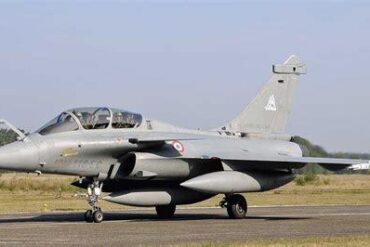
Indonesia’s air force modernization is unfolding at an unprecedented pace, yet it is also becoming increasingly fragmented. The country has already committed to 42 French Rafale fighters, with the first aircraft delivered in January 2026. It remains involved, albeit cautiously, in South Korea’s KF-21 program, and has signaled intent to purchase 48 Turkish KAAN fighters under a $10 billion agreement that emphasizes technology transfer.
Each of these programs serves a strategic purpose. Rafales offer immediate capability, the KF-21 promises future relevance, and KAAN represents industrial partnership. Together, however, they create a logistical mosaic that complicates training, maintenance, and interoperability. Adding the F-15EX to this mix would have further increased operational complexity, particularly given Indonesia’s existing inventory of F-16s and aging Su-27 and Su-30 fighters.
Sanctions, Ageing Aircraft, and Operational Pressure
Indonesia’s legacy fleet faces mounting pressure. Spare parts for Russian-made Sukhois have become harder to obtain amid international sanctions and production bottlenecks, while American F-16s are approaching the limits of economical service life. These constraints intensify the urgency of modernization while simultaneously narrowing feasible options.
In this context, affordability and supply chain reliability matter as much as performance. Heavy fighters like the F-15EX excel in air dominance roles, but they demand robust logistics, deep pockets, and sustained political alignment. For a country balancing multiple suppliers and non-aligned diplomacy, those demands are increasingly difficult to justify.
China’s J-10C Enters the Conversation
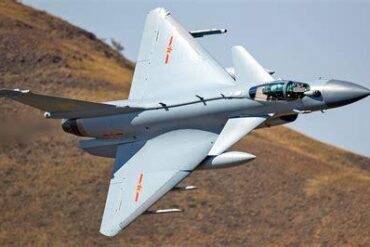
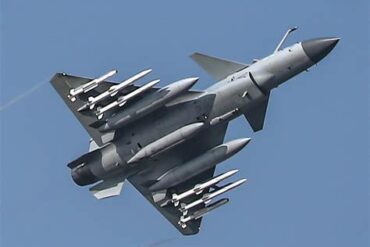
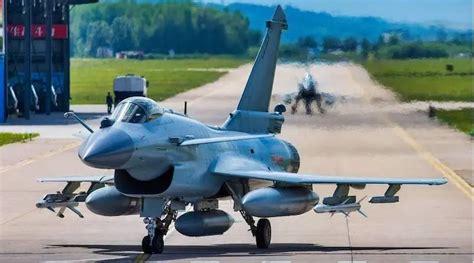
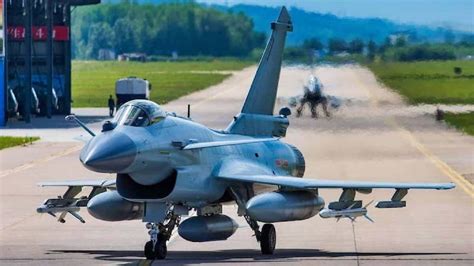
China’s J-10C has emerged as a disruptive alternative. Marketed as battle-tested following the 2025 Indo-Pakistan conflict, the aircraft is positioned as a cost-effective, modern multirole fighter equipped with advanced radar, electronic warfare systems, and beyond-visual-range missiles. Beijing’s pitch gained visibility when Indonesian officials confirmed that J-10 variants had been offered shortly after the conflict.
By late 2025, Indonesian leaders openly acknowledged that Chinese jets could soon be seen flying over Jakarta, though questions remained about whether new J-10C models or refurbished J-10B aircraft would be pursued. Reports later suggested that up to 42 J-10C fighters were under consideration, pending detailed analysis.
Strategic Benefits and Hidden Costs of the J-10C
On paper, the J-10C offers compelling advantages. It is significantly less expensive than Western counterparts, comes with fewer political strings, and would mark a milestone for China’s defense diplomacy in Southeast Asia. Indonesia would become the first country in the region to operate a modern, fully Chinese-designed fighter, signaling a new level of strategic autonomy.
The hidden costs, however, are substantial. Integrating Chinese systems alongside American, French, Russian, and Turkish platforms would strain maintenance infrastructure and complicate joint operations. Defense analysts warn that the United States would likely limit or suspend certain forms of cooperation if Indonesia inducted Chinese frontline fighters, reducing interoperability with key partners.
Boeing’s Broader F-15EX Strategy Continues Elsewhere
Indonesia’s exit does not spell doom for the F-15EX program. Boeing continues to deliver aircraft to the US Air Force and Israeli Air Force, while actively courting new export customers such as Poland. The company is also generating steady revenue by upgrading legacy F-15 fleets, including a $2.8 billion contract to modernize South Korea’s F-15K Slam Eagles to near-EX standards.
These upgrades underscore the F-15EX’s strengths as a bridge between fourth- and fifth-generation capabilities. Yet they also highlight its niche appeal: the aircraft excels where budgets are deep, alliances are firm, and operational doctrine favors heavy, long-range strike fighters.
A Signal of a Changing Regional Arms Market
Indonesia’s quiet shelving of the F-15EX campaign is emblematic of a broader trend across the Indo-Pacific. Nations are increasingly pragmatic, prioritizing cost efficiency, industrial participation, and supplier diversification over marquee platforms. The rise of alternatives like the J-10C reflects a more competitive global arms market in which Western dominance is no longer assured.
For Jakarta, the choice remains unresolved. Whether it ultimately selects Chinese fighters, expands existing Western fleets, or recalibrates its ambitions, the decision will shape regional air power dynamics for decades. What is clear is that the era of straightforward prestige purchases is fading, replaced by a more intricate calculus where economics, politics, and operational sustainability carry equal weight.