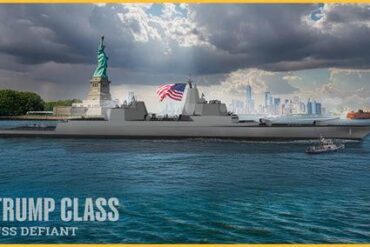
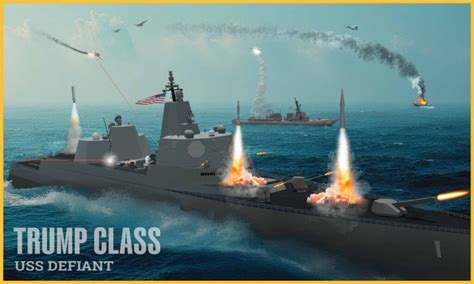
The U.S. Navy is approaching a decisive moment in its most ambitious surface combatant initiative in generations, as officials prepare to lock in the initial design schedule for the BBG(X) guided-missile battleship, widely referred to as the Trump-class battleship, within the next 30 to 60 days. This forthcoming milestone represents the first concrete scheduling signal since the program’s high-profile announcement in late December 2025 and underscores a renewed institutional commitment to restoring large, heavily armed capital ships to the American fleet.
For naval planners and defense industrial leaders alike, the announcement marks a shift from conceptual vision to executable program. Until now, the Trump-class has existed primarily as a strategic declaration tied to the broader Golden Fleet concept, a naval expansion framework intended to reverse decades of fleet contraction and capability dispersion. The expected release of a defined design timeline will determine whether BBG(X) evolves as an accelerated derivative of existing platforms or matures through a more deliberate, clean-sheet design process.
The clarification was signaled by Chris Kastner, chief executive officer of Huntington Ingalls Industries, who confirmed that the Navy is nearing internal alignment on design sequencing and industrial tasking. His remarks effectively confirm that the battleship program is no longer speculative, but rather entering the structured early phases that precede formal procurement decisions and long-term budget commitments.
Strategic Rationale Behind the Trump-Class Revival
The Trump-class battleship occupies a unique position in modern U.S. naval strategy, blending historical symbolism with forward-looking combat requirements. While the Navy has relied on destroyers and cruisers to deliver missile firepower since the Cold War, the BBG(X) concept is designed to concentrate offensive and defensive capability into a single, survivable hull capable of sustained operations in contested theaters.
This revival of the battleship designation is not a nostalgic exercise. Instead, it reflects an assessment that future high-intensity conflicts, particularly in the Indo-Pacific, may demand platforms with exceptional magazine depth, command-and-control capacity, and layered defenses. The Trump-class is envisioned as a surface warfare centerpiece, able to absorb punishment, coordinate joint fires, and project power without relying exclusively on aircraft carriers.
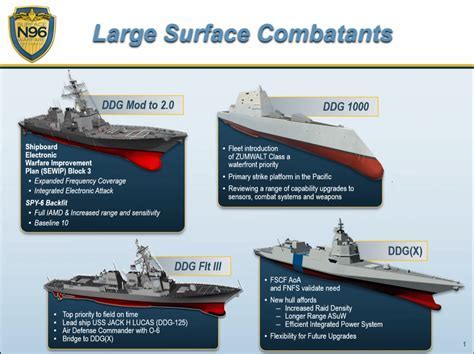
Critically, the program also serves as a potential structural replacement for the long-planned DDG(X) next-generation destroyer, whose scope and affordability have remained under review. By folding DDG(X) technologies into a larger hull, the Navy believes it can achieve economies of scale in power generation, sensor integration, and weapons deployment while avoiding fragmentation across multiple ship classes.
Program Timeline Signals and Early Expectations
Although the Navy has yet to publish a formal schedule, planning parameters indicate that the Trump-class design phase is expected to span roughly from 2026 through 2031 or 2032. This six-year design window aligns with the complexity of integrating hypersonic weapons, directed-energy systems, and advanced command architectures into a single platform.
Construction of the lead ship, USS Defiant (BBG-1), is tentatively projected for the early 2030s, with launch targeted for the mid-to-late 2030s and commissioning approaching the end of that decade or shortly thereafter. While these projections remain fluid, the imminent release of a defined design schedule will anchor subsequent milestones, including contract awards, facility upgrades, and workforce planning.
For the Navy, timing clarity is essential not only for budgeting but also for synchronizing BBG(X) with parallel force-structure decisions. The cancellation of the Constellation-class frigate program and the uncertain future of cruiser modernization have elevated the importance of a platform that can shoulder multiple mission sets without reliance on aging hulls.
Size, Displacement, and Human Factors
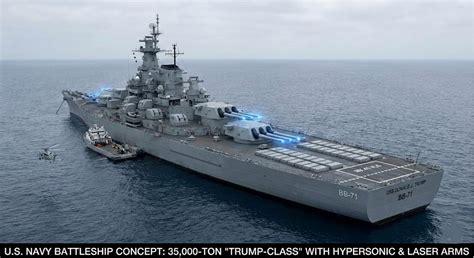
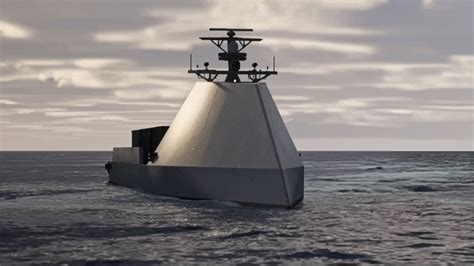
From a physical standpoint, the Trump-class battleship is designed to be unmistakably imposing. Current planning estimates place overall length between 256 and 268 meters, with a beam of up to 35 meters and a full-load displacement exceeding 35,000 tonnes. These dimensions position BBG(X) well above existing destroyers and cruisers, approaching the scale of historic battleships while remaining optimized for modern propulsion and automation.
Crew size is projected at 650 to 850 personnel, reflecting a balance between operational redundancy and labor efficiency. While significantly larger than the complements of Arleigh Burke-class destroyers, this figure represents a dramatic reduction compared to the manpower demands of Iowa-class battleships, demonstrating how automation and integrated systems have reshaped naval human-machine interaction.
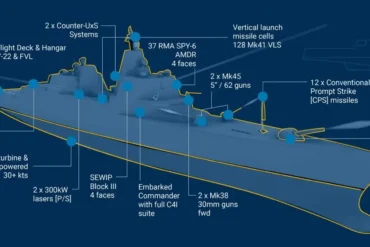
Propulsion is expected to rely on a conventional integrated power system combining gas turbines and diesel generators, delivering speeds in excess of 30 knots. More importantly, the power architecture is designed to support energy-intensive sensors and future weapons, ensuring growth margins throughout the ship’s service life.
Missile Firepower and Strike Dominance
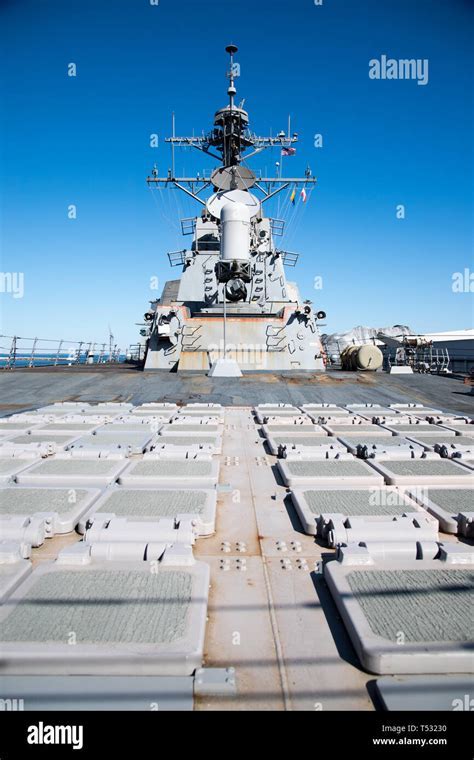
At the heart of the Trump-class concept lies its extraordinary missile capacity. The BBG(X) is planned to field 128 Mk 41 vertical launch cells, split between forward and aft arrays, providing unmatched flexibility for air defense, strike, and anti-submarine missions. This is complemented by a dedicated 12-cell launcher for Conventional Prompt Strike hypersonic missiles, enabling long-range, time-sensitive attacks against high-value targets.
The Navy has also confirmed that the platform will be compatible with the SLCM-N nuclear-capable cruise missile, reintroducing a surface-based nuclear strike option absent since the Cold War. This capability significantly elevates the strategic weight of the Trump-class, positioning it as both a conventional and deterrent asset.
When compared to existing surface combatants, the missile density of BBG(X) represents a decisive leap. Even the heavily armed Ticonderoga-class cruisers fall short of the Trump-class’s projected magazine depth, reinforcing its role as a missile arsenal ship with independent combat credibility.
Guns, Directed Energy, and Layered Defense
Beyond missiles, the Trump-class incorporates a diverse mix of kinetic and non-kinetic defenses. Plans include two Mk 45 127 mm naval guns for surface engagements and shore support, alongside a 32-megajoule electromagnetic railgun listed as a potential, though not guaranteed, capability. If fielded, the railgun would offer unprecedented range and projectile velocity without reliance on explosive munitions.
Close-in defense is equally robust, with RIM-116 Rolling Airframe Missile launchers, Mk 38 30 mm cannons, and multiple laser-based counter-drone systems forming a dense protective envelope. Directed-energy weapons rated between 300 and 600 kilowatts are intended to defeat missiles and unmanned systems at the speed of light, reducing engagement costs and reaction times.
This layered approach reflects lessons drawn from recent conflicts, where saturation attacks and low-cost drones have challenged traditional air defenses. The Trump-class is designed not merely to survive such environments, but to dominate them.
Sensors, Aviation, and Command Authority
To support its expanded mission set, the Trump-class is expected to integrate the AN/SPY-6 air and missile defense radar and the AN/SLQ-32(V)7 electronic warfare suite, forming the backbone of a fleet-level command-and-control architecture. These systems will enable BBG(X) to function as a command ship for surface action groups or as a high-end escort within carrier strike formations.
Aviation facilities are equally ambitious. A large flight deck and enclosed hangar will support MH-60 Seahawk helicopters, CMV-22B Osprey, and future tiltrotor platforms such as the Bell MV-75, as well as unmanned aircraft like the Bell V-247 Vigilant. This organic air component enhances surveillance, targeting, logistics, and strike coordination, extending the battleship’s operational reach far beyond the horizon.
Industrial Base and Cost Realities
From an industrial perspective, the Trump-class represents both an opportunity and a challenge. The Navy intends to lead the design effort, with Huntington Ingalls Industries and General Dynamics Bath Iron Works providing primary shipbuilding expertise over an estimated 72-month design phase. This timeline allows for risk reduction but demands sustained funding discipline.
Cost estimates remain contentious. Later ships are projected at approximately $10 billion per hull, while the lead ship could approach $15 billion, placing BBG(X) in the same financial category as a Ford-class aircraft carrier. These figures dwarf the costs of destroyers and frigates, ensuring intense congressional scrutiny as the program advances.
Yet supporters argue that cost must be weighed against capability concentration. A single Trump-class battleship may replace or augment multiple smaller combatants, delivering resilience and firepower that cannot be easily replicated across distributed platforms.
A Defining Moment for Surface Warfare
The Navy’s impending decision on the Trump-class design schedule will shape the trajectory of U.S. surface warfare for decades. Whether BBG(X) emerges as a bold successor to destroyers or as a new category of capital ship, its progress will signal how the Navy intends to fight, deter, and prevail in an era of great-power competition.
As the countdown to formal scheduling continues, the Trump-class battleship stands at the intersection of ambition, technology, and strategy. The next 60 days may determine whether this vision becomes a cornerstone of future naval dominance or remains the most audacious experiment of the modern fleet.