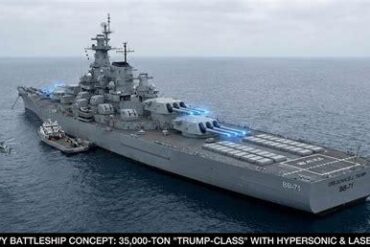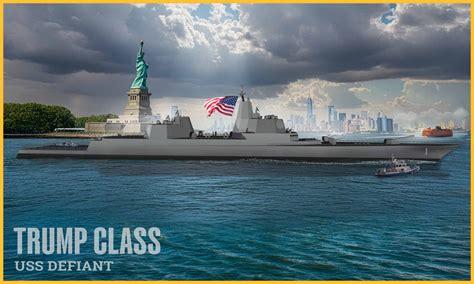
The idea of the battleship once defined global naval dominance. For decades, these enormous floating fortresses projected power across oceans, symbolizing the industrial and military might of the world’s greatest maritime powers. Yet in the 21st century, the concept of building an entirely new class of battleships has triggered intense debate among defense analysts, naval historians, and military planners. The controversy centers around a proposal to construct the USS Defiant (BBG-1), the first vessel in a planned Trump-class battleship fleet intended to spearhead what has been described as a future American “Golden Fleet.”
The announcement, made on December 22, 2025, stunned many observers. For more than 80 years, the U.S. Navy has structured its strategy around aircraft carriers, submarines, and guided missile destroyers, leaving the battleship as a relic of another era. While the idea of resurrecting the world’s largest gun-armed warships may sound dramatic and technologically ambitious, a growing number of experts warn that such a move could be strategically misguided, financially unsustainable, and even dangerous.
The Rise and Fall of Battleships in Modern Naval Warfare
At the dawn of the 20th century, the battleship represented the ultimate symbol of naval power. When HMS Dreadnought entered service in 1906, it revolutionized naval warfare with its steam turbine propulsion and uniform heavy gun armament. Nations quickly began building similar vessels, igniting a global naval arms race that shaped geopolitics before World War I.
Over the following decades, battleships grew larger and more heavily armed. By the time World War II erupted, these ships were capable of firing massive shells across miles of ocean while absorbing immense damage. The United States Navy fielded legendary vessels such as the Iowa-class battleships, which combined heavy artillery with formidable armor and speed.
However, the war also revealed a dramatic shift in the nature of naval combat. The Japanese attack on Pearl Harbor in 1941 and the decisive Battle of Midway in 1942 demonstrated that aircraft carriers had replaced battleships as the true kings of the sea. Aircraft launched from carriers could strike targets hundreds of miles away, rendering even the most heavily armored ships vulnerable.
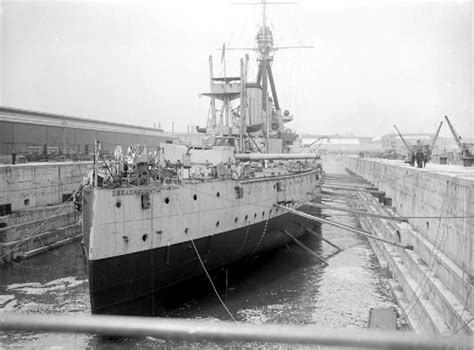
After World War II, the U.S. Navy gradually retired its battleships. Some were briefly recommissioned during conflicts like the Korean War and the Gulf War, primarily for shore bombardment. Eventually, however, every remaining American battleship was decommissioned and converted into museum ships, closing what many historians considered the final chapter of the battleship era.
The Trump-Class Battleship Proposal
The proposed USS Defiant represents a radical departure from decades of U.S. naval doctrine. The vessel is envisioned as a technological powerhouse that merges traditional battleship size with futuristic weapons systems.
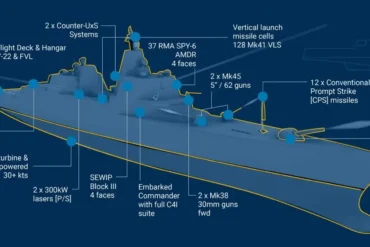
Reports suggest that the Trump-class ships would exceed the size of World War II-era American battleships, making them among the largest combat vessels ever constructed outside of aircraft carriers. Their weapon systems are expected to include:
- Hypersonic missile launch systems
- Electromagnetic railguns
- Nuclear-armed sea-launched cruise missiles (SLCM-Ns)
- High-energy laser defense platforms
In theory, these systems would transform the battleship into a multi-domain weapons platform capable of launching devastating long-range strikes while defending itself against incoming missiles and drones. Supporters of the project argue that the combination of advanced energy weapons and high-speed missiles could redefine surface warfare.
Yet the ambitious technology list has raised significant skepticism among military experts.
Experimental Weapons and Technological Uncertainty
One of the central criticisms of the project is that nearly all of the proposed weapon systems remain experimental or developmental technologies rather than fully operational tools.
The electromagnetic railgun, once heralded as a revolutionary naval weapon capable of launching projectiles at extreme velocities, has struggled with technical hurdles such as barrel wear, energy requirements, and inconsistent reliability. Similarly, high-energy laser systems are still being tested for real-world combat effectiveness against missiles and drones.
Hypersonic weapons present another challenge. Although the United States is actively developing hypersonic strike capabilities, several programs remain in testing phases. Integrating these systems into a massive surface platform would require new infrastructure, specialized launch systems, and extensive testing.
This technological uncertainty means the Trump-class battleship would rely heavily on weapons that do not yet exist in mature operational form, increasing both development risk and program costs.
China’s Hypersonic Advantage and Strategic Concerns
Beyond technological hurdles, the proposal has raised alarms about the strategic vulnerability of such large vessels. In interviews with Chinese state media, military analyst Zhang Junshe described massive surface ships as “easy targets” in the modern era of precision long-range weapons.
China has invested heavily in anti-ship missile technology, including systems specifically designed to destroy large naval vessels at extreme ranges. These include hypersonic anti-ship cruise missiles, which travel at speeds exceeding Mach 5 and are extremely difficult to intercept.
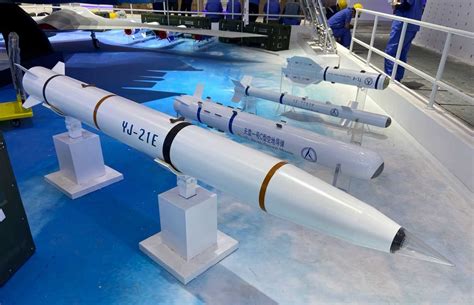
The concern among analysts is simple but serious: a gigantic battleship might become a high-value target that adversaries would prioritize in any conflict. In an age of satellite tracking, long-range targeting networks, and advanced missiles, the sheer size of a battleship could make it easier to detect and strike.
If an enemy succeeded in destroying a vessel that costs tens of billions of dollars, the strategic and psychological impact could be enormous.
Shipbuilding Limits and Industrial Constraints
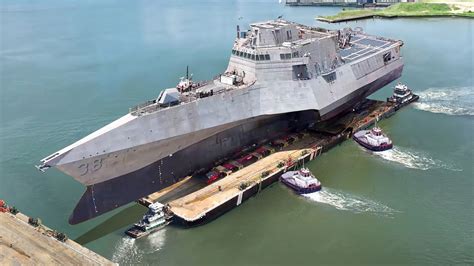
Even if the strategic case for battleships were convincing, the United States currently faces significant shipbuilding capacity limitations.
American shipyards are already operating near maximum output as they work to construct some of the most advanced vessels ever built, including:
- Gerald R. Ford-class nuclear aircraft carriers
- Virginia-class nuclear attack submarines
- Columbia-class ballistic missile submarines
- Arleigh Burke-class guided missile destroyers
Each of these programs requires specialized infrastructure, skilled labor, and highly complex supply chains. Introducing a completely new class of enormous battleships would place additional strain on an industrial base that defense analysts already consider stretched thin.
The logistical challenge of producing up to 25 Trump-class battleships, as suggested in some discussions, would require decades of sustained shipyard expansion and workforce growth.
The Enormous Cost of a Modern Battleship Fleet
Financial concerns may represent the most significant obstacle to the project. Preliminary estimates from the Congressional Budget Office suggest that building the USS Defiant alone could cost as much as $22 billion, potentially making it the most expensive surface warship in history.
For comparison, the USS Gerald R. Ford (CVN-78) — currently the most advanced aircraft carrier in the world — cost approximately $13 billion to build.
If the projected fleet of 25 battleships were completed, analysts estimate that total program costs could approach $1 trillion once procurement, maintenance, operational costs, and long-term upgrades are included. This figure would consume an enormous share of the Navy’s budget for decades.
Considering that the U.S. Navy’s fiscal year 2026 budget stands at about $292.2 billion, allocating such vast resources to a single class of ship could crowd out funding for submarines, unmanned systems, and next-generation aircraft.
A Strategic Gamble for the Future Navy
The debate surrounding the USS Defiant highlights a broader question facing modern militaries: how to balance technological ambition with proven strategy.
Supporters argue that revolutionary weapons and massive firepower could create a new class of naval dominance. Critics counter that the battleship concept was abandoned for good reason, replaced by more flexible and survivable platforms such as aircraft carriers, submarines, and distributed missile systems.
In an era defined by precision missiles, cyber warfare, drones, and space-based surveillance, the return of the battleship may represent not a bold leap forward but a nostalgic return to a bygone era of naval warfare.
Whether the Trump-class battleship becomes a cornerstone of future U.S. maritime power or remains a controversial proposal will depend on political decisions, technological breakthroughs, and the evolving realities of global naval competition. What is certain, however, is that the debate has reignited one of the oldest questions in military strategy: does bigger still mean better on the battlefield of the future? ⚓