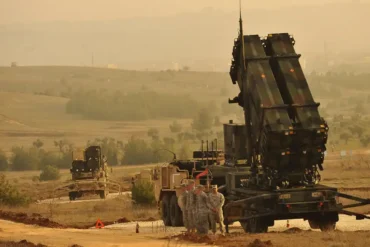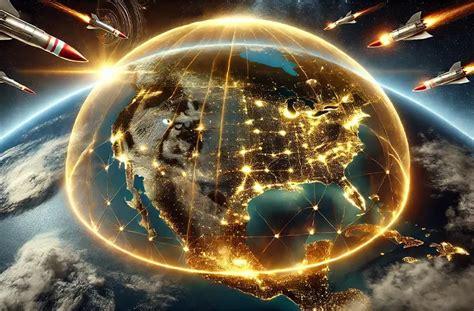
The Arctic is no longer a frozen backwater of global politics. It has become a strategic frontier, where geography, technology, and great-power rivalry collide with unprecedented intensity. At the center of this collision stands Greenland, an immense island of ice and rock that now anchors one of the most ambitious defense visions ever articulated by a sitting U.S. president.
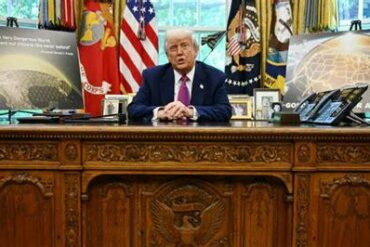
Donald Trump’s renewed insistence that Greenland is “vital” to American national security is not rhetorical flourish. It is tightly bound to the proposed Golden Dome, a multi-layered missile defense system designed to detect, track, and destroy threats ranging from traditional ballistic missiles to cutting-edge hypersonic weapons. For Washington, Greenland is the keystone. For Moscow and Beijing, it is a red line being dangerously approached.
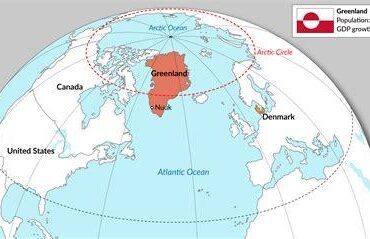
Trump’s argument is brutally simple. Greenland sits between North America and Eurasia, directly beneath the polar routes used by intercontinental missiles and strategic bombers. Control the sensors there, and the United States gains precious minutes of warning and response time. Lose them, and America’s northern flank becomes dangerously exposed.
This logic has ignited fierce reactions in Russia and China, where analysts see not a defensive shield but a calculated attempt to neutralize their nuclear deterrents. In their view, Golden Dome is not about stability. It is about dominance.
Greenland’s Geography and the Architecture of the Golden Dome
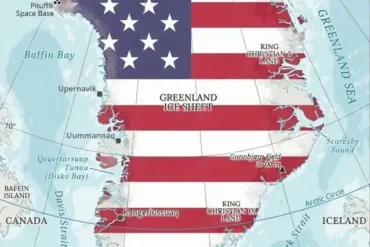
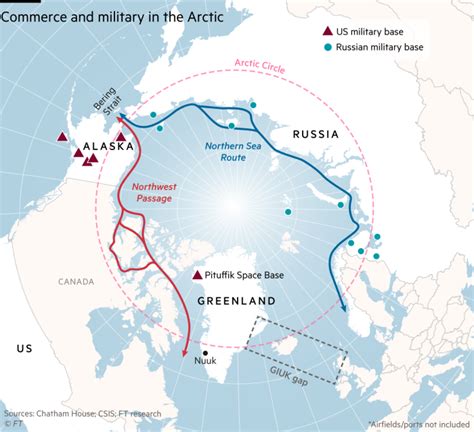
Greenland’s value lies in its unforgiving geography. Nestled between the Arctic Ocean and the North Atlantic, it occupies a position directly under the shortest flight paths between Russia and the United States. Missiles launched from northern Russia naturally arc over the Arctic, making Greenland an ideal vantage point for early detection and tracking.
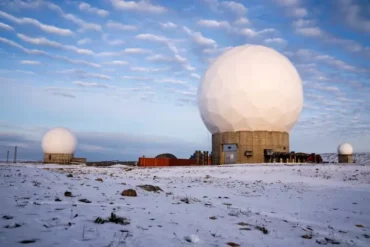
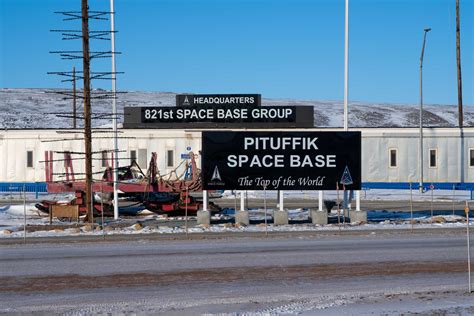
The United States already operates the Pituffik Space Base in northern Greenland under a 1951 defense agreement with Denmark. This base hosts advanced early-warning systems, including the AN/FPS-132 radar, which plays a critical role in detecting missile launches and monitoring near-Earth space. For decades, this installation has quietly served as a cornerstone of U.S. missile defense.
Golden Dome would transform that role. The project envisions a dense web of ground-based radars, space-based sensors, and interceptors working in concert. Greenland would expand radar coverage deep into the Arctic, closing gaps that adversaries might exploit. From Washington’s perspective, this is a rational evolution of homeland defense in an era of hypersonic weapons and orbital threats.
Yet rationality is always relative in nuclear strategy. What looks like defensive prudence to one side can appear as existential provocation to another.
Trump’s Security Narrative and the Politics of Control
Trump has framed Greenland not merely as a strategic asset but as a potential vulnerability. He has repeatedly warned that without stronger U.S. control, the island could “end up” in Russian or Chinese hands. This claim is disputed by many experts, who see no imminent threat of occupation. Still, the narrative serves a political purpose: it links Greenland’s future directly to American survival.
In Trump’s telling, Golden Dome cannot function optimally without Greenland. The island becomes the northern anchor of a shield meant to protect Alaska, the continental United States, and even NATO allies. He has gone further, suggesting that U.S. control would make NATO “far more formidable and effective,” elevating Greenland from a Danish autonomous territory into a pillar of Western defense.
This framing alarms not only Moscow and Beijing but also European observers who fear the militarization of the Arctic will spiral beyond control. However, for Trump’s supporters, the message is compelling: geography is destiny, and destiny must be secured.
Russia’s Alarm: Hypersonic Weapons Under Threat
Russian reactions have been blunt and unusually candid. Military experts in Moscow argue that Golden Dome is specifically designed to counter Russian hypersonic systems, weapons that Moscow considers central to its strategic advantage.
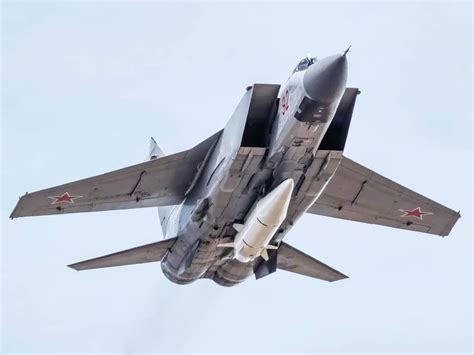
Hypersonic missiles such as Kinzhal, Tsirkon, Avangard, and Oreshnik travel at speeds exceeding Mach 5 while maneuvering unpredictably. These characteristics were meant to render existing missile defenses obsolete. Golden Dome challenges that assumption by combining Arctic-based radars with space sensors capable of tracking such weapons earlier in flight.
Alexander Stepanov, a Russian defense analyst, has stated that Greenland-based deployments would allow the United States to monitor launches not only in the Western Hemisphere but across Russia’s northern territories. From Moscow’s perspective, this erodes the credibility of its second-strike capability, the cornerstone of nuclear deterrence.
Russian officials have also warned that additional installations, including upgraded AN/TPY-2 radars and potential naval infrastructure for U.S. submarines, would tilt the Arctic balance decisively in America’s favor. The fear is not immediate vulnerability, but long-term strategic suffocation.
Strategic Stability and the Fear of Space Militarization
Beyond geography, Russia’s deeper anxiety lies in space. Golden Dome is widely interpreted as a step toward space-based interceptors, a concept that has haunted arms control debates for decades. Moscow argues that such systems undermine the logic of mutual vulnerability that has prevented nuclear war since 1945.
Senior Russian diplomats have described orbital sensors and interceptors as “extremely destabilizing,” warning that they blur the line between defense and offense. If one side believes it can intercept retaliation, the incentive to strike first increases, even if that belief is flawed.
Former space agency chief Dmitry Rogozin has gone further, calling Greenland the ideal geographic platform for dismantling global strategic stability. In his view, Arctic positioning combined with orbital assets represents a systemic threat, not a regional one. The language is dramatic, but the concern is deeply rooted in Cold War doctrine.
China’s Calculated Concern and Arctic Ambitions
China’s response has been cooler in tone but no less consequential. Beijing officially frames Golden Dome as an “unconstrained” missile defense initiative that risks violating the Outer Space Treaty and accelerating an arms race in space. The emphasis is legal and diplomatic, but the underlying worry mirrors Russia’s.
China’s strategic arsenal is smaller than Russia’s, making it more sensitive to defenses that could blunt a limited retaliatory strike. Chinese analysts argue that Golden Dome reflects a shift away from traditional deterrence toward “left-of-launch” capabilities, designed to disrupt or neutralize attacks before they unfold.
This concern is amplified by China’s growing interest in the Arctic. By calling itself a “near-Arctic state,” Beijing signaled its intent to participate in Arctic governance, research, and eventually security. Enhanced U.S. defenses in Greenland complicate those ambitions, potentially locking China out of meaningful influence in the region.
The Arctic as a Future Flashpoint
What unites Russian and Chinese anxieties is the belief that Golden Dome changes the strategic equation. Even if imperfect, such a system could complicate their planning, forcing them to invest in new penetration aids, exotic delivery systems, or expanded arsenals. The result is not safety but competitive escalation.
Analysts in Moscow openly discuss countermeasures like the Poseidon nuclear torpedo and Burevestnik nuclear-powered cruise missile, weapons designed to bypass missile defenses entirely. Chinese strategists similarly debate diversification and expansion. In this sense, Golden Dome may achieve the opposite of its stated goal by stimulating the very threats it seeks to deter.
The Arctic, once governed by cooperation and scientific exchange, risks becoming a theater of silent militarization. Submarines, sensors, and satellites now matter more than icebreakers and research stations.
Why Greenland Matters More Than Ever
Greenland’s transformation from peripheral territory to strategic linchpin encapsulates the changing nature of power in the 21st century. Control is no longer measured solely by land or population but by position, sensors, and data dominance. Golden Dome crystallizes this shift with unsettling clarity.
For the United States, the project represents an attempt to stay ahead of technological and geopolitical rivals. For Russia and China, it signals a willingness to gamble with the fragile equilibrium that has restrained nuclear conflict for generations.
The anxiety surrounding Golden Dome is not hysteria. It is the rational fear of a world where defenses blur into offenses, and where the Arctic sky becomes crowded with watchers and interceptors. Greenland, silent and immense, now stands at the center of that fear, its icy expanse reflecting the cold logic of modern deterrence.