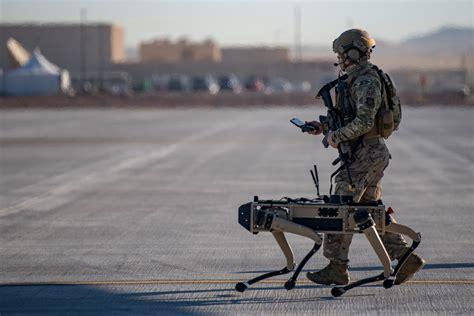
The integration of artificial intelligence into modern warfare has long been predicted, debated, and dramatized in science fiction. Yet few imagined that the transition from theoretical possibility to battlefield reality would happen so quickly—or so dramatically. In early 2026, the United States launched a massive wave of airstrikes against Iran, hitting more than 1,000 targets within the first 24 hours, a campaign made possible in part by AI-powered targeting and decision-support systems.
This moment is increasingly being described by analysts and military observers as AI’s “deadly debut” in high-intensity interstate warfare. The speed and scale of the strikes shocked military experts worldwide, demonstrating how machine-assisted targeting could dramatically accelerate the tempo of war.
But alongside the technological triumph came disturbing questions about accountability, civilian safety, and the ethical limits of algorithmic warfare. When reports emerged that one of the strikes destroyed an Iranian elementary school—killing more than 150 children—the debate surrounding the role of artificial intelligence in military decision-making intensified overnight.
As governments, tech companies, and defense planners grapple with this new reality, the Iran war may mark the beginning of an era in which algorithms increasingly shape life-and-death decisions on the battlefield.
The AI Systems Behind the U.S. Strike Campaign
The unprecedented speed of the U.S. military operation relied heavily on advanced AI-assisted targeting tools developed by both defense contractors and leading technology firms. Among the most notable systems reportedly involved were Anthropic’s Claude AI model and Palantir’s Maven platform, which together formed a powerful digital backbone for intelligence analysis and strike coordination.
Rather than acting as fully autonomous weapons, these systems functioned as decision-support engines, processing vast streams of intelligence data—from satellite imagery and drone feeds to intercepted communications and historical military databases.
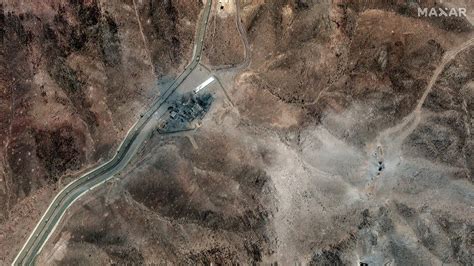
This capability allowed the U.S. military to identify, classify, and prioritize targets at unprecedented speed. AI algorithms could analyze thousands of potential targets simultaneously, rank them according to military significance, and deliver recommendations to commanders in real time.
Such technological acceleration fundamentally alters the dynamics of warfare. Traditionally, the process of verifying and approving targets could take hours or even days. AI-assisted systems can compress that timeline into minutes or seconds, enabling strike campaigns of extraordinary scale.
In the Iran operation, that compression of decision time translated directly into battlefield output. Within the first 24 hours of hostilities, U.S. forces launched hundreds of sorties and missile strikes, hitting command centers, radar installations, missile batteries, and military infrastructure across the country.
Yet the same speed that enabled operational success also exposed the fragility of machine-assisted intelligence analysis.
The Tragic Strike That Sparked Global Scrutiny
Amid the massive bombardment campaign, a devastating mistake brought the risks of AI-assisted warfare into sharp focus.
One of the airstrikes targeted a structure believed to be linked to Iranian military activity. Instead, the strike hit an elementary school building, killing more than 150 children.
The incident quickly triggered international outrage and prompted a Pentagon investigation into how the targeting decision was made.
According to preliminary findings reported by the New York Times, the attack may have been caused by outdated targeting data, raising questions about whether the AI systems involved relied on flawed intelligence inputs.
At the time of writing, investigators have not confirmed whether the AI model directly influenced the target selection. However, the incident has intensified concerns that automated systems may amplify existing intelligence errors rather than prevent them.
In modern warfare, mistakes are tragically common. But when machine systems accelerate decision cycles and process vast amounts of imperfect data, small errors can scale into catastrophic outcomes.
The Iran strike illustrates a core dilemma: AI can increase the efficiency of war, but efficiency does not guarantee accuracy or morality.
Anthropic CEO Warned of the Dangers Days Before the War
Two days before the U.S. launched its air campaign, Anthropic CEO Dario Amodei issued a striking public warning about the risks of using advanced AI systems in military operations.
In a detailed statement released on February 26, Amodei argued that current “frontier AI systems” are not reliable enough to control fully autonomous weapons.
His warning carried particular weight because Anthropic had already supplied its Claude AI model to U.S. national security agencies. The system was being used within classified networks for intelligence analysis, operational planning, and modeling simulations.

Despite this close relationship with government institutions, Amodei emphasized that certain military applications remained dangerously premature.
He stressed two areas where AI should not yet be trusted:
- Fully autonomous lethal weapons
- Mass domestic surveillance systems
According to Amodei, AI models still struggle with contextual judgment, particularly in situations involving civilian risk, ambiguous intelligence signals, or complex battlefield environments.
Human soldiers rely on experience, intuition, and ethical training when making split-second decisions. AI systems, by contrast, operate primarily through pattern recognition and statistical prediction—a powerful but fundamentally limited form of reasoning.
Without strict safeguards and human oversight, Amodei warned, such systems could produce unpredictable and potentially catastrophic outcomes.
The Pentagon’s Controversial Response
Instead of embracing Anthropic’s caution, the U.S. Department of War reportedly took a dramatically different stance.
Officials labeled the company a “supply chain risk,” a designation typically reserved for adversarial entities or foreign technology suppliers. It was the first time an American AI company had received such a classification.
The Pentagon subsequently shifted toward alternative AI providers, including systems linked to OpenAI and Elon Musk’s Grok platform.
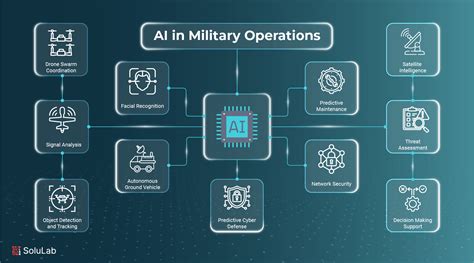
The decision highlights the growing strategic importance of artificial intelligence in defense planning. Military planners increasingly view AI as a critical capability for maintaining technological superiority over geopolitical rivals.
In an era of rapidly evolving threats—hypersonic missiles, cyber warfare, and autonomous drones—defense agencies believe AI offers a decisive advantage in data processing, situational awareness, and operational speed.
Yet critics argue that this technological race could outpace ethical oversight and legal regulation, creating dangerous precedents for algorithmic warfare.
Lawmakers Demand Oversight and Transparency
Concerns about AI’s role in the Iran conflict have sparked calls for greater transparency and stricter safeguards within the U.S. government.
Several members of the House Armed Services Committee have demanded an independent review of the military’s use of AI targeting tools.
Representative Jill Tokuda of Hawaii emphasized that human judgment must remain central to battlefield decision-making, particularly when civilian lives are at stake.
Similarly, Representative Sara Jacobs of California warned that operators often develop overconfidence in automated systems, a psychological phenomenon known as automation bias.
Automation bias occurs when humans place excessive trust in algorithmic recommendations, even when contradictory evidence exists. In high-pressure environments like military operations, this bias can lead commanders to accept AI-generated conclusions without sufficient scrutiny.
The challenge, lawmakers argue, is not simply technological—it is institutional. Military structures must ensure that human oversight remains meaningful rather than symbolic.
China’s Stark Warning: A Terminator-Like Future
As the debate unfolded in Washington, China issued a dramatic warning about the global implications of AI-driven warfare.
A spokesperson for China’s defense ministry argued that unrestricted military use of artificial intelligence could lead humanity toward a “Terminator-like dystopia.”
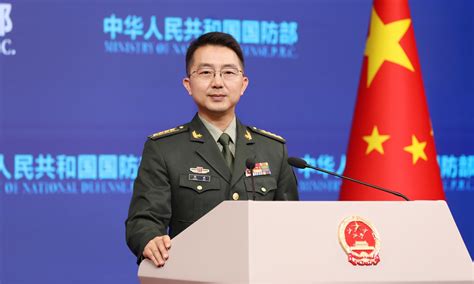
The statement referenced a world in which algorithms determine life-and-death decisions, eroding traditional ethical restraints in armed conflict.
China warned that excessive reliance on AI could trigger technological runaway, where automated systems escalate conflicts faster than human leaders can control them.
While the rhetoric carried geopolitical overtones, the underlying concern reflects a broader international debate: how much authority should machines have in warfare?
The Iran conflict may represent the first large-scale test of that question.
AI Decision-Support Systems: The Current Battlefield Reality
Despite sensational headlines about autonomous killer robots, most military AI today operates as decision-support technology rather than independent weapons.
Systems like Claude, Palantir Maven, and Israel’s Lavender and Gospel platforms analyze data, suggest targets, and assist planners—but human commanders still authorize strikes.
Yet the distinction between assistance and autonomy can blur over time.
As AI systems become faster, more accurate, and more deeply integrated into command structures, human oversight risks becoming procedural rather than substantive.
When machines process intelligence faster than humans can evaluate it, decision-makers may increasingly rubber-stamp algorithmic recommendations.
This gradual shift could transform warfare in subtle but profound ways.
Historical Lessons: Intelligence Errors in War
Military history provides sobering examples of how flawed intelligence can produce devastating consequences—even without AI involvement.
In 1999, U.S. stealth bombers accidentally struck the Chinese embassy in Belgrade during NATO’s campaign in Yugoslavia. The attack resulted from outdated maps and flawed intelligence analysis.
During the wars in Afghanistan and Iraq, numerous civilian casualties occurred when military planners misidentified hospitals, wedding celebrations, or residential buildings as hostile targets.
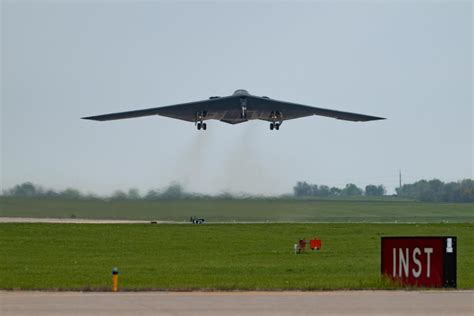
These tragedies illustrate an uncomfortable truth: war has always been vulnerable to human error, institutional bias, and incomplete information.
Artificial intelligence does not eliminate those weaknesses. Instead, it may scale them dramatically, turning isolated mistakes into widespread operational failures.
When AI enables a military to strike 1,000 targets in a single day, the consequences of flawed intelligence can multiply at extraordinary speed.
The Future of Algorithmic Warfare
The emergence of AI-assisted warfare marks a turning point in military history.
Once governments integrate artificial intelligence into intelligence networks, targeting pipelines, and operational planning, reversing the process becomes nearly impossible. The technology offers too many strategic advantages.
The question facing policymakers is no longer whether AI will be used in war. That debate has effectively ended.
The real challenge lies in defining how much control humans will retain over machines designed to optimize destruction.
Without clear legal frameworks, ethical standards, and international agreements, the risk is that algorithmic warfare will evolve faster than humanity’s ability to govern it.
The Iran conflict may ultimately be remembered not just as a geopolitical confrontation, but as the moment when artificial intelligence crossed a threshold—from experimental tool to central actor in modern war.
And once that threshold is crossed, history rarely moves backward.