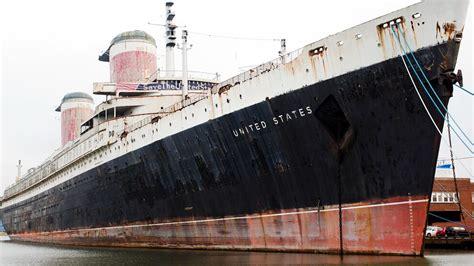
After decades of mystery and decay, the SS United States, once the crown jewel of Cold War-era maritime engineering, is preparing for its final voyage — straight to the bottom of the Gulf of Mexico. But this isn’t a tragedy. It’s a rebirth. Soon, the ship will become the largest artificial reef on the planet, marking a stunning transformation from a symbol of American prowess to a sanctuary for marine life.
From Symbol of Power to Symbol of Rebirth
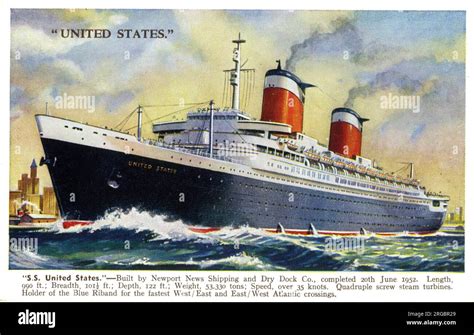
Built in 1952 at the height of Cold War tensions, the SS United States was a floating marvel. At over 990 feet long and weighing nearly 53,000 tons, she wasn’t just the fastest passenger ship ever built — she was a national icon. Her maiden voyage shattered transatlantic speed records, making her a potent demonstration of American industrial might. But by the late 1960s, she had fallen into disuse, her engines silenced and her future uncertain.
Over the years, the ship bounced between owners, languishing in legal and logistical limbo. Preservation efforts made headlines, but real progress remained elusive. That changed in 2024 when Okaloosa County, Florida, acquired the vessel with an audacious plan: send her to the seafloor, not in disgrace, but as the world’s most ambitious artificial reef.
A Precision Sinking Unlike Any Other
Sinking a vessel of this magnitude is no simple feat. It’s not about blasting holes and watching it drop. Instead, the process demands surgical-level precision and months of preparation. Environmental compliance, structural stability, and ecological foresight must align perfectly.
To begin with, contractors are carefully modifying the hull, strategically drilling to ensure the vessel lands upright and settles securely into the seabed, approximately 20 miles south of Destin, Florida. This orientation is crucial — it not only optimizes marine habitability but also enhances diver accessibility and underwater visibility.
All environmentally hazardous materials are being meticulously removed. Fuel residues, lubricants, asbestos, electrical components, and plastics are being stripped out to avoid contaminating the ecosystem. This level of diligence ensures the ship’s transformation into a reef doesn’t come at the ocean’s expense.
A Second Life Beneath the Waves
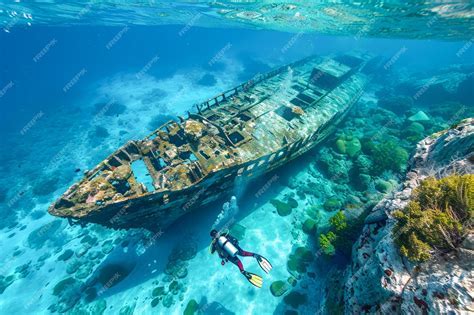
Once submerged, the SS United States will become a magnet for biodiversity. Coral, sponges, barnacles, and other encrusting organisms will colonize her steel surfaces, slowly giving her a living, breathing skin. Schools of fish — snapper, grouper, amberjack — will swarm through her halls. Sea turtles may rest on her decks, while eels and octopuses take refuge in her cabins.
This isn’t a hypothetical — artificial reefs have repeatedly proven their value in revitalizing overfished or degraded marine habitats. The USS Oriskany, sunk in 2006 off Pensacola, Florida, is one such success story. But the SS United States will dwarf all existing reef ships, both in size and legacy.
Beyond biology, this site is expected to become a premier diving destination, drawing eco-tourists and marine researchers from around the globe. With visibility in Gulf waters often exceeding 100 feet, the ship’s massive structure will be both an educational site and a visual spectacle.
Preserving History While Making It
Despite her watery fate, key sections of the SS United States will survive above ground. Her iconic red, white, and blue smokestacks, symbolic of her American heritage, are being preserved for future exhibition in a planned SS United States Museum and Visitor’s Experience. Here, visitors will learn about her storied past, from luxury liner to Cold War vessel, and her final transformation into a marine sanctuary.
This dual legacy — physical preservation and ecological repurposing — ensures the ship’s story won’t end when she sinks. Instead, she’ll live on in both human memory and oceanic biodiversity.
A Global Audience for a Historic Moment
Thanks to modern technology, the world won’t have to imagine this transformation — it can be witnessed live. Okaloosa County is collaborating with two specialized firms to create a comprehensive multi-angle record of the sinking. This will include:
- Onboard drone footage capturing the ship’s descent
- Aerial views showing the deployment zone and surrounding sea
- Underwater camera feeds following the ship as it settles into its final resting place
- A full-length professional documentary chronicling the history and engineering of the operation
Though the exact date has yet to be released, officials promise a live stream broadcast will be available to the public. Safety and operational logistics prevent early disclosure, but anticipation is building as 2025 approaches.
Cold War Legacy Meets Climate-Era Innovation
There’s poetic resonance in this ship’s fate. Born in the geopolitical rivalry of the Cold War, the SS United States was designed to transport troops and civilians alike in wartime. Her construction was a bold geopolitical statement — a weapon of prestige cloaked as a luxury liner.
Now, in an era defined by ecological urgency and the need for sustainable solutions, her purpose has changed. No longer a tool of deterrence, she becomes a beacon of conservation. Where once she symbolized division and defense, she will now stand for renewal and cooperation with nature.
The reefing also intersects with climate resilience strategies. Artificial reefs not only bolster fish populations but also help dissipate wave energy, protecting coastal communities from storm surges. As hurricanes intensify in the Gulf, such installations could serve as crucial buffers.
A Final Journey Worth Watching
Few ships receive a send-off like this. The SS United States, once capable of outrunning any enemy submarine and symbolizing America’s global reach, will now anchor a thriving ecosystem in the Gulf of Mexico. Her transformation is a metaphor for change — from manmade dominance to harmonious coexistence.
Her story doesn’t end when she disappears beneath the waves. It only begins anew, in the deep.