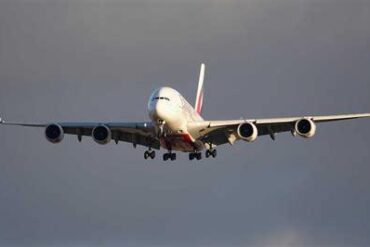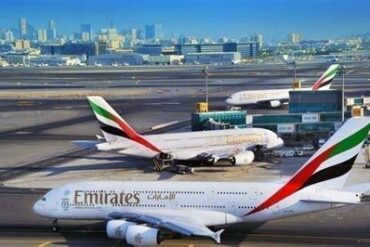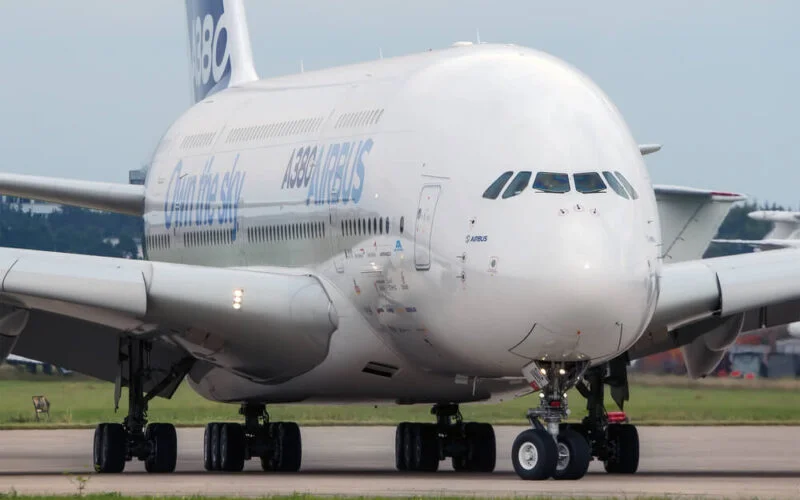
The Airbus A380 once symbolized a golden era of long-haul aviation to the United States, an era defined by scale, spectacle, and global ambition. Its unmistakable double-deck silhouette became a common sight at major American gateways, carrying millions of passengers across oceans in a flying monument to excess capacity and premium comfort. Today, that presence has dramatically thinned. What remains is not just a shift in aircraft deployment, but a fundamental transformation in how airlines view the US long-haul market.
For more than a decade, the superjumbo was a strategic weapon for airlines seeking dominance on high-density routes linking global hubs to New York, Los Angeles, San Francisco, and beyond. The aircraft promised unbeatable seat counts, lavish premium cabins, and unrivaled brand prestige. Yet the very characteristics that once made the A380 irresistible now work against it in a post-pandemic aviation economy shaped by flexibility, efficiency, and risk management.
The disappearance of the Airbus A380 from US skies did not happen overnight. It was accelerated by the COVID-19 pandemic, but its roots stretch back years, buried in rising fuel prices, evolving passenger demand, and a growing preference for smaller, more adaptable widebody jets. As a result, seven airlines that once operated thousands of A380 flights to the United States have now stepped away, leaving behind a legacy of ambition and a cautionary tale about scale.
The A380’s American Moment and Its Strategic Appeal
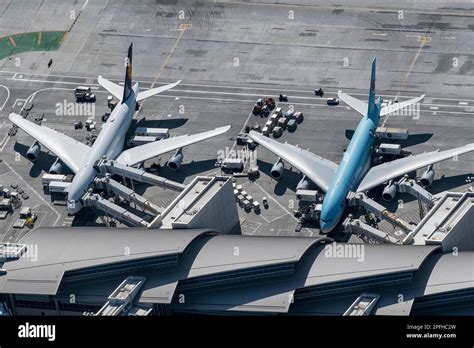
At its peak, the Airbus A380 was tailor-made for the United States market. Major US airports offered the runway length, gate infrastructure, and passenger volumes needed to justify a 500-plus-seat aircraft. For airlines like Air France, Singapore Airlines, and Etihad Airways, the superjumbo enabled them to consolidate demand onto fewer frequencies while offering unmatched onboard experiences.
The aircraft’s economics initially made sense on routes where slots were scarce and demand was relentless. A single A380 could replace multiple smaller aircraft, reduce congestion, and elevate an airline’s brand image overnight. For passengers, the appeal was immediate: quieter cabins, wider aisles, onboard lounges, and a sense of occasion that no other aircraft could replicate.
Yet this model depended on consistently high load factors and premium-heavy demand. When either faltered, the A380’s cost structure became unforgiving.
Air France and the Rise and Fall of Transatlantic Scale
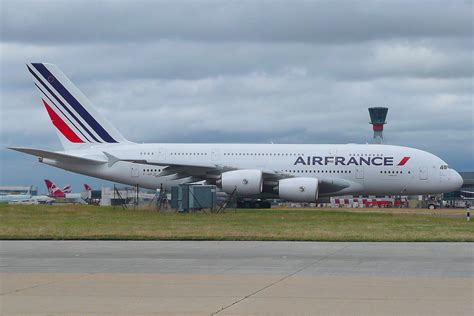
No airline embraced the A380 in the United States more fully than Air France. Between 2009 and 2020, the French flag carrier operated ten superjumbos across a dense network linking Paris Charles de Gaulle with Atlanta, New York JFK, Los Angeles, San Francisco, Miami, and Washington Dulles. In total, the airline logged 10,878 one-way A380 flights to the US, more than any other carrier in history.
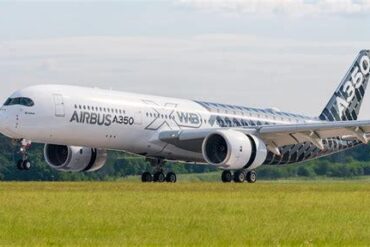
These flights were designed around volume and consistency, feeding Air France’s transatlantic joint ventures and hub connectivity. However, when the pandemic hit, the airline faced a brutal reality. Filling an A380 suddenly became not just difficult, but financially irrational. Accelerated retirement followed, and today those same routes are served by Airbus A350s and Boeing 777s, aircraft that deliver similar range with far lower risk.
Singapore Airlines, China Southern, and the Limits of Ultra-Long Haul
Singapore Airlines turned the A380 into a global icon, including on US-bound services. Its famed Singapore–Frankfurt–New York route became one of the most recognizable superjumbo operations in the world, while other services connected Asia to Los Angeles and San Francisco via intermediate hubs. In total, the airline operated 5,342 one-way A380 flights to the United States, blending prestige with operational complexity.
China Southern followed a more focused approach, deploying the A380 exclusively between Guangzhou and Los Angeles. Despite completing 2,827 one-way US flights, the airline ultimately cited high fuel costs and limited flexibility as decisive factors in retiring the type. The aircraft simply could not adapt to fluctuating demand without eroding margins.
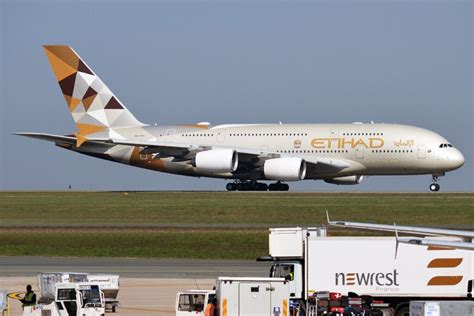
Etihad Airways represented a different case entirely. Its Abu Dhabi–New York JFK A380 service stood out not only for scale, but for its onboard luxury and unique US pre-clearance facility. After 2,413 one-way flights, even this flagship route succumbed to changing economics, marking the end of Etihad’s A380 presence in the United States.
One-Offs, Experiments, and the End of the Superjumbo Dream
Beyond the major operators, several airlines flirted briefly with the idea of A380 service to the United States. Qatar Airways operated a single celebratory A380 flight to Atlanta, never to repeat the experiment. Norwegian Air Shuttle, facing rapid expansion pressures, chartered Hi Fly A380s for a mere dozen transatlantic flights before abandoning long-haul operations entirely.
Even Global Airlines, with ambitious plans to revive A380 services from the UK to New York, managed only two US flights in 2025, both operated with external crews. These fleeting appearances underscored a harsh truth: the A380 had become an aircraft better admired than deployed.
Why the United States No Longer Needs the A380
The retreat of the Airbus A380 from US routes reflects a broader shift in airline strategy. Modern long-haul networks favor frequency over size, allowing carriers to fine-tune capacity and respond quickly to market changes. Aircraft like the A350 and Boeing 787 offer long range, strong cargo capability, and significantly lower operating costs, all while fitting seamlessly into existing airport infrastructure.
Passenger behavior has also evolved. Travelers increasingly value schedule choice and nonstop convenience over aircraft novelty. For airlines, that means deploying multiple daily flights with smaller widebodies rather than betting everything on a single massive departure.
The Legacy of the Double-Decker in American Skies
The Airbus A380’s disappearance from the United States is not a failure of engineering, but a reflection of shifting priorities. For years, it delivered unforgettable journeys and reshaped expectations of what long-haul travel could be. Its decline marks the end of an era defined by maximum capacity and maximum ambition.
What remains is a powerful legacy etched into the history of transatlantic and transpacific travel. The A380 proved that airlines could dream big, even if the future ultimately demanded something leaner. In the United States, the double-decker may be fading, but its impact on aviation will remain towering for decades to come.