The aviation industry rarely sees an aircraft order linger for nearly two decades without a single delivery. Yet that is exactly what happened with United Airlines and the Airbus A350, a relationship that once promised to redefine the airline’s long-haul network but ultimately unraveled into legal disputes, shifting strategy, and a decisive pivot toward Boeing.
For years, the Airbus A350-900 sat in United’s fleet plans as a future flagship aircraft. The order expanded, delivery timelines moved further into the future, and industry observers expected the first jet to eventually roll into United’s colors. Instead, the aircraft quietly disappeared from the airline’s delivery schedule.
This was not a sudden decision driven by a single event. It was the result of evolving economics, operational strategy, and a complicated dispute involving Rolls-Royce Trent XWB engines. The story illustrates how airline fleet planning is less about technological capability and more about long-term operational efficiency.
By 2026, the A350 had transformed from a promising asset into an expensive complication for United Airlines.
A Promising Beginning: United’s 2009 Airbus A350 Order
The relationship between United Airlines and the Airbus A350 began during a turbulent period for global aviation. In December 2009, the airline announced an order for 25 Airbus A350-900 aircraft, positioning them as replacements for its aging fleet of Boeing 747-400s and early Boeing 777 models.
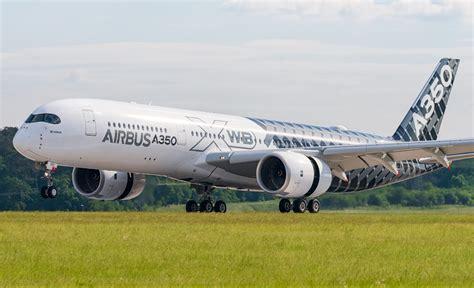
At the time, the A350 represented the next generation of long-haul aircraft. Built primarily from advanced carbon-fiber composites, the aircraft promised lower fuel consumption, reduced maintenance costs, and improved passenger comfort.
The timing also mattered. The global financial crisis of 2008 had forced airlines to rethink efficiency. Fuel costs remained volatile, and airlines needed aircraft capable of flying long distances with significantly lower operating costs.
Airbus marketed the A350-900 as the perfect answer. The aircraft offered a range exceeding 8,000 nautical miles, allowing airlines to connect distant city pairs without payload restrictions. Routes such as San Francisco to Hong Kong or Newark to Singapore suddenly became far more economical. For United, which was aggressively expanding international service, the aircraft looked like the ideal long-haul platform.
In the early years after the order, optimism was high. The A350 was expected to become a core part of United’s intercontinental strategy, delivering both operational efficiency and a superior passenger experience. However, the aviation world rarely stands still.
The Strategic Hedge Between Airbus And Boeing
The A350 order was never simply about acquiring a new airplane. It was also about negotiation leverage. Airlines often place orders with multiple manufacturers to create competition between them. In 2009, United adopted exactly that strategy by committing to both Airbus A350s and Boeing 787 Dreamliners.
At the time, the Boeing 787 program was facing major delays. Production setbacks and technical challenges had pushed back deliveries for years. The A350 order gave United a contingency plan in case Boeing failed to deliver on time.
From a negotiation standpoint, this move also strengthened United’s position when negotiating pricing and delivery terms with Boeing. If Boeing wanted to retain United as a major customer, it had to offer competitive deals. Over the next decade, that strategy paid off.
United secured substantial discounts on Boeing aircraft, particularly the 787 Dreamliner and the 737 MAX. Meanwhile, the A350 remained on the books as a future option rather than an immediate operational necessity. But hedging strategies eventually reach a point where decisions must be made.
Seventeen Years Of Delays And Changing Plans
Fleet planning works best when there is clarity. Airlines need to know which aircraft types will dominate their operations for decades. United’s A350 order lacked that clarity. Over the years, the order evolved several times. The airline expanded its commitment, eventually reaching 45 Airbus A350-900 aircraft. Delivery schedules shifted repeatedly, pushing the timeline further into the future.
Meanwhile, the aircraft that the A350 was originally meant to replace began disappearing from United’s fleet. The Boeing 747-400, once the airline’s flagship, was retired in 2017. Newer Boeing 777 and 787 aircraft gradually filled the gap. By the time the A350 was expected to arrive, United had already solved the problem the aircraft was intended to address.
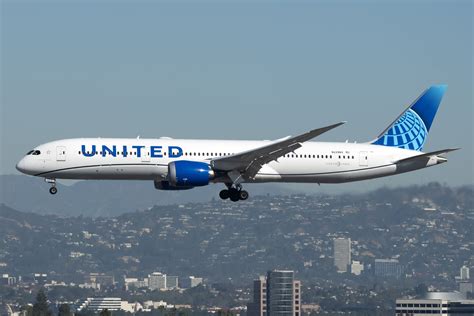
The Dreamliner family had proven itself capable of operating both high-density and ultra-long-haul routes with remarkable efficiency. Instead of needing a new aircraft type, United found itself increasingly comfortable with the one it already had. The A350 began to look less like a necessity and more like an operational complication.
A Fleet Strategy Built Around Simplicity
Airlines operate enormous, complex fleets that require constant maintenance, training, and logistical coordination. Each additional aircraft type multiplies that complexity. For United Airlines CEO Scott Kirby, the solution was straightforward: simplify. The airline’s modern strategy emphasizes fleet commonality, meaning fewer aircraft types and more shared components, training programs, and maintenance procedures. Introducing the Airbus A350 would have disrupted that philosophy. Unlike the Boeing 787, which shares operational similarities with the Boeing 777, the A350 would require entirely new infrastructure. Pilots would need separate type ratings. Maintenance crews would require specialized training. Spare parts inventories would expand significantly. Even ground handling procedures would need adjustment. For a single sub-fleet of 45 aircraft, those additional complexities could generate millions of dollars in long-term costs.
The Rolls-Royce Engine Dispute
While strategic considerations were already pushing United away from the A350, a major technical and financial conflict accelerated the process. The Airbus A350 uses only one engine option: the Rolls-Royce Trent XWB. This single-supplier arrangement differs from aircraft like the Boeing 787, which allows airlines to choose between engines produced by General Electric and Rolls-Royce.
United historically preferred flexibility in engine suppliers. It operates numerous aircraft powered by General Electric engines, including the GEnx on its Dreamliners. In 2017, United paid $175 million to secure production slots and long-term maintenance terms for Trent XWB engines. However, the relationship deteriorated.
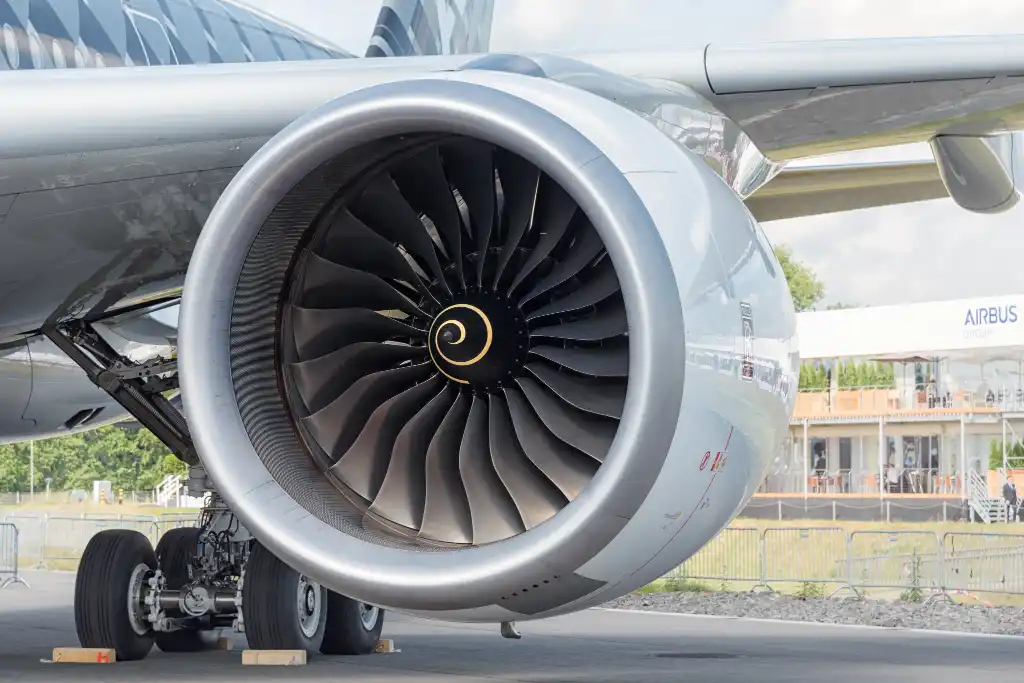
According to United’s February 2026 SEC filing, the airline demanded the return of that payment after alleging that Rolls-Royce had breached contractual obligations in late 2025. Rolls-Royce disputed the claim, arguing that United itself had violated the agreement. The disagreement escalated into a legal dispute that effectively froze the A350 program for United. Without a workable engine agreement, taking delivery of the aircraft would become financially risky.
Why The Boeing 787 Became The Better Option
By the mid-2020s, the Boeing 787 Dreamliner family had matured into one of the most versatile widebody aircraft platforms ever built. United already operated large fleets of 787-8, 787-9, and 787-10 models, making it one of the world’s largest Dreamliner operators. The aircraft offered impressive range, strong cargo capacity, and efficient fuel consumption. When Boeing introduced an upgraded higher-maximum-takeoff-weight (MTOW) version of the 787-10, the performance gap between the Dreamliner and the A350 narrowed significantly.
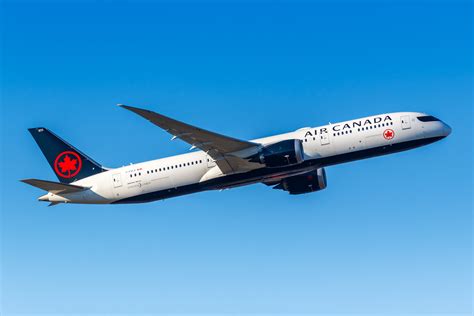
The upgraded 787-10 gained roughly 400 nautical miles of additional range, allowing it to serve long transoceanic routes that previously favored the A350.
In addition, the aircraft delivered strong economic advantages:
- Lower trip cost on medium-long routes
- Greater cargo container capacity
- Shared pilot training with other 787 variants
For routes under roughly 12 hours, the Dreamliner often achieved 5–8% lower operating costs than the A350. Those savings add up quickly when multiplied across hundreds of flights per year.
Cargo And Operational Advantages
Passenger comfort may dominate airline marketing, but cargo revenue plays a major role in airline profitability. United’s 787-10 offers space for approximately 40 LD3 cargo containers, compared to 36 containers on the A350-900. That difference may appear minor, yet cargo capacity matters enormously on transpacific routes, where airlines often transport high-value goods such as electronics, pharmaceuticals, and industrial components. More cargo space means more revenue per flight. Combined with lower operating costs, the Dreamliner’s performance made the A350 less compelling for United’s route network.
The Shift Toward A Boeing Widebody Fleet
United’s long-term plan now revolves around a streamlined widebody fleet consisting primarily of Boeing 787s and Boeing 777s. This approach delivers several operational advantages. Pilot training becomes simpler. Maintenance procedures become standardized. Spare parts inventories shrink. Most importantly, the airline gains flexibility. Pilots trained on the Dreamliner can move between 787-8, 787-9, and 787-10 aircraft, allowing United to adjust capacity quickly based on route demand. Introducing the A350 would have created a separate operational ecosystem. For a company operating hundreds of widebody flights each day, that complexity simply was not worth the cost.
Airbus Still Plays A Role In United’s Future
Despite abandoning the A350 program, United has not abandoned Airbus entirely. The airline remains deeply invested in Airbus narrowbody aircraft, particularly the A321neo and A321XLR. These aircraft are designed for long, thin routes that do not require a large widebody jet.
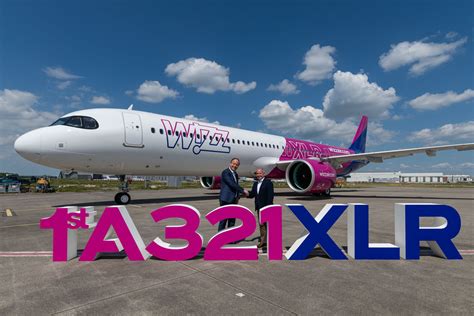
The A321XLR, scheduled to enter United’s fleet beginning in 2026, will replace the aging Boeing 757 on routes that connect smaller cities across the Atlantic. This strategy allows United to deploy aircraft more precisely. Instead of using a large widebody jet with hundreds of seats, the airline can operate a smaller aircraft with lower costs while still maintaining long-distance connectivity. In other words, Airbus still plays a crucial role—just not in the widebody segment.
A $15 Billion Decision
Walking away from the Airbus A350 was not a small decision. At list prices, the 45 aircraft originally planned for United represented a potential investment exceeding $15 billion. Of course, airlines rarely pay full list price, but the scale of the commitment remains enormous. Choosing to abandon that order signals a major shift in strategy. United concluded that operational flexibility, cost control, and fleet simplicity were more valuable than adding another advanced aircraft type. That conclusion reflects a broader trend across the airline industry. Airlines increasingly prioritize fleet commonality and operational efficiency over acquiring every new aircraft technology.
The Broader Industry Implications
United’s decision sends a powerful message to both aircraft manufacturers and engine suppliers. Airlines want flexibility. They want the ability to choose between engine providers. They want aircraft families that allow multiple variants with shared training and maintenance systems.
When those conditions are not met, even a technologically advanced aircraft like the A350 can struggle to secure long-term commitments. This dynamic highlights an important reality of aviation economics. The most successful aircraft are not always the most advanced—they are the ones that fit seamlessly into airline operations.
Conclusion: Strategy Over Technology
The Airbus A350 remains one of the most advanced commercial aircraft ever built. Its composite structure, ultra-long range, and passenger comfort make it a flagship for many airlines around the world. But technology alone does not determine success in fleet planning.
For United Airlines, the combination of Dreamliner performance, fleet commonality, cargo capacity, and operational flexibility ultimately outweighed the benefits of introducing the A350. Add in a costly dispute with Rolls-Royce, and the aircraft quickly shifted from strategic asset to strategic liability. In the end, United chose a path that prioritizes simplicity and scalability. By focusing its widebody operations on the Boeing 787 and Boeing 777, while expanding Airbus narrowbody operations with the A321XLR, the airline is building a fleet designed for efficiency rather than complexity.
The A350 may never wear United Airlines colors. Yet the story behind that absence reveals far more about the economics of modern aviation than the aircraft itself.