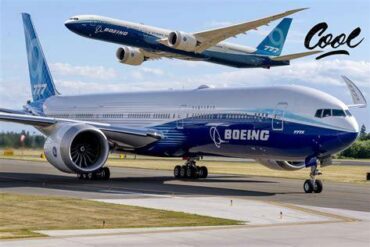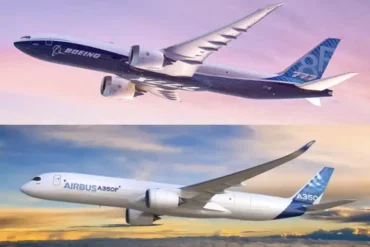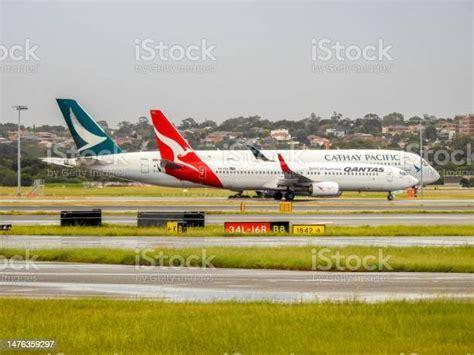
When former Qantas CEO Alan Joyce admitted he wished he had a “time machine” to reverse one of the airline’s biggest fleet decisions, the aviation world immediately knew what he meant. Qantas, despite helping shape the Boeing 777 during its development phase, never bought the aircraft. Not once. Even more remarkably, the Australian flag carrier later rejected the 777X as well.
For an airline built around ultra-long-haul flying, the absence of the Boeing 777 in Qantas’ fleet remains one of commercial aviation’s most fascinating what-ifs. The aircraft became one of Boeing’s greatest triumphs, redefining long-haul economics and gradually replacing four-engine giants across the globe. Yet Qantas chose another path — one centered on Airbus A330s, A380s, and specialized Boeing 747-400ERs.
Years later, Joyce openly questioned whether that strategy was the right one.
The irony is impossible to ignore. Qantas was among the select airlines Boeing consulted while designing the original 777. Alongside carriers including British Airways, United Airlines, American Airlines, Cathay Pacific, and Japan Airlines, Qantas helped provide operational insight into what airlines wanted from a next-generation widebody aircraft. Boeing listened carefully, creating a twin-engine jet capable of replacing aging trijets and eventually challenging even the mighty 747.
Yet when the time came to place a major fleet order in 2000, Qantas walked away.
Qantas’ Massive 2000 Fleet Gamble Changed Its Future
The decision at the center of the controversy came under then-CEO James Strong. In 2000, Qantas unveiled a transformative aircraft order that reshaped the airline for decades.
The carrier ordered:
- 7 Airbus A330-200s
- 6 Airbus A330-300s
- 12 Airbus A380-800s
- 6 Boeing 747-400ERs
At the time, the announcement stunned much of the industry. Qantas had historically been one of Boeing’s most loyal customers. Its long-haul operations revolved almost entirely around Boeing aircraft, especially the 747. Airbus, meanwhile, was still fighting to establish dominance in the premium long-haul market.
The order changed that relationship permanently.
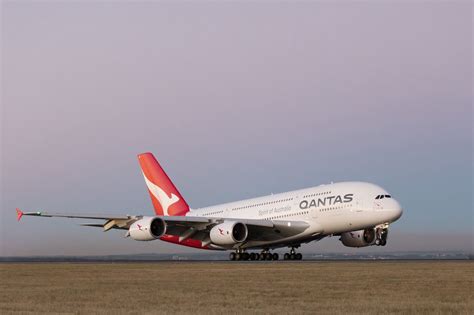
The A380 purchase was particularly symbolic. Qantas became one of the earliest major supporters of Airbus’ ambitious superjumbo project, then still called the A3XX. Boeing had proposed its own enlarged 747 derivatives, but airlines increasingly viewed Airbus’ clean-sheet design as the future of high-capacity international travel.
At the same time, the A330 family gave Qantas flexibility across regional Asia-Pacific routes while opening new opportunities for medium-haul expansion.
But hidden behind the excitement was the aircraft Qantas did not order: Boeing’s emerging second-generation 777 family.
That omission would later haunt the airline’s leadership.
Why Alan Joyce Later Regretted The Decision
By 2014, the Boeing 777-300ER had become one of the most successful widebody aircraft ever built. Airlines around the globe relied on it as the backbone of their long-haul fleets. Emirates, Cathay Pacific, Air France, ANA, Qatar Airways, Singapore Airlines, and countless others used the aircraft to replace older four-engine jets while dramatically improving fuel efficiency.
The aircraft delivered a combination airlines could not ignore:
- Near-747 passenger capacity
- Lower operating costs
- Exceptional reliability
- Long-range performance
- Twin-engine efficiency
Joyce later admitted he would have preferred “two dozen” 777s over the A380s and 747-400ERs Qantas purchased.
That statement reflected a broader shift in global aviation. During the early 2000s, airlines increasingly moved away from giant hub-focused aircraft toward flexible long-range twins capable of serving more destinations profitably.
The Boeing 777 became the perfect aircraft for that transformation.
Qantas eventually retired its 747 fleet entirely, while the A380 became a more complicated asset than many airlines originally expected. Rising fuel costs, changing passenger trends, and the expansion of ultra-efficient twinjets weakened the economic case for very large four-engine aircraft.
In hindsight, the 777 appeared almost perfectly designed for Qantas’ evolving network.
But hindsight rarely tells the entire story.
Why Qantas Initially Passed On The Boeing 777
At the time of the 2000 decision, the Boeing 777 did not yet carry the legendary reputation it enjoys today. The 777-300ER — the aircraft Joyce later admired so deeply — was still largely a promise on paper.
Boeing’s original 777 family consisted mainly of:
- The 777-200
- The 777-200ER
- The 777-300
These variants did not fully align with Qantas’ operational needs during the 1990s.
Qantas’ long-haul strategy revolved around dense trunk routes connecting Australia with London, Los Angeles, Hong Kong, and Singapore. The airline already operated large Boeing 747 fleets effectively on those sectors. Meanwhile, domestic growth requirements were being addressed with 737s and 767s.
The first-generation 777 simply did not offer enough strategic advantage to justify a major fleet transition.
Then came the second-generation 777 concept.
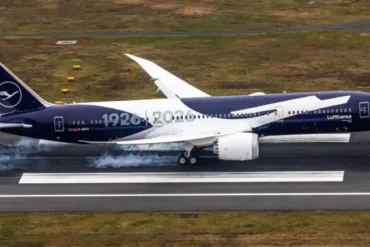
Boeing introduced plans for the ultra-long-range 777-200LR and the highly efficient 777-300ER. Today those aircraft are aviation icons, but in 2000 they were still developmental projects carrying uncertainty.
Qantas faced another important factor: Australia’s strict ETOPS regulatory environment.
ETOPS Rules Made Twinjets Less Attractive In Australia
One of the least discussed aspects of Qantas’ decision involves regulation rather than aircraft performance.
The Boeing 777 pioneered long-range twin-engine operations with ETOPS 180 certification. In the United States, regulators embraced the aircraft relatively quickly. Australia’s Civil Aviation Safety Authority, however, took a much more conservative approach.
Operating twin-engine aircraft across remote oceanic routes required extensive certification procedures, operational contingencies, maintenance requirements, and reliability documentation.
For Qantas, this created complications.
Australia’s geography presents airlines with uniquely isolated routes across enormous stretches of ocean. In 2000, relying heavily on twin-engine aircraft for ultra-long-haul operations still carried regulatory and operational challenges that four-engine aircraft largely avoided.
From a modern perspective, the concern seems outdated. Today, twinjets dominate intercontinental aviation. But two decades ago, airlines still debated whether large twins could fully replace aircraft like the 747 and A340 on the world’s longest sectors.
Qantas management therefore viewed the A380 and upgraded 747s as safer strategic choices for its flagship routes.
Airbus Offered Qantas A Deal Boeing Couldn’t Match
Pricing also played a decisive role.
Airbus aggressively pursued Qantas at a moment when the European manufacturer desperately wanted to break Boeing’s dominance within the airline’s fleet. Winning Qantas would provide both prestige and long-term strategic value.
Airbus reportedly offered highly competitive pricing on a combined package involving the A330 and A380 programs.
That mattered enormously.
The A330 family fit Qantas’ regional and medium-haul requirements effectively. The smaller A330-200 delivered strong range capability, while the A330-300 provided efficient capacity for Asian operations.
The aircraft ultimately proved commercially successful worldwide.
Aircraft order numbers eventually showed how strongly airlines embraced the A330 platform:
- Airbus A330-300: 776 orders
- Airbus A330-200: 667 orders
- Boeing 777-200ER: 422 orders
Those numbers reveal an important reality often overlooked in modern criticism of Qantas’ decision: airlines across the globe frequently chose the A330 over early 777 variants.
The A330 simply delivered lower operating costs on many routes that did not require the 777’s extraordinary range.
Qantas therefore was not making an irrational decision. It was making a commercially logical one based on the information available at the time.
The Boeing 747-400ER Became A Unique Qantas Solution
Another unusual aspect of the order involved the Boeing 747-400ER.
Qantas effectively became the launch customer for the passenger version of the aircraft. Only six were built for passenger operations, all for Qantas.
The aircraft addressed a specific operational challenge.
Some Qantas flights to the United States pushed the performance limits of existing 747-400 aircraft. Rather than introducing a completely new aircraft type immediately, Qantas wanted a solution that preserved fleet commonality while improving range and payload capability.
Boeing responded with the 747-400ER.
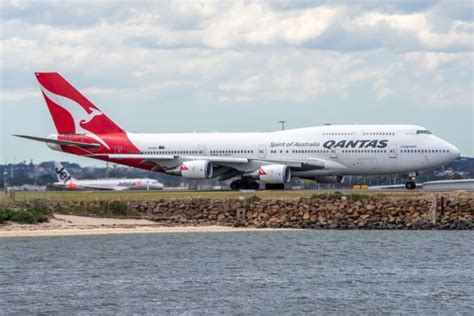
For a time, the aircraft served its purpose well. The enhanced 747 variant gave Qantas additional flexibility on demanding Pacific routes while avoiding the complexity of integrating a brand-new twin-engine fleet during a period of regulatory uncertainty.
In many ways, the 747-400ER represented Qantas doubling down on its traditional long-haul strategy before the industry pivoted toward large twinjets.
The Boeing 777 Became Better Than Boeing Originally Promised
Part of Qantas’ later regret stems from how spectacularly successful the 777-300ER eventually became.
The aircraft exceeded expectations in several critical areas.
Its General Electric GE90-115B engines delivered stronger-than-expected fuel burn performance. Reliability proved exceptional. Airlines discovered the aircraft could economically replace four-engine jets on routes previously considered impossible for twinjets.
The timing mattered.
Had Qantas known in 2000 exactly how dominant the 777-300ER would become, the airline might have made a different decision. But the aircraft’s future success was not guaranteed during the evaluation process.
Compounding matters for Airbus, the A340-600 — intended as the 777-300ER’s major rival — struggled with weight issues and engine reliability concerns. As airlines abandoned four-engine aircraft throughout the 2000s, the 777 surged ahead with overwhelming market momentum.
Ultimately, Boeing secured 833 orders for the 777-300ER alone.
That figure transformed the aircraft into one of the most commercially important jets ever produced.
Qantas Rejected The 777 Again During Project Sunrise
Even after years of industry debate over the original decision, Qantas still declined to buy the Boeing 777 when another historic opportunity emerged.
Project Sunrise aimed to create the world’s longest nonstop commercial flights, connecting Australia directly with New York and London.
The project demanded extraordinary aircraft performance. Boeing proposed the 777X, while Airbus developed a specialized ultra-long-range A350-1000 variant tailored specifically for Qantas.
In 2022, Qantas selected Airbus once again.
The airline ordered twelve A350-1000ULR aircraft for Project Sunrise, alongside additional standard A350-1000s.
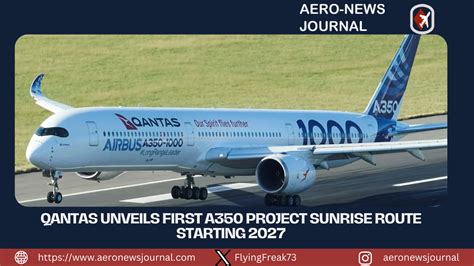
The decision reflected how deeply Airbus had embedded itself within Qantas’ modern fleet structure. Decades of A330 operations, ongoing A380 usage, and the introduction of the A321XLR strengthened Airbus’ position considerably.
Fleet commonality increasingly favored Airbus over Boeing.
Ironically, the very fleet decision Joyce later questioned may have helped lock Qantas into Airbus products for an entire generation afterward.
Why The “Mistake” Wasn’t Actually Simple
Looking back today, it is tempting to frame Qantas’ rejection of the Boeing 777 as a catastrophic strategic error. The aircraft became legendary. Competing airlines used it to dominate long-haul markets. Qantas itself later admired what the jet achieved.
But aviation decisions are rarely judged fairly through hindsight alone.
In 2000:
- The 777-300ER had not yet proven itself
- ETOPS rules remained more restrictive in Australia
- Airbus offered highly attractive pricing
- The A330 fit many operational requirements perfectly
- The A380 aligned with prevailing hub-and-spoke thinking
- The 747 still dominated premium long-haul travel
Under those conditions, Qantas’ decision looked rational.
What changed was the industry itself.
Twin-engine technology advanced faster than expected. Fuel economics became increasingly critical. Passenger demand shifted toward nonstop point-to-point routes rather than giant transfer hubs. The A380 market collapsed, while the 777 became indispensable.
Alan Joyce’s “time machine” comment captured the frustration of seeing how dramatically the market evolved after the decision was already irreversible.
Yet even today, the story remains more nuanced than simple regret. The Airbus aircraft Qantas chose helped shape the airline’s modern network, expanded its partnership with Airbus, and positioned the carrier for Project Sunrise.
The Boeing 777 may have become the aircraft Qantas never stopped thinking about, but the airline’s alternative path still defined one of the most significant fleet transformations in modern aviation history.