The next battle for dominance in the long-haul freighter market will not be decided only by aircraft size, payload numbers, or range capability. Behind the rivalry between the Boeing 777-8F and the Airbus A350F sits another critical factor that could shape airline decisions for decades: the engine. Because each aircraft is locked into a single powerplant option, cargo operators are not simply choosing between two aircraft platforms. They are also choosing between two engine philosophies, two maintenance strategies, and two different visions of future efficiency.
The Airbus A350F and Boeing 777-8F represent the next generation of widebody cargo aircraft. Both are designed to replace aging freighters and meet the increasing demand for global air freight capacity. However, their success may depend as much on the performance and reliability of their engines as on the aircraft themselves. For airlines planning fleets that will operate for 20 years or more, engine selection becomes a long-term financial commitment involving fuel efficiency, maintenance costs, spare parts availability, and operational reliability.
The Boeing 777-8F and Airbus A350F Face an Unusual Engine Battle
Most commercial aircraft families allow airlines to choose between multiple engine manufacturers. Historically, this flexibility has allowed carriers to select engines based on existing fleet experience, regional support networks, or maintenance agreements. However, the upcoming freighter competition between Boeing and Airbus is different.
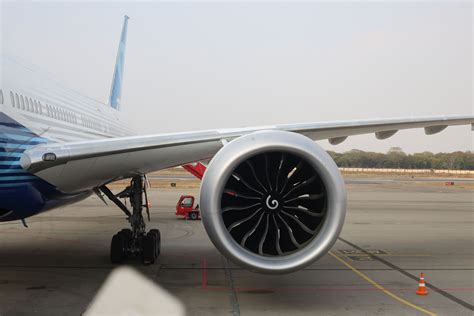
The Boeing 777-8F will exclusively use the General Electric GE9X engine, while the Airbus A350F will exclusively use the Rolls-Royce Trent XWB-97 engine. This means cargo operators cannot separate their aircraft decision from their engine decision. Purchasing either freighter also means committing to a specific propulsion technology.
For airlines, this creates a strategic calculation. The Trent XWB-97 has already accumulated operational experience on the Airbus A350-1000, giving Rolls-Royce a major advantage in terms of real-world data and proven reliability. The engine has powered long-range passenger operations worldwide and has become a core part of the A350 family’s success.
However, the GE9X represents the newest generation of large commercial aircraft engines. Although it has not yet entered airline service because the Boeing 777X program continues toward certification, the engine has completed extensive testing. It also provides unmatched thrust capability, giving Boeing an advantage in payload-focused operations.
The decision facing cargo airlines is therefore clear: choose the reliability and maturity of an engine already operating globally, or select a newer and more powerful engine designed for maximum capability.
GE9X vs Trent XWB-97: Power, Efficiency, and Operational Reality
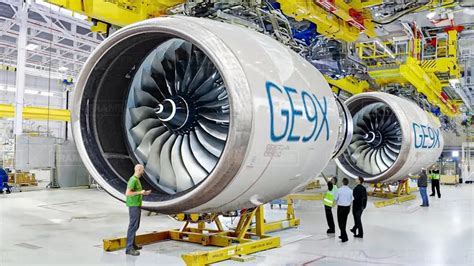
At a technical level, the two engines represent different approaches to modern aviation propulsion. The General Electric GE9X was developed specifically for the Boeing 777X family and is currently the most powerful commercial aircraft engine ever produced. The Rolls-Royce Trent XWB-97, meanwhile, was optimized for the Airbus A350-1000 and focuses on efficiency, durability, and operational consistency.
The key specifications highlight the difference between the two designs:
| Specification | Rolls-Royce Trent XWB-97 | General Electric GE9X |
|---|---|---|
| Maximum thrust | 97,000 lbf | 110,000 lbf |
| Bypass ratio | 9.3:1 | 10:1 |
| Fan diameter | 118 inches (3 meters) | 134 inches (3.4 meters) |
| Aircraft applications | Airbus A350-1000, Airbus A350F | Boeing 777-9, Boeing 777-8, Boeing 777-8F |
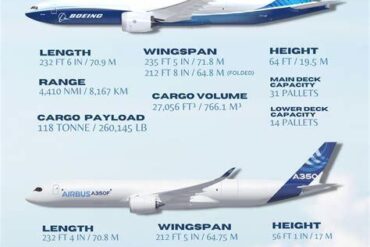
The GE9X clearly delivers greater raw power. Its massive fan diameter and higher thrust rating allow the Boeing 777-8F to carry a larger payload. The aircraft is expected to transport approximately 260,145 pounds (118,000 kilograms) of cargo, compared with around 244,700 pounds (111,000 kilograms) for the Airbus A350F.
For cargo operators, payload is one of the most important factors because every additional kilogram can translate into additional revenue. The ability to carry heavier loads on high-demand routes could make the 777-8F attractive for freight companies operating global networks.
However, power alone does not determine an engine’s success. Airlines also care about fuel consumption, maintenance requirements, and reliability. The Trent XWB-97 benefits from years of operational experience, while the GE9X still needs to prove itself in daily commercial service.
The competition is therefore not simply about which engine is stronger. It is about whether airlines value proven performance or future capability.
The Airbus A350F’s Engine Advantage: Proven Reliability and Existing Experience
One of the strongest arguments supporting the Airbus A350F is the maturity of the Trent XWB-97 engine. Since entering service with the A350-1000, the engine has become a critical component of long-range operations for airlines around the world.
Rolls-Royce promotes the Trent XWB family as one of its most reliable widebody engines, with strong dispatch reliability and long periods between major maintenance events. For airlines already operating A350 passenger fleets, the A350F offers an additional advantage: fleet commonality.
A cargo operator flying A350 passenger aircraft could potentially benefit from shared pilot knowledge, maintenance infrastructure, spare parts management, and engineering expertise. This reduces complexity and can improve overall fleet efficiency.
However, the Trent XWB-97 has faced some criticism in demanding environments. Operations in extremely hot and dry regions can place additional stress on engines, potentially increasing wear rates. For Middle Eastern cargo carriers or operators flying through harsh climates, engine durability under severe conditions will remain an important consideration.
The A350F’s engine strategy is therefore built around familiarity and efficiency. It may not offer the highest thrust, but it provides a known operating foundation.
Why The Boeing 777-8F’s GE9X Could Change Cargo Operations
The Boeing 777-8F enters the market with a major advantage: it builds on the legacy of the highly successful Boeing 777 freighter. Many cargo airlines already operate the Boeing 777F, making the transition to the 777-8F potentially easier.
The GE9X gives Boeing a powerful tool to attract these operators. The engine’s higher thrust allows the aircraft to offer greater payload capability while maintaining long-range performance. For freight carriers, especially those transporting heavy commodities, industrial equipment, or high-value goods, additional payload capacity can directly improve profitability.
The 777-8F is also part of the broader 777X family, which includes the passenger-focused 777-8 and 777-9 models. Although the program has experienced delays, the shared technology creates opportunities for future improvements and operational knowledge.
Boeing’s challenge is that the GE9X must prove its reliability in real airline service. Testing can demonstrate performance, but commercial aviation demands thousands of flight hours across different climates, airports, and operational conditions.
A powerful engine is valuable only if it can deliver consistent availability.
Maintenance Programs Could Decide Airline Confidence
For modern airlines, purchasing an aircraft is only the beginning of the financial commitment. Engine maintenance represents one of the largest ongoing costs throughout an aircraft’s operational life. This makes manufacturer-backed support programs extremely important.
General Electric offers its TrueChoice engine service programs, including flight-hour agreements designed to provide predictable costs. These programs allow airlines to transfer some maintenance risks to GE while receiving support for spare engines, replacement parts, scheduled maintenance, and unexpected engine removals.
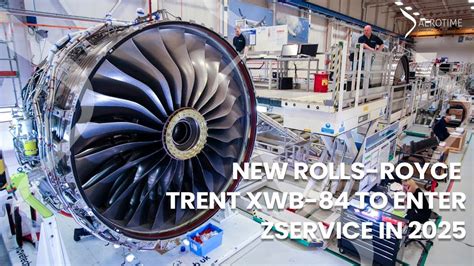
Rolls-Royce provides a similar approach through its TotalCare program. Under TotalCare, Rolls-Royce manages engine maintenance and focuses on maximizing time-on-wing performance. The company also handles predictive maintenance, spare parts planning, and overhaul requirements.
These programs have become increasingly important because airlines want cost certainty. A freighter sitting on the ground because of engine maintenance problems can quickly erase the financial benefits of a more efficient aircraft.
Supply Chain Problems Make Engine Support More Important Than Ever
The global aviation industry continues to face supply chain challenges. Aircraft manufacturers, engine companies, and maintenance providers have struggled with shortages of components, production delays, and limited repair capacity.
For aircraft with only one engine option, these challenges become even more significant. Airlines cannot simply switch to another engine supplier if spare parts become difficult to obtain or maintenance delays increase.
This reality makes manufacturer support agreements a major factor in fleet decisions. Airlines selecting either the Boeing 777-8F or Airbus A350F will need confidence that their engine supplier can provide reliable support throughout the aircraft’s lifetime.
The importance of the supply chain may also influence early customers. Operators with strong relationships with GE or Rolls-Royce could have advantages when securing maintenance capacity and spare parts.
Two Next-Generation Freighters Compete for the Future of Air Cargo
Beyond their engines, the Airbus A350F and Boeing 777-8F represent two different approaches to the future of cargo aviation.
The A350F is based on Airbus’s successful A350 platform and benefits from advanced composite materials, aerodynamic efficiency, and existing passenger aircraft technology. Airbus expects the aircraft to enter service in the second half of 2027.
The Boeing 777-8F follows the evolution of the 777 family, one of the most successful widebody aircraft platforms ever built. It offers greater payload capacity and continues the operational philosophy of the popular 777 freighter. Current expectations suggest entry into service could occur around 2028 or 2029.
Both aircraft have already attracted significant customer interest. Airbus has secured more than 100 A350F orders, while Boeing has also built a strong order pipeline for the 777-8F.
The final outcome may depend on how airlines evaluate the engine decision. The aircraft themselves are closely matched, but their engines represent two very different bets.
The Engine Choice May Define the Winner of the Freighter Market
The future competition between the Boeing 777-8F and Airbus A350F will not be decided only by cargo capacity, range, or aircraft technology. The real battle may happen inside the engine nacelle.
The Trent XWB-97 offers proven reliability, operational experience, and compatibility with the growing A350 ecosystem. The GE9X delivers unmatched power, higher payload potential, and the promise of next-generation performance.
For airlines, the decision comes down to priorities. Operators seeking a proven and efficient solution may prefer the Airbus approach, while carriers focused on maximum cargo capability may find the Boeing 777-8F more attractive.
In the end, the winner of the next-generation freighter market may not simply be the aircraft with the best specifications. It may be the aircraft whose engine delivers the strongest combination of reliability, efficiency, and long-term support.