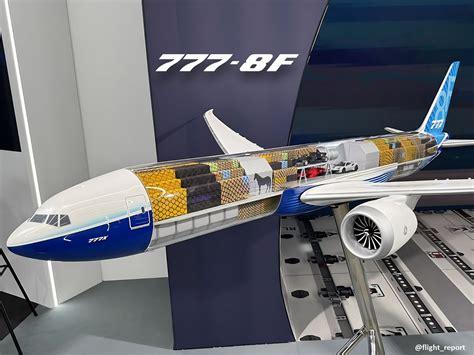
The global air cargo industry is entering one of its most transformative periods in decades. As aging four-engine freighters approach retirement and e-commerce continues to redefine logistics networks, airlines and cargo operators are searching for aircraft that can deliver the perfect balance of capacity, efficiency, and cost. Boeing’s upcoming 777-8 Freighter (777-8F) was designed to dominate this new era, promising unmatched payload capability and cutting-edge technology.
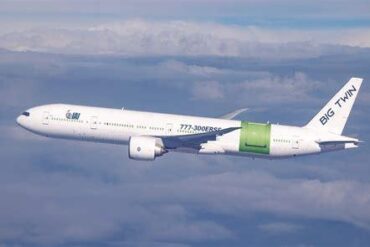
Yet a surprising competitor has emerged from the secondary aircraft market. The 777-300ERSF “Big Twin Freighter”, a passenger-to-freighter conversion developed by Israel Aerospace Industries (IAI) in partnership with leasing giant AerCap, may represent a formidable economic threat to Boeing’s flagship cargo aircraft. Instead of relying on an entirely new production jet, the Big Twin repurposes retired passenger aircraft and transforms them into high-capacity cargo workhorses.
For cargo operators focused on profitability rather than prestige, this converted aircraft may be the more practical choice. With greater cargo volume, dramatically lower acquisition costs, and proven reliability, the Big Twin could reshape fleet planning across the cargo industry—and potentially steal a significant portion of the market Boeing expects its newest freighter to capture.
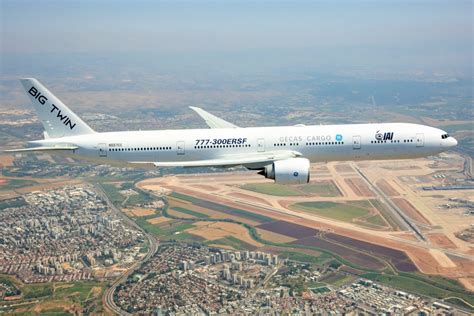
The Rise Of The Big Twin Freighter Concept
The Big Twin Freighter is built from the widely successful Boeing 777-300ER, a long-haul twin-engine passenger aircraft that dominated intercontinental travel for nearly two decades. Over 800 units of the aircraft were produced, making it one of the most common widebody jets in global fleets. As airlines begin replacing these aircraft with newer models such as the Boeing 777X, large numbers of well-maintained 777-300ER airframes are entering the secondary market.
Rather than allowing these aircraft to fade into retirement, Israel Aerospace Industries recognized an opportunity. Through an extensive passenger-to-freighter (P2F) conversion program, the company developed a system to transform these airliners into massive cargo aircraft optimized for modern logistics networks.
The concept is elegantly simple. Passenger interiors are removed, the fuselage is reinforced, and a large main deck cargo door is installed. The result is a freighter capable of carrying enormous volumes of goods while benefiting from the structural durability and aerodynamic efficiency that made the 777-300ER so successful.
What makes this transformation especially compelling is how quickly it can be completed. According to IAI, the conversion process can take as little as 130 days from the time the aircraft enters the facility to when it rolls out as a fully operational freighter. For cargo airlines facing immediate demand from booming e-commerce networks, that rapid turnaround is a major advantage.
Why Cargo Airlines Care About Volume More Than Weight
One of the most overlooked realities in air cargo economics is that volume often matters more than payload weight. While traditional freight shipments—such as industrial components or heavy machinery—push aircraft toward their weight limits, the explosive growth of e-commerce has fundamentally changed the equation.
Online retail shipments tend to consist of lightweight but bulky packages. These packages fill an aircraft’s cargo space long before they reach its maximum weight capacity. In industry terminology, this is known as “voluming out” rather than “grossing out.”
The Big Twin was almost accidentally designed for this reality. Because the 777-300ER passenger fuselage is longer than the 777-8F, the converted aircraft offers more interior cargo volume than Boeing’s next-generation freighter.
That additional space translates directly into greater efficiency for e-commerce cargo operators. The Big Twin allows airlines to transport more packages per flight without paying for the extra structural strength and payload capacity designed into the 777-8F.
In other words, the Big Twin is not necessarily stronger—but it is better optimized for the cargo that dominates modern air freight.
Big Twin Vs Boeing 777-8F: A Battle Of Design Philosophies
At first glance, the comparison between the IAI 777-300ERSF Big Twin and the Boeing 777-8 Freighter appears straightforward. The new Boeing aircraft clearly offers superior payload capability, thanks to its next-generation design and reinforced structure. However, a deeper look reveals a more nuanced story.
The Big Twin’s longer fuselage creates a unique advantage in terms of volumetric capacity.
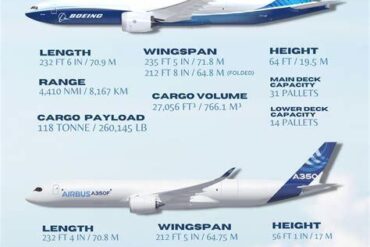
Key differences between the two aircraft include:
- Total cargo volume:
- Big Twin – 28,936 cubic feet
- 777-8F – 27,056 cubic feet
- Main deck pallet positions:
- Big Twin – 33 pallets
- 777-8F – 31 pallets
- Maximum payload:
- Big Twin – 222,000 pounds
- 777-8F – 260,145 pounds
- Fuselage length:
- Big Twin – 242 ft 4 in
- 777-8F – 232 ft 6 in
While the 777-8F can carry more weight, the Big Twin can carry more physical cargo volume. For high-density freight, Boeing’s aircraft retains a clear advantage. But for lightweight shipments—such as consumer electronics, apparel, and retail goods—the Big Twin can actually carry more packages per flight.
This difference represents a philosophical divide in aircraft design. Boeing built the 777-8F to replace heavy-duty freighters capable of lifting dense industrial cargo across long distances. The Big Twin, by contrast, is effectively a high-volume logistics carrier, perfectly suited for the retail-driven supply chains that dominate modern air freight.
The Massive Wave Of Retiring 777-300ER Aircraft
Another factor fueling the Big Twin’s potential dominance is the sheer number of available aircraft.
The Boeing 777-300ER was one of the most widely used long-haul aircraft in the world. Airlines relied on it for high-capacity intercontinental routes for nearly two decades. As newer aircraft such as the 777-9 begin entering service, many airlines are gradually phasing out older 777-300ER jets.
This transition is creating an unprecedented supply of used widebody aircraft. Instead of being scrapped, many of these airframes still have thousands of flight cycles remaining. Cargo operators and leasing companies are quickly recognizing their potential value.
Most retired 777-300ER aircraft enter the secondary market with 20,000 to 30,000 flight cycles remaining. Because freighters generally operate fewer cycles per year than passenger aircraft, these converted jets can remain profitable for another two decades or more.
For cargo operators, this availability means there is a massive pool of aircraft ready to be converted into freighters. The Big Twin program can scale rapidly without waiting for new aircraft production lines.
Proven Engines And Reliability Advantages
A critical component of the Big Twin’s appeal lies under its wings. The aircraft is powered by the General Electric GE90-115B, an engine that held the record for the most powerful commercial jet engine in the world for nearly twenty years.
The GE90 family is renowned for its exceptional reliability. With a dispatch reliability rate of approximately 99.97%, it has become one of the most trusted engines in long-haul aviation.
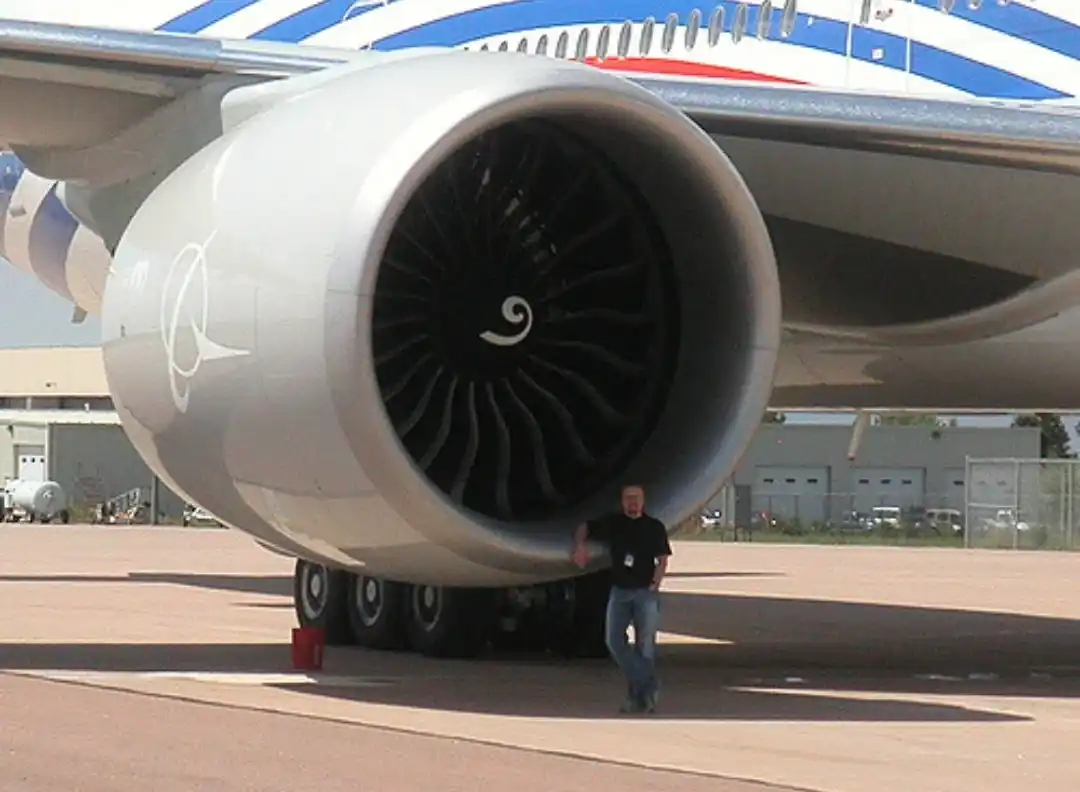
For cargo operators, reliability often outweighs cutting-edge technology. Every delayed flight can disrupt an entire logistics chain, especially for express shipping networks that promise overnight delivery.
The 777-8F, meanwhile, will rely on the GE9X, a newer engine developed specifically for the 777X family. While the GE9X promises improved efficiency, new engine designs typically require years of operational experience before reaching peak reliability.
Cargo airlines tend to prefer proven hardware, particularly when operating high-frequency logistics routes where downtime can be extremely expensive.
Seamless Integration With Existing Cargo Fleets
Another major advantage of the Big Twin lies in its compatibility with existing airline infrastructure.
The Boeing 777 platform is already widely used across global airline fleets. Maintenance facilities, spare parts inventories, and trained technicians are readily available in nearly every major aviation hub.
Because the Big Twin maintains roughly 90% commonality with existing 777 aircraft, integrating the converted freighter into current fleets is relatively straightforward. Mechanics familiar with the passenger variant can service the freighter with minimal additional training.
The same is true for flight crews. Pilots transitioning from other 777 variants can complete shortened type-rating courses, dramatically reducing training costs and time.
For cargo airlines replacing aging Boeing 747-400 freighters, the transition is especially appealing. Operating two GE90 engines instead of four older engines reduces maintenance complexity, fuel consumption, and spare parts requirements.
Disruptive Economics In The Cargo Market
Perhaps the most compelling argument in favor of the Big Twin is its dramatically lower acquisition cost.
A newly built Boeing 777-8 Freighter carries a list price exceeding $400 million. Even after typical industry discounts, purchasing one represents a major financial commitment for cargo operators.
By contrast, acquiring and converting a used 777-300ER into a Big Twin freighter typically costs between $60 million and $80 million.
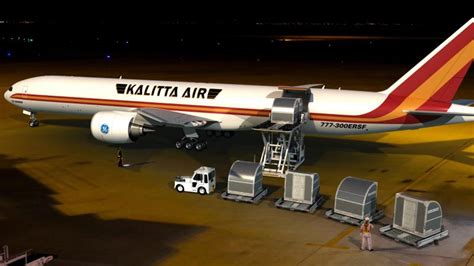
This cost difference creates a powerful economic incentive. For the price of a single 777-8F, an airline could potentially deploy three or four Big Twin freighters.
In logistics networks where coverage and frequency are more valuable than maximum payload, that strategy can generate significantly higher revenue. Multiple aircraft serving different routes provide more flexibility and reduce operational risk.
Fuel efficiency also contributes to the Big Twin’s attractive economics. Compared with older 747-400 freighters, the twin-engine aircraft burns substantially less fuel per ton of cargo. Lower maximum takeoff weight also reduces airport landing fees and navigation charges, further improving operating margins.
The E-Commerce Revolution Driving Demand
The global air cargo market is increasingly shaped by e-commerce giants and express logistics companies. Retailers promise customers faster delivery times, often requiring packages to move between continents within a single day.
These networks rely on frequent flights connecting large distribution hubs rather than traditional long-haul cargo routes. Aircraft often operate shorter, high-frequency flights between major logistics centers.
This operational model perfectly matches the Big Twin’s capabilities. Its large cargo volume and efficient twin-engine design make it ideal for transporting massive quantities of lightweight retail goods.
Meanwhile, the advanced performance capabilities of the 777-8F may be unnecessary for many of these routes. Airlines focused on high-frequency e-commerce logistics may find the Big Twin provides exactly the capacity they need—without paying for capabilities they rarely use.
Immediate Availability Versus Future Delivery
Timing may ultimately determine the outcome of this competition. The Big Twin is already entering service, having received its Supplemental Type Certificate in 2025. Cargo operators can acquire converted aircraft within months.
The Boeing 777-8 Freighter, on the other hand, is still under development. The broader 777X program has experienced multiple delays related to certification and engineering challenges. Current projections suggest the cargo variant may not enter service until 2027 or 2028.
For cargo airlines operating aging 747 fleets, waiting several more years may not be practical. Maintenance costs for older aircraft continue to rise, and fuel consumption remains significantly higher than modern twin-engine freighters.
By offering a solution that can be deployed quickly, the Big Twin allows airlines to modernize their fleets immediately while improving profitability.
Why The Big Twin Could Reshape Cargo Aviation
The emergence of the Big Twin freighter highlights a broader shift in the aviation industry. Innovation is no longer limited to brand-new aircraft designs. Sometimes the most disruptive ideas come from repurposing existing technology in smarter ways.
By combining a proven airframe, reliable engines, and a cost-effective conversion process, the Big Twin delivers a solution perfectly tailored to modern logistics networks. It offers cargo airlines a powerful blend of volume capacity, reliability, and affordability.
For Boeing, the success of the Big Twin may present an unexpected challenge. The company’s 777-8 Freighter remains an incredibly capable aircraft, designed to handle the heaviest cargo across the longest distances. Yet the rapid rise of e-commerce has shifted the economics of air freight toward volume efficiency rather than pure lifting power.
If cargo operators increasingly prioritize lower costs and faster deployment, the converted 777-300ERSF could capture a significant share of the market before Boeing’s newest freighter even enters service.
In the fiercely competitive world of global logistics, the aircraft that wins is not always the most advanced—it is the one that delivers the best return on investment. The Big Twin Freighter appears poised to do exactly that, turning retired passenger jets into one of the most disruptive cargo aircraft concepts the industry has seen in decades.