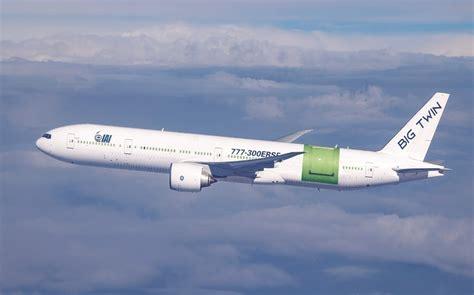
The global cargo aviation industry is entering one of its most important transition periods since the rise of the jumbo jet. For decades, the Boeing 747 freighter dominated long-haul cargo operations, moving everything from industrial machinery and automotive parts to high-value e-commerce shipments across continents. But as aging four-engine freighters become increasingly expensive to operate, airlines and cargo operators are facing a difficult reality: the aircraft that built modern air freight is reaching the end of its commercial life.
Instead of waiting years for newly manufactured freighters, airlines have found a faster and far cheaper solution. Retired passenger Boeing 777-300ER aircraft are now being stripped down, cut open, structurally rebuilt, and transformed into giant cargo aircraft capable of replacing many of the missions once handled by the Boeing 747.
The result is the Boeing 777-300ERSF, a converted freighter that is rapidly becoming one of the most important aircraft in modern cargo aviation.
The transformation is not simply a clever recycling project. It represents a major strategic shift in how airlines and leasing companies think about aircraft life cycles, fleet economics, and the future of global logistics.
By turning retired long-haul passenger aircraft into highly efficient freighters, the aviation industry has effectively created a bridge between the aging 747 era and the next generation of cargo operations.
The timing could hardly be more important.
Global e-commerce demand has exploded over the past decade, placing enormous pressure on cargo networks that were never designed for such sustained high-volume shipping. Online retail giants now require enormous airlift capacity capable of moving lightweight but space-consuming packages between Asia, North America, Europe, and the Middle East at unprecedented speed.
That shift fundamentally changed the economics of air cargo.
Historically, cargo operators prioritized payload weight. Today, many routes are constrained not by maximum weight but by available cargo volume. Airlines often fill the available space inside a freighter long before reaching the aircraft’s payload limit. That creates a major opportunity for larger-volume twin-engine freighters like the converted Boeing 777-300ERSF.
The aircraft offers something the cargo industry has desperately needed: enormous internal volume combined with lower operating costs than older four-engine freighters.
After years of development and certification work, the converted aircraft finally entered commercial service in late 2025, immediately attracting attention across the aviation industry.
How A Viral Landing Introduced The Boeing 777-300ERSF To Aviation Fans
For many aviation enthusiasts, the first public glimpse of the converted freighter came unexpectedly.
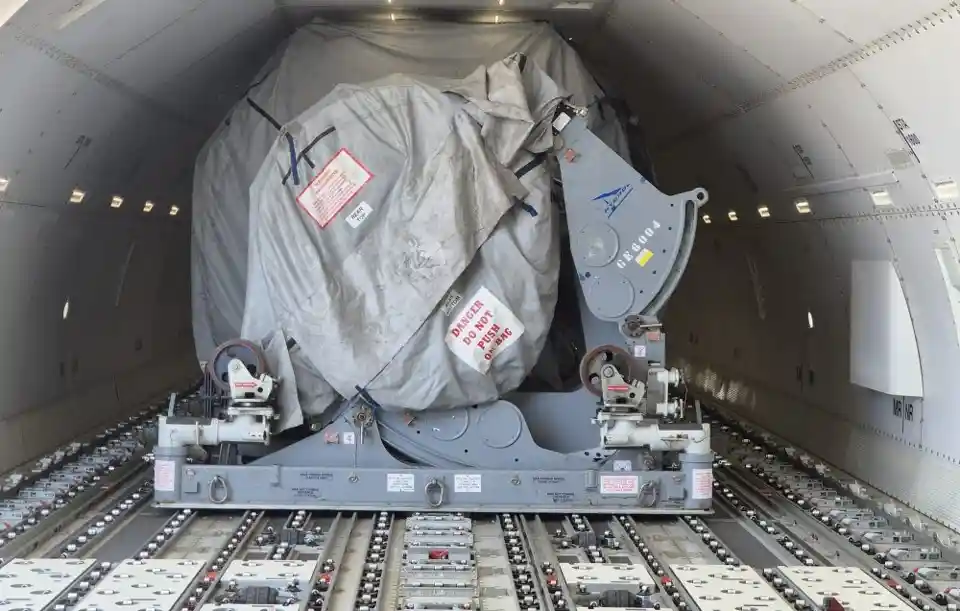
In late 2025, a video showing a Kalitta Air cargo jet making a dramatic landing attempt at Miami International Airport spread rapidly across aviation forums and social media. The aircraft appeared familiar at first glance, but sharp-eyed observers quickly noticed something unusual.
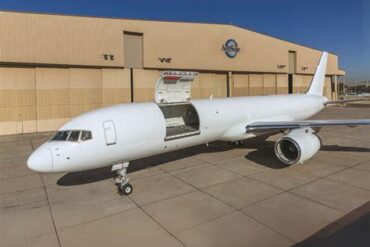
The jet had the unmistakable proportions of a Boeing 777, yet it carried a massive cargo door positioned along the rear fuselage — something no factory-built 777 freighter possesses.
The unusual aircraft immediately sparked curiosity throughout the aviation community.
What viewers were seeing was the Boeing 777-300ERSF, a passenger-to-freighter conversion developed by Israel Aerospace Industries in partnership with aircraft leasing giant AerCap. The aircraft represented years of engineering development aimed at solving one of the cargo industry’s biggest problems: replacing the aging Boeing 747 fleet with something equally capable but far more economical.
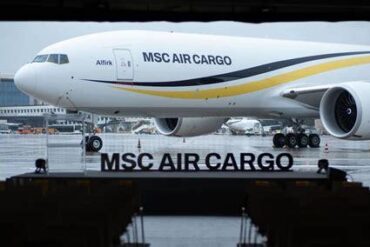
Kalitta Air became the launch customer for the aircraft after committing to the program years earlier. By the end of 2025, the airline had already received seven converted freighters, signaling strong confidence in the platform’s long-term potential.
The viral landing clip inadvertently introduced the broader public to a cargo aircraft that could reshape the economics of global freight transportation for decades.
Why Airlines Are Retiring Passenger Boeing 777-300ERs
The Boeing 777-300ER was once one of the most profitable long-haul passenger aircraft ever built. Airlines including Emirates, Cathay Pacific, Singapore Airlines, Air France, and many others relied heavily on the aircraft for international routes connecting major global hubs.
The aircraft combined long range, exceptional reliability, and impressive passenger capacity in a twin-engine package that dramatically reduced fuel costs compared to older four-engine jets like the Boeing 747-400.
But aviation economics evolve quickly.
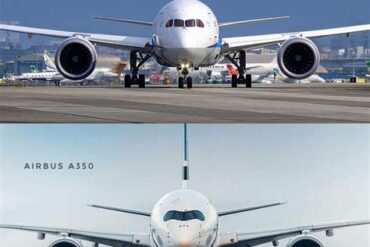
As newer aircraft such as the Boeing 787 Dreamliner and Airbus A350 entered service, many airlines began modernizing their fleets with more fuel-efficient next-generation widebodies. While the 777-300ER remained highly capable, some carriers accelerated retirement plans as maintenance costs increased and fleet renewal strategies advanced.
That created a large pool of retired 777-300ER aircraft entering the secondary market.
For cargo operators, this timing was ideal.
Many of these retired aircraft were only 15 to 20 years old and still had substantial structural life remaining. Because they had been operated by major international airlines, maintenance histories were generally excellent, making them highly attractive conversion candidates.
Instead of sending the aircraft into long-term desert storage or scrapping them entirely, leasing companies recognized a massive opportunity to extend their commercial usefulness for another two decades or more.
What Actually Happens During A Boeing 777 Freighter Conversion
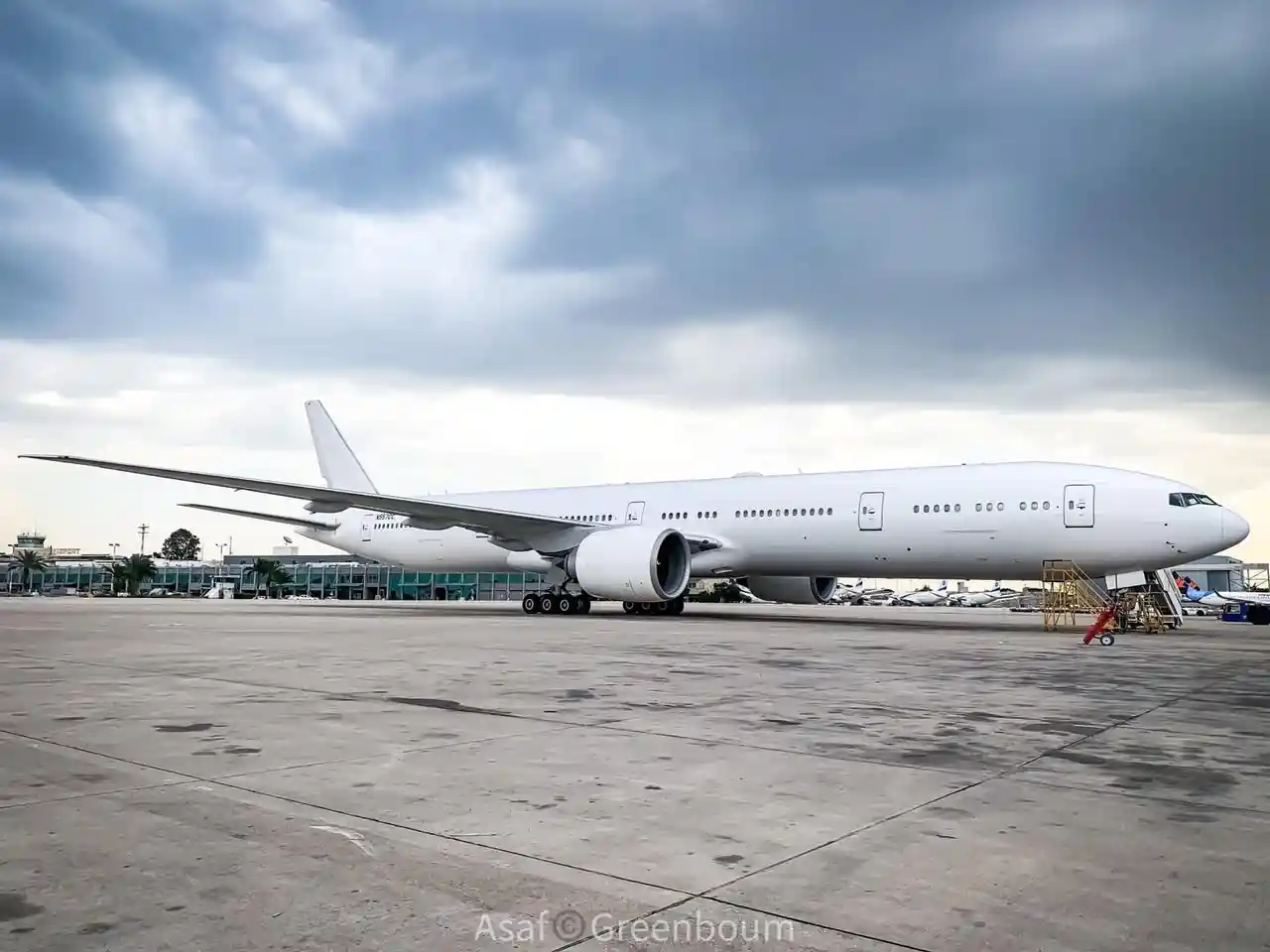
Turning a passenger aircraft into a freighter is an extraordinarily complex engineering project. The process goes far beyond removing seats and adding cargo containers.
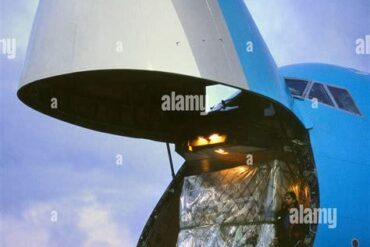
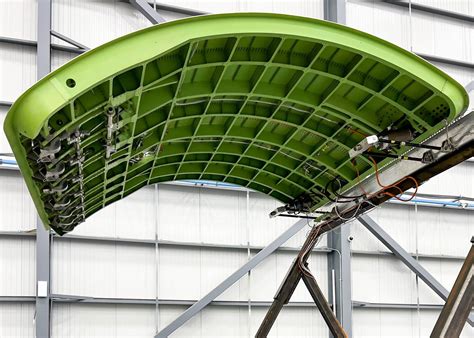
The single most dramatic modification involves cutting a massive cargo door into the side of the fuselage. Engineers must carve a large opening into one of the aircraft’s most structurally stressed areas while ensuring the surrounding fuselage retains its strength during flight operations.
Once the opening is created, extensive reinforcement structures are installed around the cargo door frame to restore the aircraft’s load-bearing integrity.
The passenger floor is also completely removed.
Passenger cabin floors are designed to support distributed human weight, not concentrated cargo pallet loads generated by industrial freight operations. To handle heavy containers and mechanized loading systems, the aircraft receives an entirely new reinforced aluminum cargo floor capable of withstanding extreme pressure points.
Inside the aircraft, nearly everything associated with passenger service disappears.
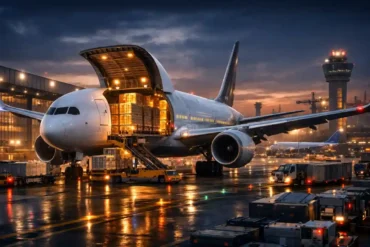
Galleys, lavatories, overhead bins, entertainment systems, sidewall panels, and passenger seating are stripped out completely. Cargo handling systems, pallet rollers, locking mechanisms, and restraint equipment replace the luxury interiors once used on long-haul international routes.
A rigid safety barrier is installed near the cockpit to protect the flight crew from shifting cargo during sudden deceleration events. This barrier is engineered to withstand forces as high as 9g.
The environmental control systems are also redesigned. Freighter aircraft require very different airflow, fire protection, and temperature management systems compared to passenger cabins.
By the time conversion work is complete, the aircraft bears almost no resemblance internally to the premium passenger jet it once was.
Only the outer airframe, engines, landing gear, and wings remain largely unchanged.
Why Converted Boeing 777 Freighters Make Financial Sense
The economics behind the Boeing 777-300ERSF are extraordinarily compelling.
Acquiring and converting a retired 777-300ER generally costs between $75 million and $80 million, including roughly $30 million to $35 million for the conversion process itself.
That may sound expensive, but it is dramatically cheaper than purchasing a newly built next-generation freighter.
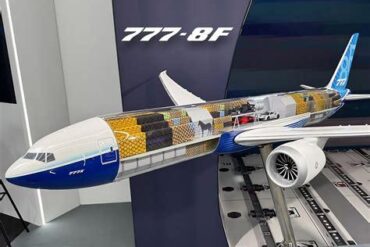
A factory-built Boeing 777-8F carries a far higher price tag and faces substantial production backlogs that could delay deliveries for years. Airlines needing immediate cargo capacity cannot always afford to wait.
The converted 777 offers operators a much faster path into service.
Conversion work takes roughly five to five-and-a-half months once aircraft enter the production line. Compared to waiting years for new aircraft deliveries, the timeline is remarkably short.
The operating economics further strengthen the business case.
The aircraft’s twin GE90 engines burn significantly less fuel than the four-engine Boeing 747 freighters many operators currently fly. Fuel savings alone can dramatically improve profitability across long-haul routes where fuel represents one of the largest operating expenses.
Environmental performance is also becoming increasingly important.
Cargo operators face growing pressure from regulators, customers, and investors to reduce emissions. The converted Boeing 777 freighter reportedly delivers approximately 20 percent lower CO2 emissions per flight compared to older 747 freighters.
For airlines balancing profitability and sustainability goals, that combination is difficult to ignore.
Why E-Commerce Changed Everything For Air Cargo Airlines
The rise of e-commerce fundamentally transformed the cargo aviation industry.
Traditional cargo operations focused heavily on dense industrial freight. Aircraft frequently approached maximum payload weight before exhausting available cargo space.
Modern e-commerce shipments behave differently.
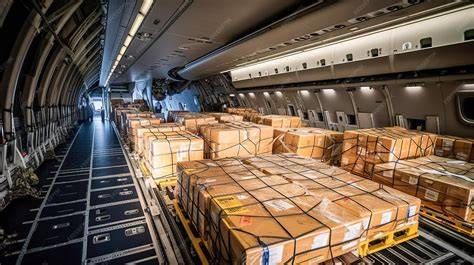
Packages shipped through global online retail networks are often relatively lightweight but consume enormous amounts of physical volume. Consumer electronics, clothing, household goods, and express parcels fill cargo compartments quickly without necessarily reaching payload limits.
That shift created a major disadvantage for smaller-volume freighters.
The Boeing 777-200F, despite being highly capable, carries significantly less cargo volume than the converted 777-300ERSF. For airlines operating high-density parcel routes, volume matters more than raw payload capability.
The 777-300ERSF offers approximately 811 cubic meters of cargo volume, giving operators a substantial advantage on routes dominated by e-commerce traffic.
In practical terms, that means airlines can transport more revenue-generating packages on every flight.
The aircraft effectively fills the space between older jumbo freighters and future next-generation cargo aircraft, making it one of the most commercially attractive solutions currently available.
Kalitta Air And The Beginning Of A New Cargo Era
Few airlines understand heavy cargo operations better than Kalitta Air.
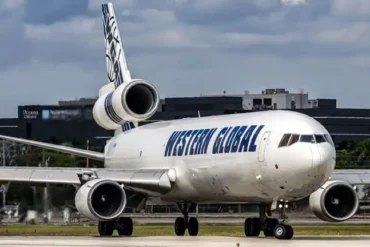
The Michigan-based carrier built much of its business around the Boeing 747, operating large freighter fleets across long-haul charter and ACMI markets for decades. But like every major 747 operator, Kalitta eventually faced the unavoidable challenge of fleet replacement.
The converted Boeing 777 provided a practical answer.
Unlike the smaller 777-200F, the 777-300ERSF offered cargo volume much closer to the 747 aircraft it would eventually replace. That made it especially attractive for ACMI operations where flexibility and maximum freight capacity are essential.
Kalitta officially received its first converted aircraft in September 2025.
Both aircraft had previously flown for Emirates as passenger jets before undergoing extensive modification work. Their arrival marked the operational debut of a freighter platform many analysts believe could become one of the defining cargo aircraft of the 2030s.
The airline moved quickly to expand the fleet.
Within months, Kalitta had already integrated multiple converted aircraft into active cargo operations, demonstrating confidence not only in the aircraft itself but also in the long-term viability of passenger-to-freighter conversion programs.
For cargo operators worldwide, Kalitta’s early adoption effectively validated the market.
Why The Boeing 747’s Retirement Created A Massive Industry Gap
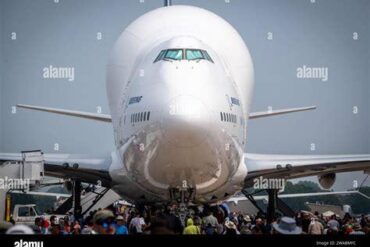
The Boeing 747 transformed global logistics after entering service in the 1970s. Its enormous payload and unmatched cargo volume made it indispensable for decades.
But maintaining aging four-engine aircraft has become increasingly difficult.
Fuel prices, environmental regulations, maintenance expenses, and engine overhaul costs all place mounting pressure on operators still flying older 747 freighters. Many aircraft are simply becoming too expensive to justify economically.
Yet replacing them has proven surprisingly complicated.
Modern twin-engine freighters deliver impressive efficiency but often lack the sheer cargo volume that made the 747 so valuable. For routes dominated by high-volume freight, that limitation matters enormously.
The converted Boeing 777-300ERSF changes the equation.
It provides more cargo volume than any other twin-engine freighter currently available while avoiding many of the operating penalties associated with older jumbo jets.
That combination may explain why demand for conversion slots is growing rapidly.
Airlines no longer view retired passenger aircraft as obsolete assets. Instead, they increasingly see them as strategic investments capable of generating entirely new revenue streams deep into the future.
The Future Of Passenger-To-Freighter Conversions
The success of the Boeing 777-300ERSF may only be the beginning.
As more widebody passenger aircraft retire over the coming decade, conversion programs are expected to expand significantly. Leasing companies, cargo operators, and aerospace engineering firms are all closely watching the economics generated by the 777 program.
The industry is effectively rewriting the traditional aircraft retirement model.
Instead of ending their careers in storage facilities, many passenger aircraft may now transition into entirely new operational roles. Freighter conversion extends aircraft usefulness while reducing the need for immediate large-scale manufacturing expansion.
That shift also reflects broader realities within aviation.
Aircraft production delays, supply chain bottlenecks, and rising demand for cargo capacity mean airlines increasingly need flexible alternatives to factory-built fleets. Passenger-to-freighter conversion offers exactly that.
For now, the Boeing 777-300ERSF sits at the center of this transformation.
What began as a niche engineering project has rapidly evolved into one of the most strategically important developments in modern cargo aviation — a solution born from retirement, rebuilt through engineering, and perfectly timed for the explosive growth of global air freight.