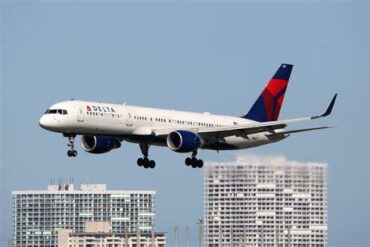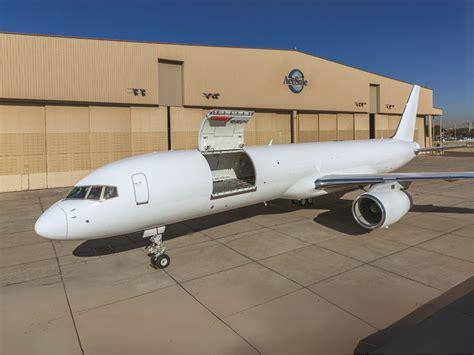
The modern aviation industry is often defined by relentless innovation, where newer, more fuel-efficient aircraft rapidly replace older designs. Yet in a fascinating twist, one aircraft continues to defy this cycle: the Boeing 757. While passenger airlines steadily retire this iconic narrowbody, cargo operators are eagerly acquiring and transforming it into one of the most capable freighters in the sky. This is not nostalgia—it is strategy, engineering logic, and economic precision converging into one powerful decision.
The resurgence of the Boeing 757 as a cargo workhorse reflects a deeper shift in global logistics. As e-commerce accelerates and delivery expectations tighten, the demand for reliable, mid-sized cargo aircraft has surged. Instead of investing billions into new aircraft development, logistics companies have identified a smarter path: repurposing an already over-engineered platform whose strengths perfectly align with cargo operations.
This transformation is not merely a second life—it is a reinvention. The same features that made the 757 less competitive in passenger service have become decisive advantages in freight logistics, turning an aging airliner into a cornerstone of global supply chains.
Why the Boeing 757 Is Perfectly Built for Cargo Dominance
The Boeing 757 was never an ordinary aircraft. Designed in the late 1970s and entering service in 1983, it was engineered with performance margins far beyond typical narrowbody requirements. This “overbuilt” philosophy now defines its success in the cargo world.
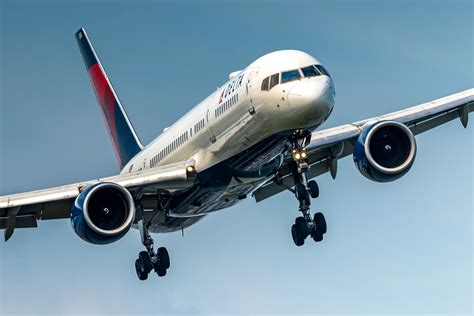
At the heart of its capability lies an exceptional thrust-to-weight ratio. Powered by either Rolls-Royce RB211 or Pratt & Whitney PW2000 engines, the aircraft delivers remarkable raw power. In passenger service, this translated into strong takeoff performance and flexibility. In cargo operations, it becomes something even more valuable: the ability to lift dense, heavy freight efficiently without compromising climb performance or range.
Cargo is fundamentally different from passengers. It is heavier, more compact, and less forgiving when it comes to weight distribution. The 757 handles this with ease. Its powerful engines allow it to perform steep climbs even when fully loaded, reaching cruising altitude faster and avoiding inefficient step climbs that can delay operations.
This performance advantage is not theoretical—it directly impacts profitability. Faster climbs mean reduced fuel burn during ascent and tighter scheduling windows, both critical in overnight logistics networks where minutes matter.
High-Power Performance for Challenging Airports
One of the most underrated strengths of the Boeing 757 is its ability to operate from constrained airports. Many cargo routes rely on secondary or regional airports where runway length, elevation, or temperature can limit aircraft performance.
The 757 thrives in these environments. Its large wing area and powerful engines allow it to take off from shorter runways while carrying substantial payloads. This capability opens up a vast network of airports that are inaccessible or inefficient for newer narrowbody aircraft.
In practical terms, this means cargo operators can bypass congested major hubs and operate point-to-point routes directly between regional distribution centers. The result is faster delivery times, reduced congestion, and greater operational flexibility.
The Perfect Middle-Market Cargo Aircraft
The global cargo network requires a delicate balance between capacity and efficiency. Too small, and the aircraft cannot meet demand. Too large, and it becomes uneconomical on lower-density routes. The Boeing 757 fits precisely into this “middle market” niche.
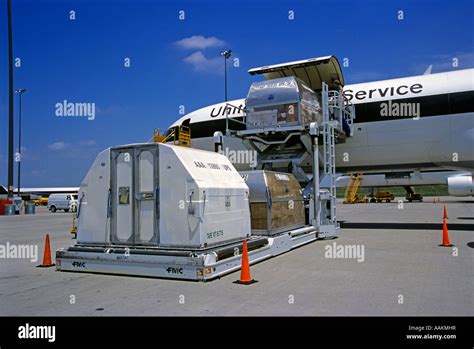
In its freighter configuration, the 757-200 offers an impressive payload capacity of up to 87,700 pounds (nearly 40 metric tons). It can carry up to 15 standard cargo pallets on its main deck, supported by approximately 6,600 cubic feet of internal volume. This combination allows it to handle high-density freight over medium distances with exceptional efficiency.
Its range of roughly 2,900 nautical miles makes it ideal for transcontinental and regional trunk routes. Whether moving goods across the United States, Europe, or Asia, the 757 delivers a rare combination of payload, range, and operational flexibility.
Newer converted aircraft, such as the Airbus A321P2F, offer certain advantages like improved lower-deck containerization. However, they struggle to match the 757’s raw lifting capability and range when operating at maximum payload. For logistics companies focused on maximizing revenue per flight, the 757 remains unmatched in its category.
Inside the Passenger-to-Freighter Conversion Process
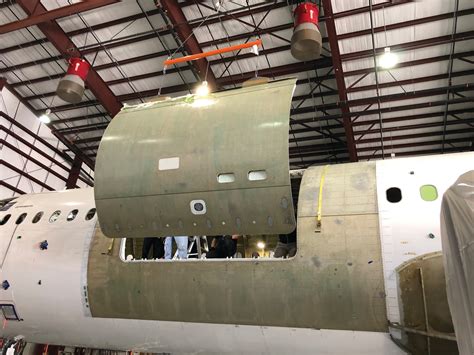
Transforming a passenger aircraft into a freighter is an engineering feat of remarkable complexity. Known as Passenger-to-Freighter (P2F) conversion, this process fundamentally reshapes the aircraft’s structure and purpose.
The first step involves stripping the aircraft of its passenger interior. Seats, overhead bins, galleys, lavatories, and insulation are all removed, leaving a bare fuselage. What remains is essentially a structural shell ready for transformation.
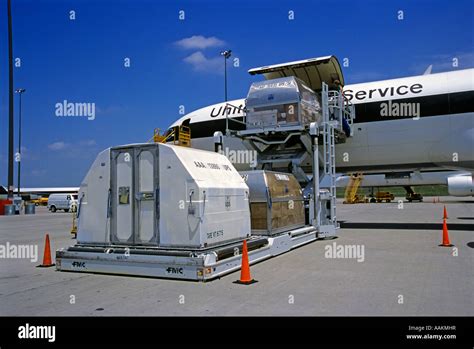
The most dramatic modification comes next: cutting a massive cargo door into the fuselage. This opening, typically measuring around 134 by 86 inches, is reinforced with high-strength materials to maintain structural integrity. A hydraulically operated door system is then installed, allowing large cargo pallets to be loaded directly onto the main deck.
To ensure safety, a rigid barrier is constructed behind the cockpit. This 9G-rated wall protects the flight crew from shifting cargo during turbulence or sudden maneuvers. It is a critical feature that transforms the aircraft into a safe cargo platform.
The floor structure undergoes a complete redesign. Lightweight passenger flooring is replaced with reinforced beams capable of supporting heavy loads. Integrated roller systems and locking mechanisms are installed, enabling rapid loading and unloading of cargo pallets.
The Economics: Why Conversion Beats Buying New
The decision to convert rather than purchase new aircraft is driven by compelling economics. Developing a new freighter aircraft requires billions of dollars in research, certification, and production costs. These expenses translate into high purchase prices that many cargo operators cannot justify.
By contrast, acquiring a used Boeing 757 is relatively inexpensive. Passenger airlines are eager to retire older aircraft due to rising maintenance costs and fuel inefficiency. This creates a steady supply of affordable airframes for conversion.
Even after factoring in the cost of a full P2F conversion, the total investment remains significantly lower than purchasing a new aircraft. This lower capital requirement reduces financial risk and allows operators to scale their fleets more rapidly.
Equally important is operational flexibility. A newly built aircraft with high financing costs must be utilized continuously to generate sufficient revenue. A converted 757, already largely depreciated, can operate primarily during nighttime cargo windows and remain profitable. This aligns perfectly with the operational patterns of express logistics networks.
Powering the E-Commerce Revolution
The rise of e-commerce has fundamentally reshaped global logistics. Consumers now expect next-day or even same-day delivery, placing immense pressure on distribution networks to move goods quickly and reliably.
The Boeing 757 freighter has become a central player in this ecosystem. Its ability to carry large volumes of cargo over medium distances makes it ideal for connecting regional sorting centers and distribution hubs.
Unlike passenger airlines, which rely on hub-and-spoke systems, cargo operators increasingly favor point-to-point networks. This approach minimizes handling time and reduces delays. The 757’s performance characteristics make it perfectly suited for this model, enabling direct flights between smaller airports with high efficiency.
Night operations are particularly critical. Cargo flights often depart late in the evening, transport goods overnight, and arrive before dawn. The 757’s speed, reliability, and payload capacity ensure that these tight schedules can be met consistently.
Operational Flexibility Across Global Markets
One of the defining advantages of the Boeing 757 freighter is its adaptability across diverse markets. From North America to Central Asia, the aircraft can operate efficiently in a wide range of environments.
Its ability to handle both scheduled and charter operations makes it attractive to established logistics giants and emerging regional carriers alike. Companies can deploy the aircraft on high-demand routes or use it to open new cargo lanes without significant risk.
The 757 also allows operators to bypass congested mega-hubs. By utilizing secondary airports, carriers can avoid delays, reduce costs, and improve delivery times. This flexibility is increasingly valuable in a world where airspace congestion and airport slot constraints continue to grow.
Why Modern Aircraft Haven’t Replaced It
Despite advances in aviation technology, no modern aircraft has fully replaced the Boeing 757 in the cargo role. This is a rare anomaly in an industry that typically prioritizes newer designs.
Modern narrowbody aircraft like the Airbus A321neo and Boeing 737 MAX are optimized for fuel efficiency in passenger operations. They feature lighter structures and high-bypass engines designed for cruising efficiency rather than raw power.
However, these design priorities limit their effectiveness as freighters. They lack the structural strength, landing gear robustness, and payload capacity required for demanding cargo operations. In essence, they are optimized for a different mission.
The 757, by contrast, was built with performance margins that now prove invaluable. Its structural durability, powerful engines, and spacious fuselage create a combination that newer aircraft have yet to replicate.
A Legacy That Refuses to Fade
Production of the Boeing 757 ended in 2004, with just over 1,000 aircraft built. Yet decades later, its relevance continues to grow. As passenger airlines retire their remaining fleets, cargo operators stand ready to acquire and convert these aircraft into freighters.
This ongoing demand highlights a fundamental truth: the value of an aircraft is not defined solely by its age, but by how well its capabilities align with operational needs. The Boeing 757 exemplifies this principle, proving that the right design can transcend generations.
Its transformation into a freighter is not just a story of reuse—it is a story of optimization. By leveraging existing assets and adapting them to new roles, the aviation industry has created a highly efficient solution to modern logistics challenges.
The Future of the Boeing 757 Freighter
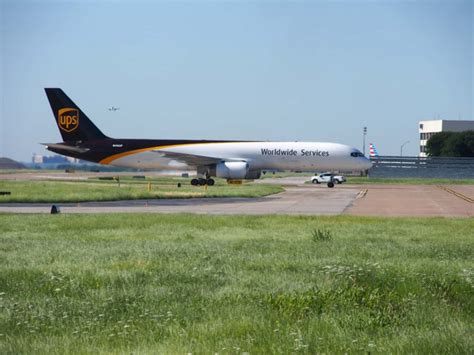
Looking ahead, the Boeing 757 freighter is poised to remain a critical component of global cargo networks for years to come. As e-commerce continues to expand and supply chains become more complex, the demand for versatile, mid-sized cargo aircraft will only increase.
While new freighter designs may eventually emerge, they will need to match the unique combination of performance, capacity, and economics that the 757 offers. Until then, this “retired” passenger jet will continue to dominate its niche.
The story of the Boeing 757 freighter is a reminder that innovation is not always about creating something new. Sometimes, it is about recognizing the hidden potential of what already exists—and transforming it into something even more powerful.