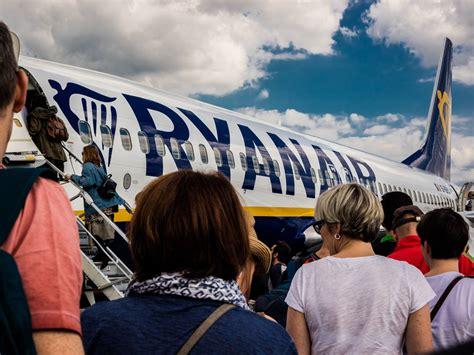
Air travel has never been more accessible. It has also, paradoxically, never felt more suffocating for a growing number of passengers. Scroll through TikTok or X and you will find videos of travelers pressed against windows, wedged between armrests, or narrating their discomfort mid-flight as though documenting a minor survival story. The claim is blunt: flying is becoming unbearable.
Yet the real reason is more complex than shrinking seats or indifferent airlines. The tension unfolding at 35,000 feet is not just about legroom. It is about economics, aircraft design decisions made decades ago, shifting passenger expectations, and a society that has physically changed while airplanes have not.
The Viral Outcry: Cramped Cabins and Claustrophobic Experiences
The recent wave of complaints has been emotional and visceral. Passengers describe feeling trapped, short of breath, or forced into physical contact with strangers for hours. Social media amplifies these experiences, turning isolated discomfort into a collective narrative of decline.
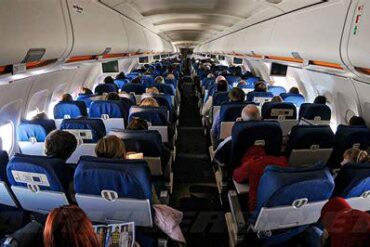
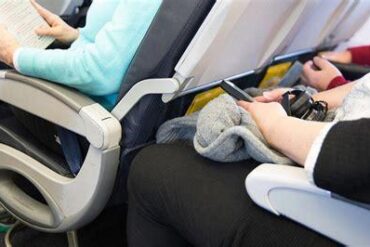
In many viral accounts, the central grievance is not simply limited legroom. It is proximity. Elbows overlap. Shoulders touch. Armrests become contested territory. Fully booked flights leave no buffer between bodies. In extreme cases, passengers describe neighboring travelers occupying more than one seat’s width, making the experience feel involuntary and invasive.
Airlines in the United States typically maintain a policy that passengers must fit within their assigned seat with armrests lowered. If they cannot, they are expected to purchase a second seat or upgrade. On paper, the rule seems straightforward. In practice, enforcement is delicate. Gate agents and flight attendants operate under intense time pressure and heightened social scrutiny. The result is inconsistency, and inconsistency breeds frustration.
The emotional framing is powerful: passengers believe airlines are squeezing more and more space out of cabins. That belief, while understandable, is only partly true.
The Shrinking Seat Myth: What Actually Changed
When people say seats are “getting smaller,” they are usually referring to seat pitch rather than seat width. Seat pitch is the distance between one seat and the seat in front of it. It is a measure of legroom, not actual seat size.
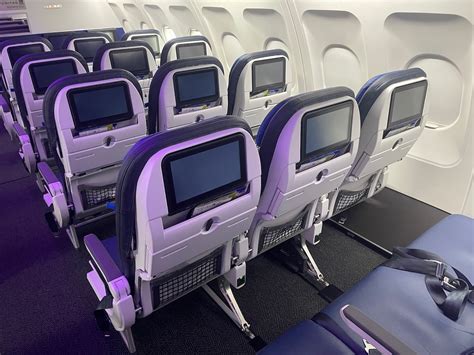
Over the years, airlines have reduced seat pitch in economy cabins to fit more rows. Many low-cost carriers operate with seat pitch as low as 28 or 29 inches. Traditional carriers sometimes offer 30 to 32 inches in standard economy, with more generous spacing in premium economy or exit rows.
But here is the twist: seat width has not dramatically changed on most aircraft.
The Boeing 737, introduced in the 1960s, was designed as a six-abreast narrowbody aircraft. Its cabin width has remained essentially fixed. The Airbus A320, designed in the 1980s, is slightly wider, offering marginally more shoulder room. Both aircraft still define the geometry of short-haul travel today.
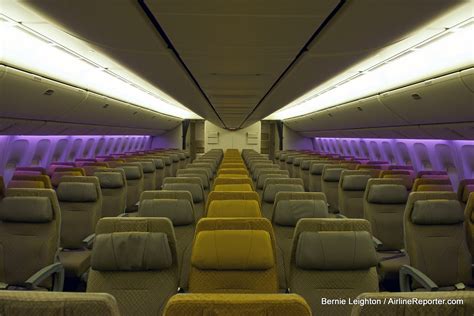
On long-haul routes, aircraft like the Boeing 777 were originally configured nine-abreast. Over time, many airlines moved to ten-abreast layouts to increase capacity. That shift reduced seat width by roughly an inch per passenger. In a cabin where every inch matters, that inch feels enormous.
Still, the overall cabin architecture is constrained by physics and certification. Airlines cannot widen the fuselage of an aircraft they did not design. They can only adjust how many seats they install within it.
The Economics of Cheap Flights: You Asked for Low Fares
There is an uncomfortable economic truth behind the squeeze. Consumers overwhelmingly prioritize price.
Over the past three decades, inflation-adjusted airfares have declined dramatically. Flying, once a luxury experience, has become a mass-market commodity. The democratization of air travel is one of the quiet revolutions of modern transportation. More people fly more often than at any point in history.
Low-cost and ultra-low-cost carriers built their business models around this demand. They stripped away bundled amenities and optimized for density. High-density seating allows airlines to spread fixed costs across more passengers. More passengers per flight mean lower base fares.
The tradeoff is simple and blunt: cheaper tickets in exchange for tighter cabins.
Passengers often say they want comfort, but booking data tells a more nuanced story. When presented with fare options, a large segment chooses the lowest available price, even if it means fewer amenities. Airlines respond to this revealed preference. Market forces are not sentimental; they follow demand.
Meanwhile, for travelers willing to pay more, options exist. Exit rows. Premium economy. Domestic first class. Spirit’s Big Front Seats. Delta Comfort+. The hierarchy of comfort is still there. What changed is that the baseline product has become more austere.
The Rise of Premium Economy: Comfort Without Champagne
Airlines have not simply stripped space away. They have also re-segmented it.
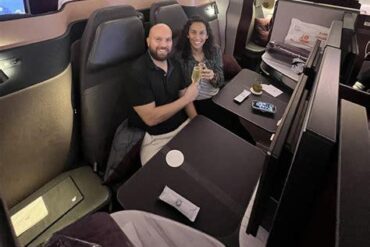
Premium economy has exploded globally over the past decade. This cabin class offers wider seats, increased pitch, enhanced recline, and upgraded service without the full cost of business class. It targets passengers who want comfort but cannot justify—or do not value—the luxury of lie-flat beds and multi-course meals.
This bifurcation reveals the deeper dynamic at play. Airlines did not eliminate comfort; they monetized it more precisely. Instead of a uniformly spacious cabin for everyone, they created a tiered structure.
The uncomfortable truth is that what many passengers mourn is not the loss of comfort itself, but the loss of comfort at economy prices.
Aircraft Design Constraints: The Geometry of the Sky
Airplane interiors are governed by regulatory and engineering constraints that rarely enter public conversation.
For certification, aircraft must be capable of evacuating all passengers within 90 seconds using half the available exits. This rule limits how densely airlines can configure cabins. Exit placement, aisle width, and crew positioning all factor into maximum certified capacity.
The upcoming Boeing 777X offers a revealing example. Despite being larger than the 777-300ER, its revised exit configuration reduces its maximum certified passenger capacity from around 550 to approximately 475. Safety certification, not greed, sets hard boundaries.
Short-haul aircraft like the 737 and A320 families were designed for six-abreast seating decades ago. Their cross-sectional dimensions are fixed. Airlines cannot simply widen seats without sacrificing an entire column of revenue-generating space. That tradeoff is economically brutal.
The Human Variable: Passengers Have Changed
There is a factor that rarely appears in viral debates but matters enormously: average body size has increased.
Since the 1960s, the average American adult has gained significant weight. Height has increased slightly, but weight has risen more dramatically. The aircraft cabins flying today were engineered for the anthropometric averages of previous generations.
When a system built around 1960s body metrics encounters 2020s body realities, friction emerges.
This is not a moral judgment. It is a statistical observation. Seat widths in narrowbody aircraft often range between 17 and 18 inches. In a world where average body mass has increased by double-digit percentages, those dimensions feel tighter even if they have not changed.
Enforcing size-related seating policies is sensitive and socially charged. Airlines risk accusations of discrimination or body-shaming. Yet failing to enforce them leads to passenger conflict. The tension is structural, not merely operational.
The Cultural Layer: Humor, Expectations, and Brand Identity
Different markets respond differently to discomfort.
Ryanair, the Irish low-cost giant, has built an entire brand identity around irreverence. Its social media presence openly mocks the lack of recline and tight spacing. The subtext is clear: you paid €19.99, not €199. The airline leans into irony and self-awareness.
In the United States, the tone is more restrained, but the economic logic is identical. Frontier, Spirit, Allegiant, and others serve customers who prioritize price above all else. Their leadership has openly stated that many of their passengers would not otherwise fly full-service carriers.
The emotional backlash often emerges when expectations and reality diverge. When a passenger books a deeply discounted ticket but subconsciously expects legacy-carrier comfort, disappointment follows. Airlines that clearly communicate their value proposition—however spartan—often experience less cognitive dissonance among customers.
The Upgrade Illusion: Choice Still Exists
One of the more overlooked aspects of the debate is the abundance of upgrade paths.
Exit rows provide extra legroom. Bulkhead seats offer unobstructed space in front. Premium economy widens the seat and expands pitch. Domestic business class offers significantly more shoulder room. On some carriers, purchasing a second seat can be surprisingly affordable.
Ultra-low-cost airlines even allow customers to reserve additional space for modest fees relative to full-service competitors. The choice architecture is explicit: pay more, receive more space.
The deeper issue is psychological. When upgrades are framed as add-ons rather than defaults, the baseline experience feels diminished. In earlier decades, the “standard” seat resembled what is now marketed as a premium product. The reframing alters perception.
The Long View: Flying Then and Now
There is nostalgia for the golden age of flying—wider seats, generous meals, empty middle seats. What often goes unmentioned is the price tag.
In the 1970s and 1980s, airfare consumed a much larger share of household income. Deregulation and competition drove fares down, expanding access to millions who previously could not afford to fly.
The modern cabin is a product of that democratization. High-density seating makes weekend getaways and cross-country visits financially possible for families who once would have taken buses or simply stayed home.
Comfort and affordability exist in tension. Expanding one typically contracts the other. Airlines navigate that tension with surgical precision, guided by booking data rather than nostalgia.
Why Flying Feels Worse Than It Is
Perception amplifies discomfort.
Flights are fuller today due to sophisticated revenue management systems. Empty middle seats are rare. Cabin lighting is brighter. Personal devices heighten awareness of proximity. Social media transforms private annoyance into public narrative.
At the same time, modern aircraft are quieter, more fuel-efficient, and often technologically superior. In-flight entertainment, Wi-Fi connectivity, and digital boarding processes have improved dramatically. Yet these enhancements do not offset the primal discomfort of limited personal space.
Humans are acutely sensitive to spatial boundaries. When those boundaries blur, stress rises. The airplane cabin compresses strangers into intimate proximity for hours. No algorithm can fully neutralize that psychological reality.
The Real Reason Air Travel Feels Unbearable
The discomfort many passengers articulate is not solely about shrinking seats. It is about the collision of four forces:
- Relentless demand for the lowest possible fares
- Aircraft dimensions locked in by decades-old engineering
- A population that has physically grown larger
- Expectations shaped by nostalgia and social amplification
Air travel has not universally deteriorated. It has stratified. Those who pay for premium experiences often report comfort comparable to past eras. Those who pursue the absolute lowest fares experience the logical consequences of high-density economics.
The sky has become a marketplace of tradeoffs.
Where This Leaves the Industry
Airlines face mounting scrutiny. Lawmakers occasionally propose minimum seat size regulations. Advocacy groups call for wider seats and greater transparency. Carriers experiment with cabin redesigns, slimline seat materials, and ergonomic improvements.
Future aircraft may incorporate more efficient layouts that preserve comfort without sacrificing capacity. Composite materials and cabin innovations could unlock incremental gains. Yet the core geometry of narrowbody flight will remain constrained.
The debate over whether air travel is becoming unbearable is, at its heart, a debate over value. How much space is worth how much money? How much inconvenience is acceptable in exchange for affordability?
As long as passengers continue choosing lower fares in aggregate, airlines will continue optimizing for density. If collective purchasing behavior shifts toward comfort over cost, cabin configurations will follow.
Air travel is not collapsing into misery. It is reflecting the preferences of the market that sustains it. The squeeze in economy is real, but it is also a mirror.
Understanding that mirror clarifies the conversation. Flying feels tighter because it is optimized for affordability in a world of larger bodies and louder expectations. The cabin did not suddenly shrink; it evolved to serve a different set of priorities.
The next time a viral video declares air travel unbearable, it is worth remembering that the unbearable seat and the $49 fare are two sides of the same aerodynamic coin.