Submarines are among the most advanced examples of engineering designed around a single goal: remaining undetected beneath the ocean. Unlike surface ships that rely on speed, weapons, and visible presence, submarines survive through silence, deception, and careful manipulation of underwater physics. A modern submarine can travel for thousands of miles while avoiding detection, using a combination of specialized materials, advanced designs, and highly trained crews.
The ability of submarines to disappear is not based on a single technology. Instead, it comes from the interaction of hydrodynamics, acoustics, materials science, and navigation techniques. Every curve of a submarine’s hull, every movement of its crew, and every adjustment of its propulsion system is carefully designed to reduce the chances of detection.
The ocean is a challenging environment for military surveillance because light disappears quickly underwater, making traditional visual observation nearly impossible. As a result, naval forces depend heavily on sonar technology, which uses sound waves to locate objects beneath the surface. Submarines must therefore defeat both active sonar that searches for them and passive sonar that listens for their movements.
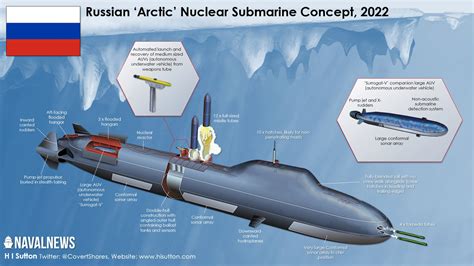
How Submarine Hull Design Defeats Active Sonar Detection
Active sonar works by sending sound pulses through the water and analyzing the echoes that return after hitting an object. If a submarine reflects a strong signal directly back to the source, its location can be identified. To prevent this, submarines are built with carefully shaped hulls that reduce sonar reflections.
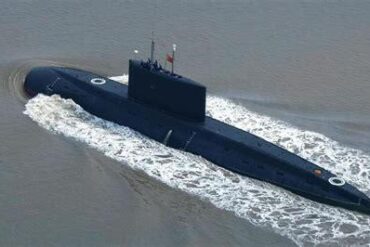
The rounded, smooth structure of a submarine helps scatter incoming sound waves in different directions instead of sending them directly back toward the sonar operator. This makes the returned signal much weaker and more difficult to interpret. The result is a faint or unclear sonar contact that may not provide enough information to track the submarine accurately.
Many submarines also use anechoic coatings, specialized rubber-like materials attached to the outer hull. These coatings absorb some sonar energy and reduce the strength of reflected signals. They also help prevent internal machinery vibrations from escaping into the surrounding water.
The combination of streamlined hull shapes and sound-absorbing materials creates a significant advantage. While no submarine is completely invisible, modern designs make detection far more difficult, requiring sophisticated equipment and experienced operators.
The Role of Silence in Avoiding Passive Sonar
While active sonar attempts to locate objects by sending signals, passive sonar depends on listening for natural sounds produced by ships and submarines. This creates a different challenge because even a perfectly shaped hull cannot hide a submarine that produces excessive noise.
The largest source of underwater noise is usually the propulsion system. Submarine designers spend enormous effort reducing sounds from engines, pumps, gears, and propellers. Machinery is mounted with vibration-isolation systems that prevent mechanical noise from transferring into the hull and surrounding water.
Propeller design is another important factor. Traditional propellers can create bubbles through a process called cavitation, which produces distinctive underwater noise. Modern submarines use specially designed propellers and propulsion systems to minimize these effects, allowing them to move more quietly through the ocean.
Crew behavior also plays an important role. Submarine operators follow strict procedures to reduce unnecessary noise, limiting equipment movement and carefully controlling the vessel’s speed. In stealth operations, even small sounds can become valuable clues for an enemy sonar team.
How Ocean Physics Helps Submarines Disappear
Submarines do not rely only on engineering; they also take advantage of the natural properties of the ocean. Water temperature, pressure, and salinity change at different depths, creating layers that affect how sound travels.
Sound does not always move in a straight line underwater. Instead, it can bend when it passes through areas with different temperatures and pressures. Submarine crews can use these underwater conditions to enter areas known as sound shadow zones, where their acoustic signals become harder for distant sensors to detect.
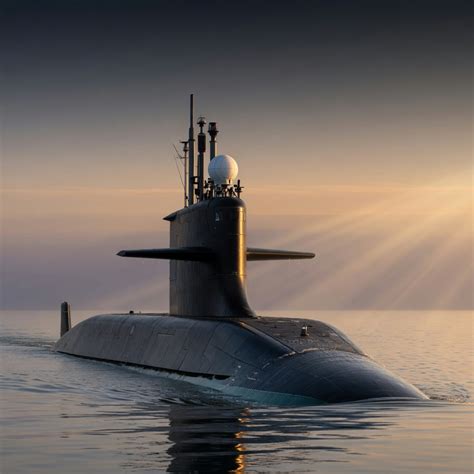
The thermocline, a layer where water temperature changes rapidly, is especially important in underwater warfare. Sound waves may bend away from certain areas, allowing submarines to operate below or above these layers while reducing the chances of detection.
Experienced submarine crews understand these environmental conditions and use them as part of their stealth strategy. The ocean itself becomes a natural shield, working together with the submarine’s technology.
The Future of Submarine Stealth Technology
The science of submarine concealment continues to evolve as detection technology becomes more advanced. Future submarines are expected to incorporate improved materials, quieter propulsion methods, artificial intelligence systems, and autonomous technologies.
Unmanned underwater vehicles may introduce new approaches to stealth because they can operate without many of the limitations associated with human crews. Smaller autonomous systems could potentially move quietly through difficult environments while collecting intelligence or supporting naval missions.
However, the fundamental principles of submarine stealth will remain the same: reduce noise, control reflections, and understand the underwater environment. The ability of submarines to stay hidden comes from thousands of carefully engineered details working together.
Modern submarines are not invisible machines, but they represent one of humanity’s greatest achievements in controlling sound and movement beneath the ocean. Their secrecy is the result of advanced science, precision engineering, and a deep understanding of the underwater world.