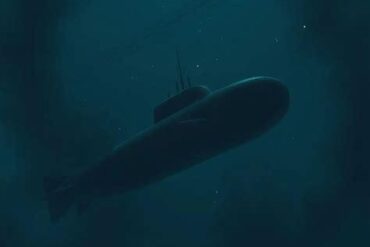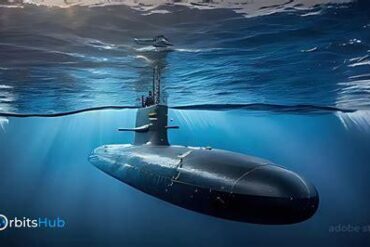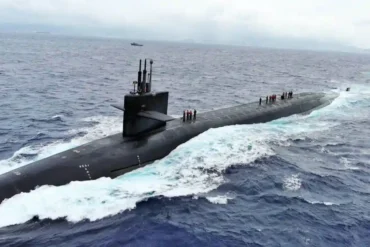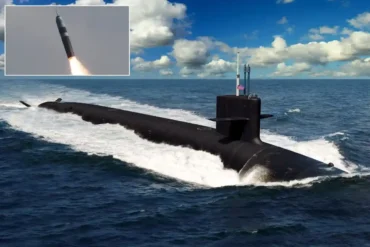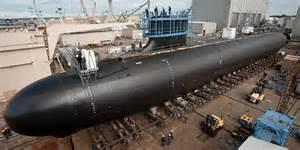
Nuclear submarines represent one of the most formidable and least understood components of modern military power. Designed to operate silently beneath the ocean’s surface for extended periods, these vessels are central to strategic deterrence and global force projection. As a core element of the United States’ nuclear triad, alongside land-based intercontinental ballistic missiles and strategic bombers, nuclear-powered submarines maintain a continuous and covert presence at sea. Their ability to remain submerged for months is not a science fiction fantasy but a direct result of advanced nuclear engineering, life-support innovation, and careful logistical planning.
Unlike conventional diesel-electric submarines of the early 20th century, nuclear submarines are not tethered to atmospheric oxygen for propulsion. Before 1954, submarines relied on diesel engines that required frequent surfacing to recharge onboard batteries. Once submerged, they could travel only about 80 miles or creep along underwater for a few days before needing air to run their engines again. The launch of the USS Nautilus in 1954 fundamentally changed naval warfare. By integrating a compact nuclear reactor into a submarine hull, engineers unlocked the ability to generate enormous amounts of energy without relying on external air.
At the heart of this transformation is nuclear fission, the process of splitting uranium atoms to release heat. That heat converts water into high-pressure steam, which spins turbines connected to propeller shafts. The result is sustained underwater propulsion at speeds that diesel-electric boats could never match. A small quantity of enriched uranium can power a submarine for years without refueling, enabling operations limited less by fuel and more by human endurance.
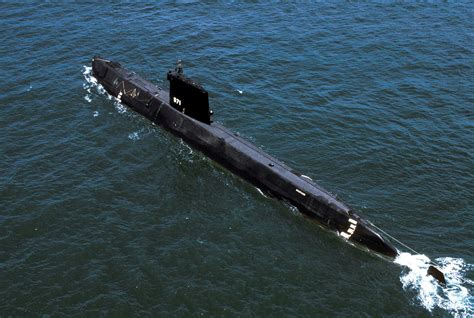
Nuclear Reactor Technology Enables Indefinite Submersion
The compact reactor inside a modern nuclear submarine functions much like those in commercial power plants, but on a smaller and highly controlled scale. It generates electricity not only for propulsion but also for onboard systems including navigation, sonar arrays, weapons control, and environmental management. Because the reactor does not require oxygen, the submarine can remain sealed beneath the ocean’s surface indefinitely from an energy standpoint.
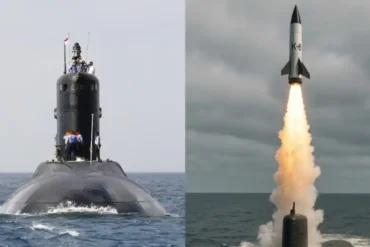
This capability provides immense strategic advantages. A nuclear submarine can travel thousands of miles underwater without detection, reposition silently across oceans, and maintain constant readiness. Ballistic missile submarines, often referred to as “boomers,” conduct patrols that can last several months, ensuring a survivable second-strike capability. Their stealth is their shield. The ocean becomes both armor and hiding place.
How Nuclear Submarines Produce Oxygen Underwater
Energy independence is only part of the equation. Human survival demands breathable air, and submarines solve this challenge through electrolysis. This process uses electricity to split water molecules into hydrogen and oxygen. Because the nuclear reactor produces abundant electrical power, generating oxygen becomes a sustainable, continuous operation.
Seawater cannot be used directly for this purpose, as splitting saltwater would produce hazardous chlorine gas. Instead, seawater undergoes reverse osmosis, a filtration process that removes salt and impurities before entering the electrolysis system. The resulting oxygen is circulated throughout the vessel, maintaining breathable air for the crew even while submerged hundreds of meters below the surface.
Electrolysis also supports auxiliary systems. Older Los Angeles-class attack submarines retain diesel engines as emergency backup generators. In such cases, onboard oxygen production ensures operational redundancy. Yet under normal conditions, nuclear power supplies all propulsion and electrical needs throughout extended deployments.
The True Limiting Factor: Human Endurance
Technically, a nuclear submarine could remain underwater for years. In practice, patrols typically last around 70 to 90 days. The limiting factor is neither fuel nor oxygen, but food storage and crew resilience. Submarines depart with carefully calculated provisions, packing roughly three months of rations into every available compartment. Fresh produce disappears first; frozen and preserved foods sustain the later weeks of deployment.
Life beneath the sea is psychologically demanding. Crew members operate in confined spaces without natural sunlight, separated from family and cut off from real-time communication. Strict routines, rotating watches, and disciplined maintenance schedules preserve operational effectiveness. Submariners rely on training, camaraderie, and structured daily rhythms to maintain morale.
The remarkable truth is that nuclear submarines are less constrained by engineering than by biology. They embody a fusion of physics and human adaptation, transforming atomic energy into silent endurance beneath the waves. In a world defined by uncertainty, these vessels remain hidden sentinels, sustained by the controlled power of the atom and the resilience of the crews who serve within their steel hulls.