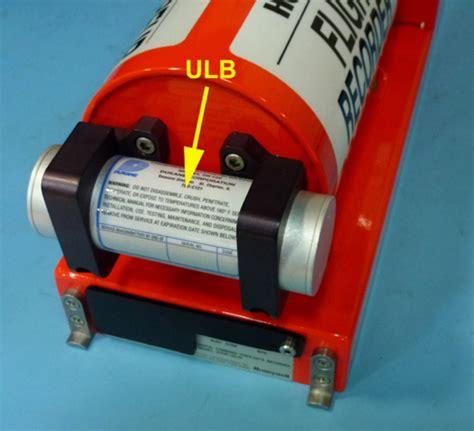
An underwater locator beacon (ULB), sometimes known as an underwater locating device (ULD) or underwater acoustic beacon, is a crucial safety feature for aviation. These devices are fitted to flight recorders, including the cockpit voice recorder (CVR) and the flight data recorder (FDR), as well as attached to the aircraft fuselage. When a ULB comes into contact with water, it activates automatically, emitting an ultrasonic pulse at 37.5 kHz every second for at least 30 days. ULBs that are attached to the airframe operate at a lower frequency of 8.8 kHz and are referred to as low-frequency ULBs. It’s important to note that ULD can also refer to Unit Load Devices, which are containers used for baggage and cargo in aircraft holds.
These beacons are designed to withstand accidents and function correctly post-impact. A study conducted for the Bureau d’Enquêtes et d’Analyses (BEA) in 2011 revealed that ULBs have a remarkable survival rate of 90% across 27 maritime air accidents.
In response to updated European aviation safety regulations, new rules have been set. By January 1, 2020, the transmission time for ULBs on flight recorders must extend from 30 days to 90 days. Furthermore, by January 1, 2019, most large airplanes flying more than 180 nautical miles from shore need to be equipped with an additional low-frequency (8.8 kHz) ULB. These low-frequency ULBs must comply with ETSO-C200 standards and should not be installed in the wings or empennage.
Low-frequency ULBs offer a long detection range, significantly aiding in locating wreckage quickly and efficiently. They transmit an 8.8 kHz acoustic signal for a minimum of 90 days, and their lower frequency enhances detection range, making it four times greater—between 13-22 km (7-12 NM)—compared to standard ULBs on FDRs and CVRs. These devices can operate at depths of up to 6,000 meters (20,000 feet) and activate in both salt and fresh water. Their battery is a single-cell type with a lifespan of six years, and the ULB unit includes the ULB DK180 Beacon, a mounting kit, and an adapter plate.
Proper maintenance of ULBs is essential for reliability. An aircraft maintenance program should ensure that testing procedures for the ULB occur alongside battery replacements. This includes functional testing of the ULDs before old batteries are removed to confirm they are still operational. Maintenance should address periodic checks of the ULB’s operation per the manufacturer’s guidelines, including any battery life limits and cleaning of switch contacts. When installing the ULB on the flight recorder, it’s vital to position the switch contacts to minimize debris buildup that could cause shorts; ideally, contacts should be vertical or facing downward.