Understanding the Role of Airport Beacons in Aviation
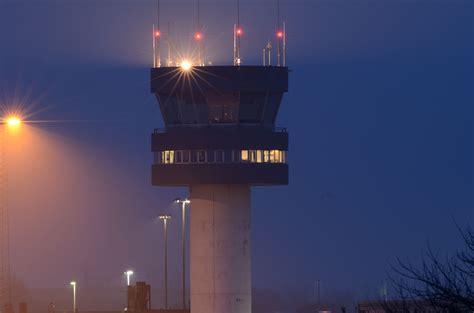
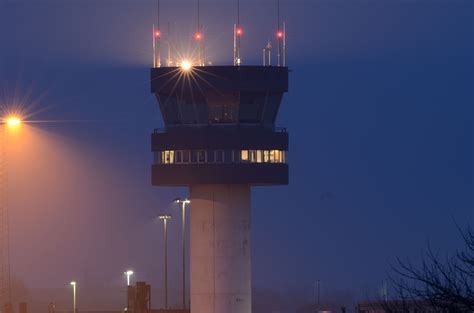
Among the myriad navigational aids that define modern aviation, airport beacons remain one of the most visually iconic. Towering above terminal buildings, control towers, and hangars, these lights serve as aeronautical lighthouses, guiding pilots to safety during nighttime operations and periods of low visibility. These beacons, flashing rhythmically against the darkened sky, are far more than ornamental—they are coded, regulated signals that communicate critical information to aviators.
Airport beacons, also known as rotating aerodrome beacons, are omnidirectional light systems designed to be visible from several miles away. Positioned at strategic elevations, their rotating or strobe lights pierce through atmospheric obscurity, offering unmistakable identifiers for airfields.
Purpose and Function of Airport Beacons
Airport beacons serve two core purposes:
-
Location Identification – They mark the physical location of an airport, heliport, or seaplane base for aircraft in the vicinity.
-
Type Differentiation – Through their distinct color codes and flash sequences, beacons identify what type of facility is in view—whether it be military, civilian, water-based, or heliport.
The Federal Aviation Administration (FAA) mandates precise installation parameters and operational standards to ensure consistency and reliability. These specifications govern everything from rotation speed to mounting height.
Airport Beacon Color Codes and Meanings
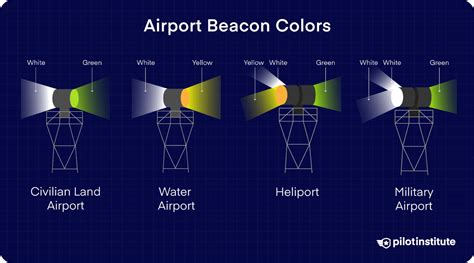
The most efficient form of non-verbal communication at night is light color. Pilots approaching an unknown beacon rely on standardized colors to determine the nature of the facility:
-
White and Green: Indicates a civilian land airport.
-
White and Yellow: Identifies a seaplane base.
-
Green, Yellow, and White: Designates a heliport.
-
White, White, Green: Signals a military airport—two white flashes followed by one green.
-
White, Green, Amber: Represents a hospital or emergency services heliport.
The importance of accurate color perception cannot be overstated. Color-coded signals eliminate ambiguity and allow for quick navigational decisions.
Regulated Flash Rates: The Language of Light
Each beacon doesn’t just flash randomly—it follows a regulated frequency pattern:
-
Airports and landmarks: 24–30 flashes per minute.
-
Heliports: 30–45 flashes per minute.
This variation ensures that even if the color scheme is difficult to identify due to atmospheric conditions, the flashing rate offers a secondary identifier. These rates are part of FAA’s AC 150/5345-12F specification and must be adhered to with precision.
When and Why Airport Beacons Are Activated
Although primarily designed for nighttime operations, beacons are also used during daytime under specific conditions:
-
Visibility below 3 statute miles.
-
Cloud ceilings under 1,000 feet.
In Class B, C, D, and E surface areas, Air Traffic Control (ATC) personnel often control beacon operation manually. However, many airports utilize photoelectric cells or automated timers, ensuring consistent, objective activation based on environmental light conditions.
These sensors assess ambient lighting and activate the beacon when dusk, fog, or overcast weather demands increased visibility support.
FAA Regulations and Maintenance Protocols
The FAA mandates rigorous maintenance and inspection standards for airport beacons:
-
The beacon tower must be painted in alternating aviation orange and white.
-
Daily functional inspections must be conducted.
-
The beacon glass should be checked bi-monthly for clarity.
-
Electrical and mechanical systems require annual evaluation.
-
Lamps must be replaced every 30,000 hours of use.
Such stringent requirements are in place because even minor malfunctions can have significant operational consequences.
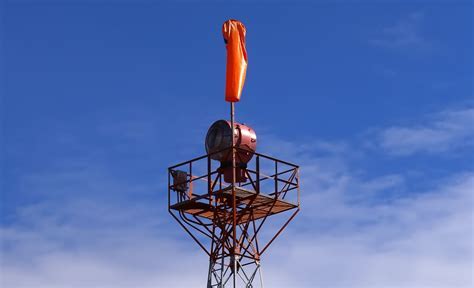
A Brief History: The Birth of the Airway Beacon System
Before advanced avionics, visual navigation was the pilot’s only lifeline. In the 1920s, this need gave birth to the Airway Beacon System, a government-funded network of rotating light towers across the continental United States. The inaugural route, from Cheyenne to Chicago, relied on beacons every 10 miles to guide postal pilots flying at night.
These early beacons used incandescent bulbs, mounted on steel towers as high as 50 feet, rotating to emit light in all directions. By 1933, more than 1,500 beacons spanned over 18,000 miles of airway routes, forming a glowing spiderweb across the American night sky.
The Decline of Visual Beacons: Rise of Radio Navigation
By the 1940s and 1950s, technological breakthroughs like VHF Omnidirectional Range (VOR) and Instrument Landing Systems (ILS) diminished the role of airway beacons. These systems allowed for accurate point-to-point navigation in any weather conditions.
As radio navigation became mainstream, the Airway Beacon System was decommissioned. However, while route beacons faded into history, airport-based beacons persisted, evolving to meet the modern aviator’s needs.
Next-Generation Beacon Technologies
Despite their age, airport beacons continue to evolve with technology. The most transformative changes are already underway:
LED Integration
Traditional incandescent bulbs are being phased out in favor of energy-efficient LED systems. The advantages are considerable:
-
Reduced power consumption
-
Longer operational life
-
Lower heat generation
-
Reduced maintenance costs
This shift not only saves money but also supports the broader sustainability goals of modern airports.
Remote Monitoring and Control
Advanced control systems now enable airport operations teams to monitor beacon performance in real-time. Sensors track operational parameters and send data to a central system. If a fault is detected—such as bulb failure or rotation malfunction—alerts can be dispatched instantly.
Future systems may include adaptive lighting algorithms, automatically adjusting intensity based on ambient light levels or pilot proximity, thereby minimizing light pollution while maximizing visibility.

Challenges and Limitations of Airport Beacons
Though indispensable, airport beacons are not without faults. Several issues persist:
Limited Visibility During Severe Weather
Dense fog, snow, or torrential rain can significantly reduce the effective range of a beacon. While designed to cut through darkness, particulate interference from weather systems limits their practical utility.
Color Misinterpretation
Color confusion is a known hazard, especially when beacon lights are observed through haze or cockpit glare. Pilots may misread a military beacon as a civilian one, potentially leading to misnavigation.
Technical Failures
Though rare, mechanical rotation failures, electrical shorts, or incorrect flash intervals can mislead pilots. FAA compliance inspections exist to mitigate these, but unexpected issues do occur.
Urban Light Pollution
Airports near metropolitan areas often struggle with background illumination. Competing light sources from high-rise buildings, billboards, and street lamps can obscure a beacon’s visibility.
Interference from Other Rotating Lights
Rotating warning lights atop telecommunication towers, emergency vehicles, or cranes can mimic airport beacons. Pilots must always cross-reference visual cues with navigational charts, GPS, and VOR systems.
Conclusion: A Beacon That Still Shines Bright
Despite the passage of time and the rise of digital avionics, the airport beacon remains a vital part of airfield identification and aviation safety. More than just a nostalgic nod to aviation’s past, the beacon represents reliability, clarity, and guidance. As airports modernize and incorporate smart infrastructure, beacons will likely integrate seamlessly into hybrid navigation ecosystems, combining visual cues with data-driven systems.
From roaring biplanes of the 1920s to the sleek jets of today, airport beacons have watched over the skies faithfully—and they will continue to do so as we enter the era of automation and AI-driven flight.
FAQs
What does a white and green airport beacon mean?
A white and green beacon indicates a lighted civilian land airport. This is the most common beacon configuration used across the United States to denote standard public-use airports.
Are airport beacons used during the day?
Yes, in specific conditions. If ground visibility drops below 3 statute miles or the cloud ceiling is under 1,000 feet, airport beacons may be activated during daylight hours to assist in visual identification.
How far away can pilots see an airport beacon?
Depending on elevation, weather, and surrounding obstructions, airport beacons can be visible from up to 20 miles away. Typically, they are most effective when viewed from an angle 1 to 10 degrees above the horizon.