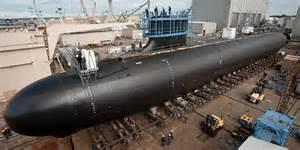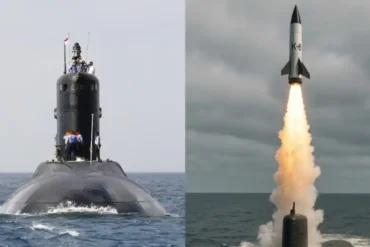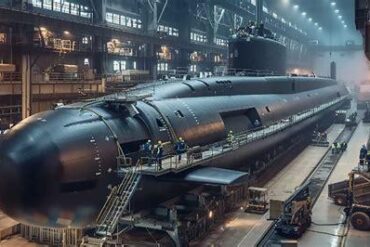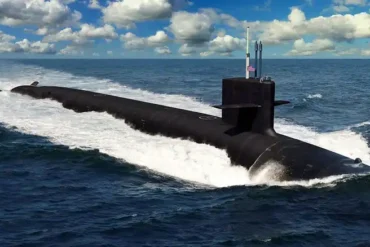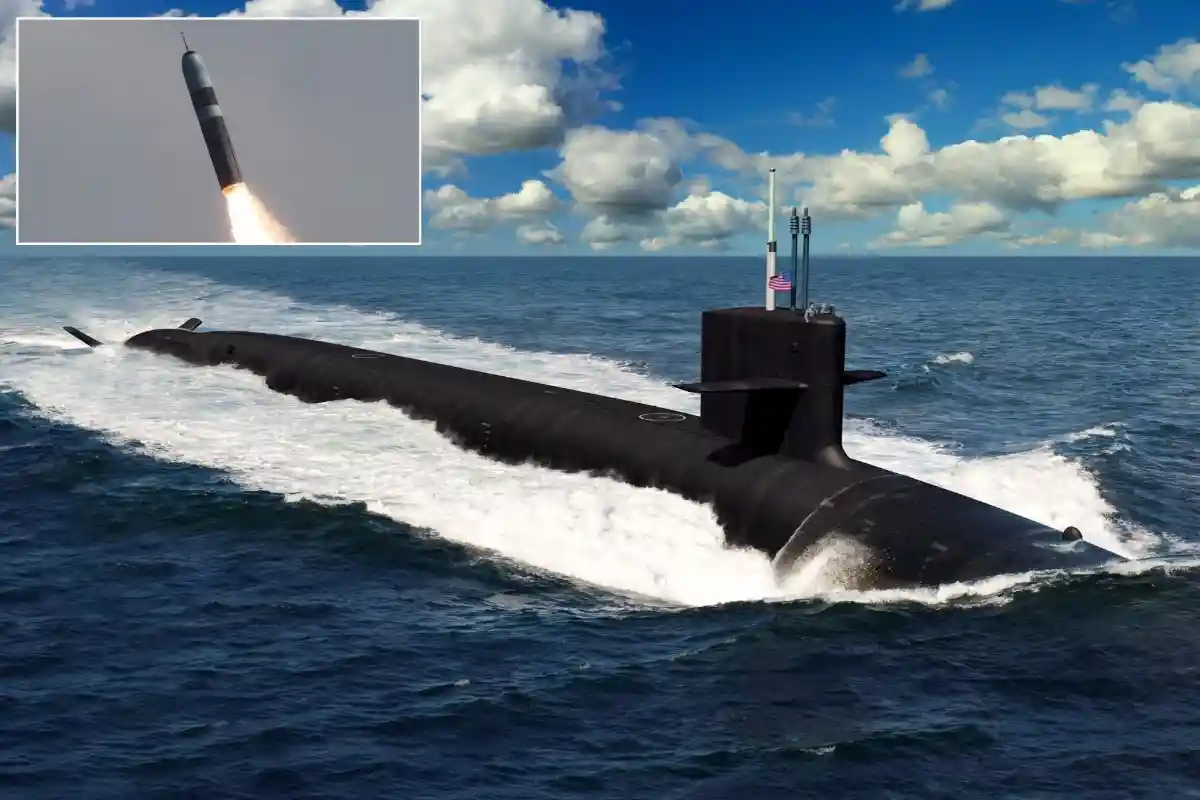
The United States Navy is accelerating preparations for its next generation of nuclear-powered ballistic missile submarines, ensuring that the forthcoming Columbia-class SSBN fleet will seamlessly deploy the formidable Trident II D5 submarine-launched ballistic missile (SLBM). At the center of this effort is a new contract awarded to General Dynamics Mission Systems, aimed at sustaining and modernizing the sophisticated fire control architecture that connects missile systems with submarine navigation and targeting networks.
This modernization program represents far more than a routine upgrade. It forms a critical bridge between the aging Ohio-class ballistic missile submarines, which have served as the backbone of the U.S. sea-based nuclear deterrent since the 1980s, and the Columbia-class submarines, designed to patrol the oceans well into the latter half of the 21st century. By maintaining technological continuity between these platforms, the Navy ensures that its strategic deterrent remains operational without interruption during one of the most complex fleet transitions in modern naval history.
Strategic nuclear deterrence depends heavily on reliability, precision, and survivability. The Trident II D5 missile system, long regarded as one of the most accurate submarine-launched ballistic missiles ever deployed, remains the centerpiece of this maritime deterrent capability. Through sustained modernization of the missile’s fire control systems and digital infrastructure, the Navy seeks to preserve the operational edge that has defined the Trident program for decades.
Strategic Importance of the Columbia-Class SSBN Program
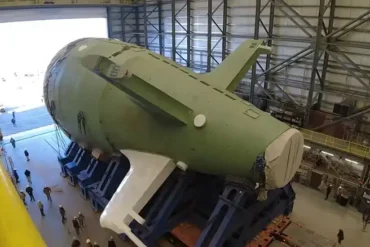
The Columbia-class submarine program represents one of the most consequential naval modernization efforts undertaken by the United States. Designed to replace the Ohio-class SSBN fleet, the Columbia-class will eventually form the entire sea-based component of the U.S. nuclear triad, alongside land-based intercontinental ballistic missiles and strategic bombers.
Each Columbia-class submarine is engineered for extended deterrent patrols, enhanced stealth, and reduced acoustic signatures, allowing it to remain virtually undetectable in the vastness of the world’s oceans. These submarines are expected to serve operational lifespans exceeding four decades, ensuring strategic continuity deep into the mid-21st century.
Unlike the Ohio-class vessels that carry up to 24 Trident II missiles, the Columbia-class design will incorporate 16 missile tubes. While the number of launchers is smaller, advances in missile accuracy, survivability, and targeting precision ensure that the strategic deterrent capability remains fully intact. The emphasis has shifted toward technological superiority and survivability rather than sheer missile quantity.
The transition between these submarine classes requires a carefully managed technological overlap. The same missile system must operate flawlessly on both platforms, demanding that fire control software, targeting systems, and digital interfaces remain compatible across generations.
The Fire Control System: The Brain Behind the Trident II
At the heart of the modernization effort lies the Trident II ballistic missile fire control system, an advanced digital architecture that functions as the operational brain of the submarine’s strategic weapons suite.
This system integrates several critical subsystems:
- Submarine navigation sensors
- Targeting and mission computers
- Missile launch control interfaces
- Trajectory calculation algorithms
Together, these elements process targeting data and calculate ballistic trajectories with extraordinary precision. The system continuously synchronizes launch parameters with the submarine’s exact position, speed, and orientation beneath the ocean surface, ensuring that a missile launched from thousands of kilometers away can strike its intended target with remarkable accuracy.
On board an Ohio-class submarine, the fire control system supervises the alignment and readiness of up to 24 Trident II missiles, conducting diagnostic verification and preparing launch sequences while the submarine remains fully submerged and concealed.
Maintaining this digital architecture across both Ohio-class and Columbia-class submarines is essential. Without such continuity, the transition to the new submarine generation could introduce operational gaps—something the U.S. strategic command structure is determined to avoid.
The Trident II D5: Cornerstone of the Sea-Based Nuclear Deterrent
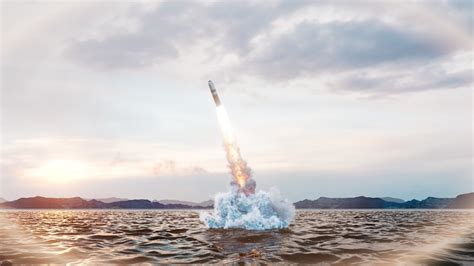
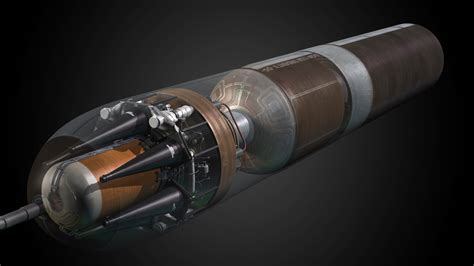
The Trident II D5 missile has served as the backbone of the United States’ submarine-based nuclear deterrent since the early 1990s. This three-stage solid-fuel ballistic missile is capable of striking targets at ranges exceeding 7,000 kilometers, depending on its payload configuration.
Its design incorporates the Multiple Independently Targetable Reentry Vehicle (MIRV) concept. MIRV technology allows a single missile to carry several nuclear warheads, each capable of striking a different target. This dramatically increases the strategic effectiveness of each submarine patrol.
Guidance precision is achieved through a sophisticated combination of inertial navigation systems and stellar navigation updates. During flight, the missile uses onboard sensors to track star patterns and refine its trajectory. The result is an estimated circular error probable (CEP) of approximately 90 meters, an extraordinary level of accuracy for an intercontinental ballistic missile launched from a moving underwater platform.
This level of precision allows strategic planners to maintain credible deterrence with fewer missiles while still guaranteeing effective strike capability.
Extending the Missile’s Service Life: The D5LE2 Program
While the Trident II missile itself remains highly capable, maintaining its operational relevance requires continuous modernization. The Trident II D5 Life Extension program, commonly known as D5LE, is designed to keep the missile viable well into the mid-21st century.
The current phase, D5LE2, involves extensive upgrades to the missile’s internal systems. These upgrades include:
- Replacement of aging electronic components
- Modernized guidance and navigation computers
- Updated software architecture for fire control compatibility
- Improved integration with next-generation submarine systems
These improvements ensure that the Trident missile can integrate seamlessly with the advanced digital systems being installed aboard Columbia-class submarines.
Rather than replacing the missile entirely, the Navy has chosen to extend and upgrade the existing platform. This strategy preserves decades of operational experience while reducing the risks associated with developing a completely new SLBM system.
Industrial Network Supporting the Strategic Submarine Enterprise
The modernization contract awarded to General Dynamics Mission Systems involves a complex industrial ecosystem spread across multiple locations in the United States and allied facilities abroad.
The majority of the work—approximately 87 percent—will take place in Pittsfield, Massachusetts, where General Dynamics maintains major engineering and integration facilities. Additional activities will occur at strategic submarine support hubs, including:
- Bangor, Washington, home to the U.S. Pacific Fleet ballistic missile submarines
- Kings Bay, Georgia, the Atlantic Fleet SSBN base
- Groton, Connecticut, a major submarine construction and engineering center
- Cape Canaveral, Florida, a key missile testing location
- Quonset Point, Rhode Island, supporting submarine manufacturing
International collaboration also plays a role. Certain technical activities will occur in Loanhead, United Kingdom, reflecting the long-standing partnership between the United States and the United Kingdom in operating Trident missile systems aboard their respective ballistic missile submarines.
If all contract options are exercised, this modernization effort could extend through December 2032, aligning with the timeline for the early operational deployment of the Columbia-class fleet.
Why Ballistic Missile Submarines Remain the Most Survivable Nuclear Force
Within the framework of the U.S. nuclear triad, ballistic missile submarines are widely considered the most survivable leg of the strategic deterrent. Their ability to operate silently in vast ocean patrol areas makes them extremely difficult for adversaries to detect or track.
Unlike fixed land-based missile silos or airbases, submarines provide a continuous and stealthy second-strike capability. Even in the unlikely event of a large-scale nuclear attack against the United States, submarines at sea would remain capable of launching a retaliatory strike.
This survivability forms the cornerstone of strategic stability. Potential adversaries understand that eliminating the submarine force would be nearly impossible, which discourages any attempt at a disarming first strike.
As nations such as Russia and China continue to modernize their own strategic submarine fleets, maintaining a technologically advanced and reliable sea-based deterrent has become a priority for U.S. defense planners.
The modernization of the Trident II fire control architecture, alongside the introduction of the Columbia-class submarine, ensures that the United States will preserve an uninterrupted and credible nuclear deterrent capability for decades to come. Beneath the oceans, unseen but ever-present, these submarines remain one of the most powerful instruments of strategic balance in the modern world.