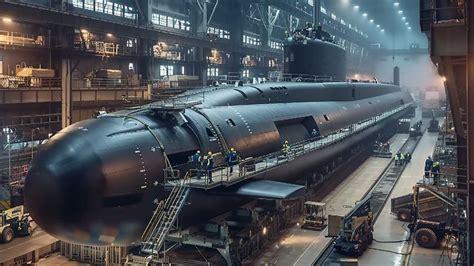
The United States Navy has taken a decisive leap forward in reinforcing its nuclear deterrent capabilities by awarding a $2.283 billion contract modification to General Dynamics Electric Boat. This funding is earmarked for the advanced procurement and early construction of the next five Columbia-class fleet ballistic missile submarines — SSBN 828 through SSBN 832 — ensuring the uninterrupted momentum of this critical program well into 2031.
Columbia-Class: The Vanguard of Strategic Sea-Based Deterrence
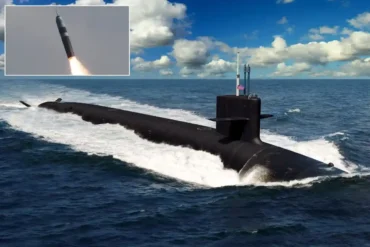
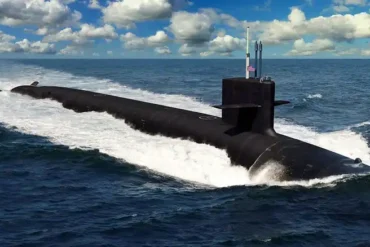
The Columbia-class submarine is not merely a successor to the Ohio-class—it is a transformational leap in naval engineering, survivability, and operational endurance. Designed to serve as the cornerstone of the U.S. Navy’s sea-based leg of the nuclear triad, these submarines will assume patrol responsibilities from the aging Ohio-class boats, whose operational service has already been extended to 42 years.
The Columbia-class aims to sustain uninterrupted strategic deterrence, delivering a credible second-strike capability. Despite a reduced number of launch tubes (16 compared to the Ohio’s 24), improved missile technology and advanced warhead configurations ensure equivalent if not superior firepower. The UGM-133A Trident II D5LE ballistic missile is central to this capacity, boasting greater range, accuracy, and payload versatility.
Technical Supremacy Underwater
At 560 feet in length and a submerged displacement of approximately 20,800 long tons, the Columbia-class submarines incorporate innovations designed for stealth, survivability, and reduced lifecycle costs.
Key features include:
- S1B reactor: Engineered to last for the entire 42-year service life without refueling, drastically reducing mid-life overhauls.
- Turboelectric drive with pump jet propulsion: Eliminates direct mechanical linkage between turbines and shaft, resulting in a much quieter acoustic signature.
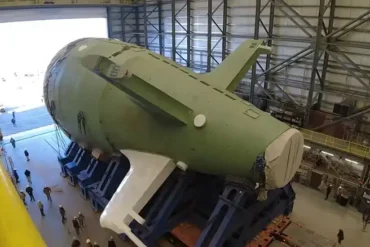
- Modular Common Missile Compartment: Developed in cooperation with the United Kingdom, this allows for efficient integration, maintenance, and scalability.
Sensor Superiority and Combat Architecture
Equipped with a large aperture bow sonar, flank and towed arrays, and electronic warfare systems, the Columbia class can detect and evade adversaries in the densest electromagnetic environments. The sonar suite is derived from the Virginia-class Large Aperture Bow system but significantly enhanced.
This suite is integrated into an open-architecture Shipboard Wideband Fiber Transport System (SWFTS), allowing future upgrades in sonar, weapons, and optronics. Such foresight ensures decades of technological relevance.
Optronic masts combine EHF/UHF and SATCOM links for secure, low-probability-of-intercept communications — crucial for maintaining nuclear command and control (NC2) under stringent emission control (EMCON) conditions.
Strategic Manning and Operational Doctrine
Each submarine will carry approximately 155 crew members, divided into dual crews to ensure continuous deployment availability. Living quarters, logistics, and operational interfaces are optimized for longer patrol durations, capitalizing on the improved endurance of the platform.
While submerged in mission zones such as the North Atlantic or the Pacific, the Columbia-class submarines rely on ambient underwater noise and thermal layering to avoid detection. Their restrictive communications discipline helps maintain a low profile while staying seamlessly integrated within the U.S. strategic NC2 architecture.
Industrial Backbone and Supply Chain Stabilization
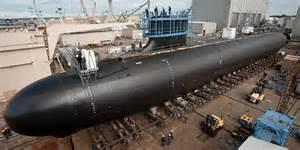
The Columbia program’s industrial framework represents one of the most comprehensive maritime production efforts in U.S. history. General Dynamics Electric Boat leads the initiative, handling end-to-end submarine integration. Newport News Shipbuilding (a Huntington Ingalls Industries subsidiary) manufactures critical hull sections and missile compartments, contributing to joint trials and final assembly.
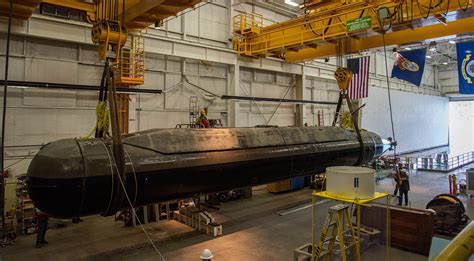
Supporting this top-tier collaboration are thousands of suppliers across more than 40 U.S. states, delivering components ranging from propulsion turbines and sonar domes to nuclear instrumentation and tactical communication arrays. The new contract modification is pivotal in maintaining the health and rhythm of this complex supply chain, particularly as production capacities overlap with the Virginia-class submarine program.
Strategic Context: A Modern Deterrence Environment
The renewed investment in the Columbia-class fleet unfolds against a rapidly evolving strategic backdrop. As the Russian Navy expands its Borei-A SSBN fleet and China increases patrols with its Jin-class boats, the importance of a robust, survivable, and technologically superior U.S. sea-based deterrent becomes paramount.
The Columbia-class is designed not just for U.S. defense but also to underpin NATO’s strategic deterrence posture and reassure allies in the Indo-Pacific under arrangements such as AUKUS. This reflects the U.S. commitment to maintaining strategic equilibrium, deterring adversaries, and preserving peace through credible force projection.
Avoiding a Strategic Gap: Timing and Delivery
Timeliness is critical. The first Columbia-class submarine, USS District of Columbia (SSBN 826), is slated for delivery around fiscal year 2028. If this timeline holds, the Navy can proceed with a seamless transition as Ohio-class units retire, averting a potential strategic coverage gap.
Any delays could result in increased strain on existing crews, compressed maintenance cycles, and potentially reduced deterrence capability. While extending the service life of older Ohio-class subs remains an emergency fallback, it is not a viable substitute for full fleet renewal.
Long-Term Vision and Strategic Signaling
The sustained funding and prioritization of the Columbia program signal unwavering U.S. intent to maintain an undetectable and reliable underwater nuclear deterrent well into the 2080s. The use of the National Sea-Based Deterrence Fund for fiscal year 2026 and beyond provides budgetary insulation and programmatic continuity, bolstering both domestic and international confidence.
This commitment is closely monitored by strategic competitors. A consistent investment trajectory reinforces U.S. deterrence credibility, affirms allied security commitments, and acts as a counterweight to regional arms buildups in Europe and the Indo-Pacific.
Conclusion: Maritime Deterrence for a New Century
The $2.28 billion contract awarded to General Dynamics Electric Boat represents more than just a procurement milestone. It is a strategic investment in global stability, a vote of confidence in American industrial capacity, and a technological affirmation of U.S. naval supremacy.
Through silent strength, persistent vigilance, and superior engineering, the Columbia-class fleet ballistic missile submarines will carry forward a tradition of deterrence—stealthy, survivable, and unstoppable. In an age of multipolar competition and evolving threats, these submarines form the unseen shield that guards peace beneath the waves.