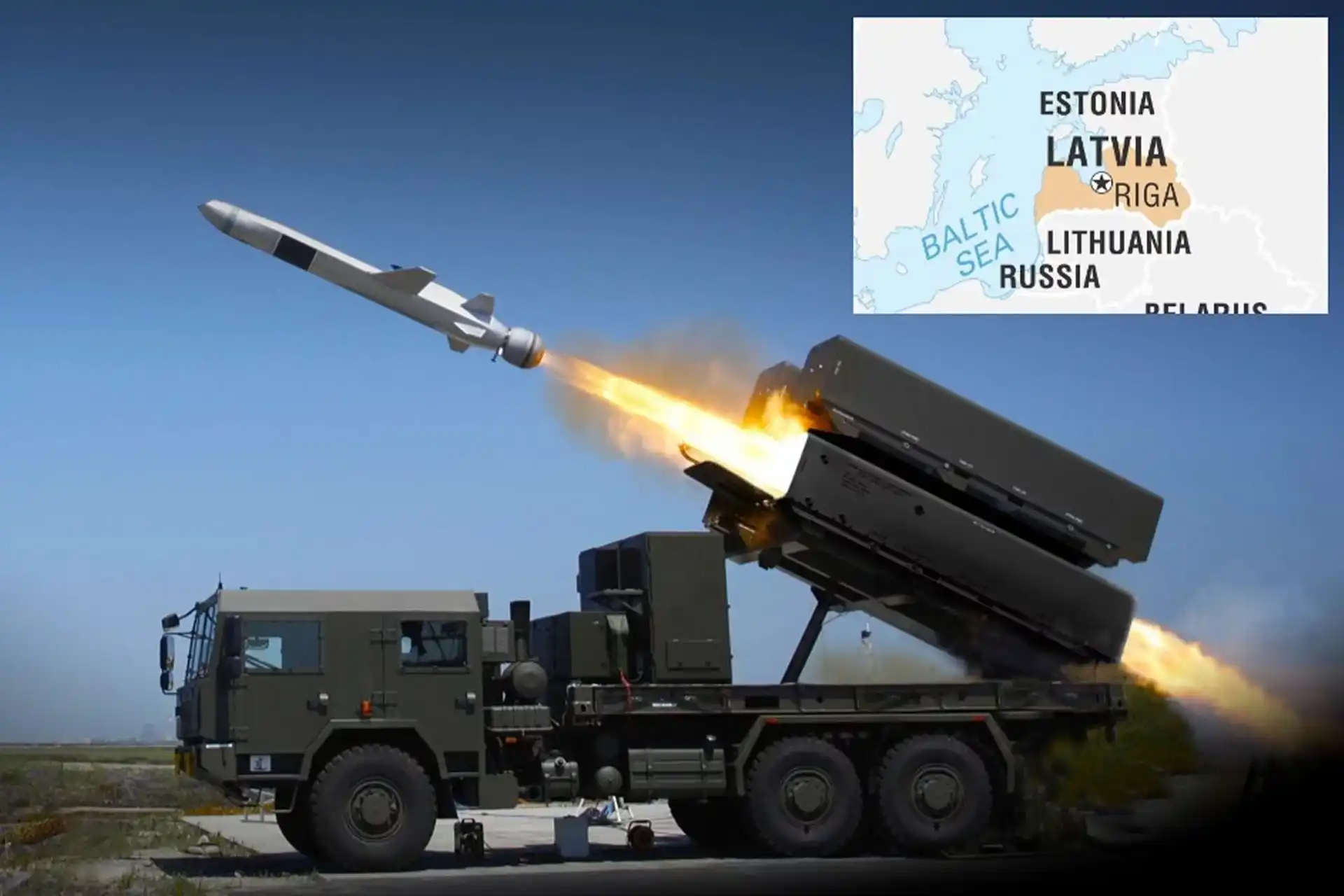
The United States has awarded Kongsberg Defence & Aerospace a $45.54 million contract to deliver key elements of the Naval Strike Missile (NSM) Coastal Defense System to Latvia, marking a significant milestone in NATO’s effort to reinforce maritime security across the strategically sensitive Baltic Sea region. The agreement, issued through the Foreign Military Sales (FMS) framework and managed by the U.S. Naval Sea Systems Command (NAVSEA), reflects a growing Allied commitment to strengthening distributed coastal defense networks along NATO’s northeastern flank.
Announced on March 13, 2026, the contract underscores the importance of empowering frontline NATO members with advanced precision strike capabilities capable of deterring hostile naval movements and safeguarding critical sea lanes. Latvia’s acquisition of the NSM coastal defense capability represents not merely a modernization initiative but a structural upgrade to the country’s defense posture, enabling long-range maritime denial operations integrated with allied command networks.
The Baltic Sea has emerged as a focal point of NATO’s security planning in recent years. Increasing geopolitical tension, concerns over undersea infrastructure sabotage, and intensified military activity have elevated the region into one of Europe’s most closely monitored maritime theaters. In that environment, land-based anti-ship missile systems such as the Naval Strike Missile Coastal Defense System offer an asymmetric yet highly effective method of controlling coastal approaches.
Strategic Investment in Baltic Sea Security
The newly announced contract carries a base value of $45,544,458, with potential options that could expand the program’s total value to approximately $56.3 million if exercised. All funds tied to the Latvian procurement case were obligated at the time of the award, reflecting the urgency and strategic weight attached to the project.
Work under the contract will extend across a multinational industrial footprint, highlighting the collaborative nature of modern NATO defense production. While Kongsberg Defence & Aerospace in Norway serves as the prime contractor, production and integration activities are distributed across facilities in Finland, Italy, Denmark, the United Kingdom, and additional European locations. Completion of the primary work is expected by July 2030, with optional extensions potentially continuing through November 2031.
The procurement falls under 10 U.S. Code 3204(a)(4), a legal provision allowing acquisitions conducted through international agreements. In practical terms, this means the deal is not a simple commercial transaction but a government-backed interoperability program designed to ensure the Latvian system aligns seamlessly with NATO’s broader command, control, and targeting infrastructure.
The Naval Strike Missile Coastal Defense System
At the heart of the Latvian capability lies the Naval Strike Missile Coastal Defense System, a ground-based anti-ship and land-attack missile architecture engineered for networked, long-range maritime strike operations.
Developed by Kongsberg, the system integrates multiple technological components into a cohesive battlefield network. Its architecture centers on a Fire Control Center (FCC) that performs battle management and command functions, linking sensors, targeting data, and launcher units into a coordinated combat system.
The core elements of the system include:
- Fire Control Center responsible for command, targeting, and engagement coordination
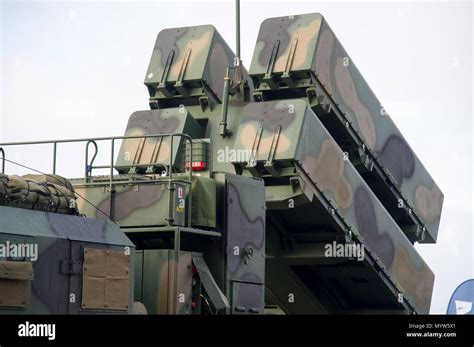
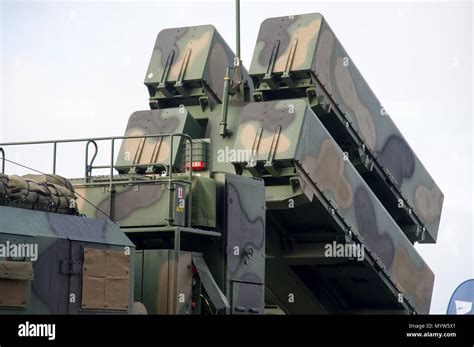
- Canisterized mobile launcher units mounted on tactical vehicles
- Optional surveillance and tracking radar capable of detecting maritime targets
- Digital networking architecture enabling integration with allied sensor and command systems
Unlike traditional coastal missile batteries designed primarily for static defense, the NSM system is built around a net-centric operational concept. Data from radars, reconnaissance aircraft, drones, or allied ships can be fused into a shared operational picture, enabling missile launches based on over-the-horizon targeting information.
This connectivity allows Latvian forces to participate directly in NATO’s distributed sensor-to-shooter networks, dramatically expanding situational awareness and reaction time in contested maritime environments.
Advanced Missile Technology and Precision Strike Capability
The Naval Strike Missile itself is widely regarded as one of the most advanced anti-ship weapons currently deployed within NATO arsenals. Designed for survivability and precision engagement, the missile combines several advanced technologies intended to overcome modern naval defenses.
Among its defining characteristics are low-observable design features, which reduce radar detectability during flight. The missile travels at sea-skimming altitude, hugging the ocean surface to minimize exposure to enemy sensors while executing complex maneuver patterns to evade interception.
Additional capabilities include:
- Passive imaging infrared seeker guidance
- autonomous target recognition algorithms
- precision aim-point selection
- terminal evasive maneuvers
- overland low-altitude flight capability
These features allow the NSM to strike both maritime and land-based targets with remarkable accuracy. For Latvia, the system provides an engagement range of up to 185 kilometers, enabling coastal batteries to monitor and threaten vessels operating far beyond the immediate shoreline.
The system’s plug-and-fight networking design enables multiple fire control centers to operate together, potentially linking up to four FCC nodes into a single coordinated defense network. Each node can authorize multiple simultaneous engagements, allowing the broader system to orchestrate dozens of concurrent missile strikes if required.
This distributed firing architecture significantly complicates enemy defensive planning, as hostile naval forces must contend with multiple dispersed launch points rather than a single identifiable missile site.
Proven Combat System with Expanding NATO Adoption
Latvia’s decision to adopt the NSM coastal defense system builds upon a track record of successful deployment by several NATO allies. Poland was the first nation to introduce the system in 2008, establishing a coastal defense regiment along the Baltic coast. The Polish military later expanded its capabilities by adding additional squadrons in 2014 and signing a significant follow-on contract in 2023.
Beyond Poland, the system has also been selected by Romania and the United States, while the Naval Strike Missile itself has been widely adopted for shipboard use by NATO navies.
The U.S. Marine Corps demonstrated the missile’s expeditionary capability during Large Scale Exercise 2021, when two NSM missiles were launched from a mobile platform and successfully struck a target ship at sea after traveling more than 100 nautical miles. The exercise showcased how mobile coastal missile batteries could support distributed maritime operations and contribute to sea denial missions.
The United States later deepened its investment in the system with a $960.8 million multiyear contract in 2024 for the Over-the-Horizon Weapons System, reinforcing the missile’s role in providing long-range anti-surface strike capability for both American and allied forces.
Transforming Latvia’s Coastline into a Defensive Barrier
For Latvia, the introduction of the NSM coastal defense system represents a profound shift in maritime defense strategy. Rather than attempting to match larger naval powers ship for ship, Latvia can leverage land-based missile batteries to control access to its coastal waters.
This approach reflects the principle of sea denial, in which smaller nations use precision strike systems to make maritime operations prohibitively risky for adversaries. Even a limited number of mobile missile batteries can threaten a wide range of vessels, from small patrol craft to heavily armored frigates and destroyers.
The system also offers land-attack capability, enabling strikes against high-value targets such as:
- logistics depots
- command and control centers
- sensor installations
- air defense sites
- ships docked in port facilities
The Latvian Ministry of Defence has previously emphasized that these missile batteries will play a central role in protecting national coastlines and maritime trade routes, while also contributing to NATO’s collective defense framework.
Notably, the United States has agreed to finance approximately 70 percent of the overall procurement cost, illustrating Washington’s continued commitment to strengthening the military capabilities of frontline NATO states.
NATO’s Baltic Shield and Infrastructure Protection
The timing of Latvia’s acquisition aligns closely with broader NATO initiatives to enhance security across the Baltic maritime domain. In January 2025, the alliance launched Operation Baltic Sentry, a multinational mission aimed at protecting critical undersea infrastructure following several incidents involving suspected sabotage of energy pipelines and communication cables.
The Baltic Sea hosts an extensive network of subsea data cables, energy pipelines, and maritime infrastructure essential to European economic and military stability. Disruptions to these systems could have wide-ranging consequences, affecting everything from financial networks to military command communications.
Baltic Sentry integrates frigates, maritime patrol aircraft, naval drones, and national surveillance assets into a coordinated monitoring effort designed to detect and deter hostile activity. Land-based missile systems like Latvia’s NSM batteries add another layer to this defense network by providing rapid response strike capability against hostile surface vessels operating in sensitive areas.
In February 2026, eight NATO allies—including Latvia—agreed to accelerate the development and integration of technology-enabled naval defense systems throughout the region. The NSM coastal defense program fits squarely within this broader effort to establish a layered maritime security architecture combining sensors, unmanned platforms, and precision weapons.
A Multinational Defense Ecosystem
Beyond its immediate military significance, the Latvian NSM contract illustrates the evolution of NATO’s transatlantic defense industrial ecosystem. The project connects American funding mechanisms, Norwegian missile technology, and manufacturing contributions from multiple European countries into a unified capability development effort.
This collaborative approach yields several strategic advantages. Shared equipment and software architectures enhance interoperability among allied forces, ensuring that sensor data, targeting information, and operational commands can be exchanged seamlessly across national boundaries.
Common weapons systems also simplify training, logistics, and long-term sustainment, creating efficiencies that strengthen the alliance’s overall readiness.
For Washington, supporting Latvia’s acquisition aligns with broader strategic objectives aimed at reinforcing NATO’s eastern flank while distributing defensive responsibilities among allied partners. For European members of the alliance, the program demonstrates how coordinated investment can deliver high-impact deterrence capabilities without requiring massive naval expansion.
Strengthening NATO’s Northeastern Defensive Line
As geopolitical competition intensifies in the Baltic region, the deployment of networked coastal missile batteries provides NATO with a powerful deterrence tool. Unlike traditional naval fleets that require significant time and resources to deploy, mobile missile systems can be rapidly dispersed, concealed, and repositioned, complicating enemy targeting efforts.
Latvia’s NSM system will form part of a growing network of precision-strike nodes distributed across NATO’s northeastern coastline. When combined with allied surveillance assets, naval patrols, and air power, these systems create an integrated defensive barrier capable of challenging any attempt to dominate the Baltic maritime domain.
The contract awarded to Kongsberg therefore represents more than a procurement decision. It signals a strategic shift toward distributed maritime defense, where land-based precision weapons, digital command networks, and multinational cooperation form the backbone of NATO’s deterrence posture.
In the complex security landscape of the Baltic Sea, the ability to transform geography into strategic advantage may prove decisive. With the arrival of the Naval Strike Missile Coastal Defense System, Latvia is poised to turn its shoreline into a formidable shield—one tightly woven into the collective defense fabric of the Atlantic alliance.