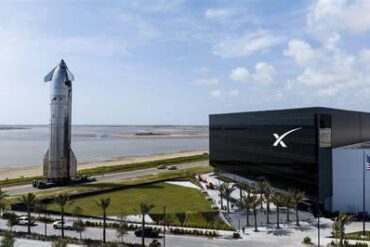
The convergence of commercial spaceflight and artificial intelligence has reached a historic inflection point as SpaceX merges with xAI, forming what is poised to become the most valuable private company in the world. The deal signals far more than a corporate consolidation—it represents a structural shift in how humanity will power, compute, and scale next-generation technologies. By integrating launch dominance with advanced AI research, Elon Musk is constructing a vertically integrated empire designed to operate both on Earth and beyond it.
At an estimated $1 trillion valuation, the newly combined entity now eclipses every other privately held firm, including major AI competitors. The scale of this valuation reflects investor confidence not only in reusable rocket economics and satellite broadband, but also in the explosive commercial demand for machine intelligence. With AI workloads expanding at unprecedented speed, infrastructure—not algorithms—is becoming the true bottleneck.
The merger arrives during a capital-intensive era for technology markets. Musk has already floated plans for a future initial public offering that could raise $30 billion, potentially pushing valuation estimates toward $1.5 trillion. Such a listing would rank among the largest financial events in corporate history and could dramatically expand funding for orbital computing networks, deep-space logistics, and AI supercomputing clusters.
Orbital Data Centers: Solving AI’s Energy Crisis
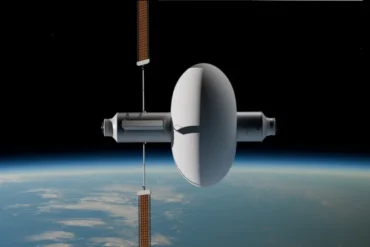
At the heart of the merger lies an audacious premise: move AI computation into space. According to company statements, terrestrial grids cannot sustainably support the coming surge in machine learning power demand. Training frontier AI systems requires colossal electricity loads, vast cooling systems, and continuous hardware refresh cycles—all of which strain land, water, and energy resources.
Space-based data centers offer radical advantages. Solar energy in orbit is continuous, unconstrained by weather or night cycles. Heat dissipation—one of computing’s greatest engineering challenges—becomes easier in the vacuum of space. Musk estimates that within two to three years, orbital computation could become the lowest-cost AI processing method at scale.
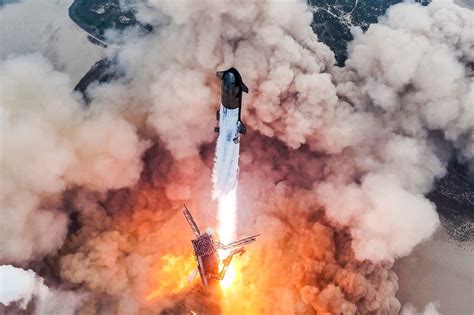
This strategy transforms rockets from transport vehicles into infrastructure deployment tools. Every heavy-lift launch becomes a delivery mechanism for compute nodes, power arrays, and laser communication relays, forming an extraterrestrial cloud network.
Satellite Megastructures and the Expansion of Starlink
To support this vision, SpaceX has petitioned regulators to authorize the launch of over one million satellites. The objective is not merely broadband expansion but the creation of a dense, resilient mesh capable of handling zettabyte-level data transfer between Earth and orbit.
Such scale would dwarf the existing Starlink constellation and position SpaceX as the backbone of global digital traffic. The network would support AI training, autonomous systems, defense communications, financial modeling, and climate simulations—industries where latency, bandwidth, and uptime are mission-critical.
Market Shockwaves Across AI and Automotive Sectors
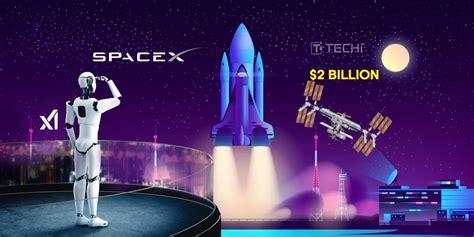
The merger’s ripple effects extend across Musk’s corporate ecosystem. Tesla’s recent decision to discontinue two mass-market vehicle models reflects a strategic pivot toward AI robotics and automation platforms. The automaker also invested $2 billion into xAI, reinforcing an interlinked supply chain of hardware, software, and compute power.
While some shareholders expressed concern about capital flowing between Musk-led firms, the integrated model offers strategic advantages. Autonomous vehicles, humanoid robots, and logistics AI all require immense training capacity—capacity the SpaceX–xAI alliance aims to supply internally.
Power Demand, Economics, and the Future of Computing
Financial institutions project that global electricity demand from AI data centers will rise 165% by 2030. This surge is already influencing consumer electronics pricing, semiconductor supply chains, and industrial energy markets. By shifting computation off-planet, SpaceX is attempting to decouple AI growth from Earth-bound resource constraints.
If successful, the merger will redefine infrastructure economics. Launch costs—once the barrier to space commercialization—become marginal relative to the value of orbital compute output. In effect, rockets turn into power plants, and satellites become servers.
The formation of a trillion-dollar private titan built on rockets, satellites, and artificial intelligence signals a new industrial category: space-native computing. Rather than supporting digital civilization from the ground, the next era of processing power may orbit above it—silent, solar-fed, and planetary in scale.