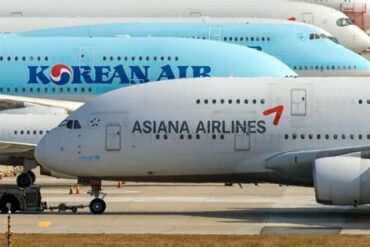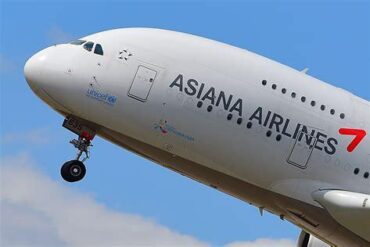
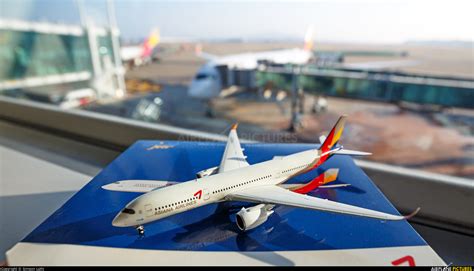
Asiana Airlines, founded in 1988, has long stood as a pillar of South Korea’s aviation industry. Headquartered in Osoe-dong, Gangseo District, Seoul, it has developed into a major international and domestic carrier. With its primary hubs at Incheon International Airport and Gimpo International Airport, Asiana services a vast network spanning Asia, North America, Europe, and parts of Oceania. By 2019, the airline commanded 25% of South Korea’s international and 20% of its domestic aviation market.
Initially launched as Seoul Air International under the ownership of Kumho Asiana Group, Asiana was introduced to challenge Korean Air’s monopoly, reshaping the competitive landscape of South Korean aviation.
Founding and Early Expansion
Asiana’s entry into the market was not born from deregulation, but rather as a result of chaebol-led industrial pressure. With a fleet of Boeing 737 Classics, the airline began operations in December 1988 on domestic routes to Busan and Gwangju. It quickly expanded its reach, launching flights to Jeju, Daegu, and international charters to Sendai, Japan within a year.
By 1990, scheduled international services had expanded to Tokyo, Nagoya, Sendai, and Fukuoka. Transpacific operations began in December 1991, when a Boeing 747-400 Combi launched service to Los Angeles. The following years saw additions to its network in Southeast Asia, Europe, and North America, including destinations like Vienna, Brussels, Honolulu, and Ho Chi Minh City.
Becoming a Global Carrier and Star Alliance Member
By the late 1990s, Asiana had grown into a global mid-sized carrier. In 1998, the airline flew South Korea’s president, symbolizing its rise to national prominence. It was listed on KOSDAQ in 1999 and joined Star Alliance in January 2003, a move that solidified its international stature and improved global connectivity.
Asiana enhanced its fleet with the Airbus A330 and Boeing 777-200ER, reinforcing its commitment to long-haul services. The cargo division, Asiana Cargo, further expanded with routes across Asia, Europe, and North America. By 2012, its annual revenue had climbed to $5.3 billion USD, a reflection of robust operational scale.
Brand Evolution and Service Refinement
In 2006, Asiana underwent a major corporate identity revamp. The travel classes were rebranded as First, Business, and Travel (economy) Class, each assigned a distinct color scheme—yellow, blue, and red, respectively. New crew uniforms were introduced, symbolizing alignment with the wider Kumho Asiana Group identity.
Onboard services included a range of classes such as First Suite Class—available on Airbus A380s servicing Los Angeles, Frankfurt, Sydney, and New York City—and Business Smartium Class for long-haul flights. Entertainment systems were progressively modernized, and high-tier passengers received personalized amenities, such as pajamas, luxury kits, and pre-order meal options.
Financial Crisis and Attempted Acquisition
Despite international success, Asiana faced a financial crisis in 2019. Kumho Asiana Group announced plans to sell the airline. Unprofitable routes were suspended, and acquisition interest emerged from Aekyung Group, Mirae Asset Daewoo, and others. On 12 November 2019, a consortium led by HDC Hyundai Development Company was named the preferred bidder.
However, after regulatory approvals from multiple countries—including China, the U.S., and Turkey—the deal was ultimately canceled by the Korea Development Bank (KDB), citing concerns. During this period, Asiana strategically retired older aircraft, including Boeing 747-400s and 767-300s, to reduce financial liabilities.
Merger with Korean Air: Timeline and Milestones
2020–2022: Government-Led Consolidation
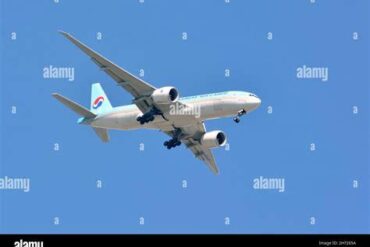
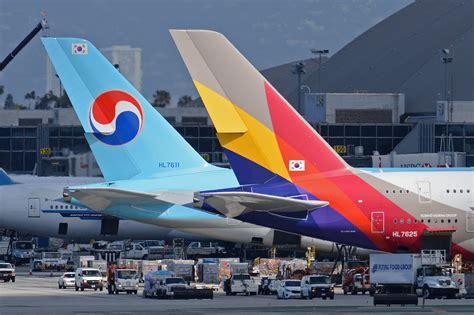
On 16 November 2020, the South Korean government announced a state-backed merger of Asiana Airlines with Korean Air. KDB funded the process with 800 billion won (approx. $600 million USD) through an investment in Hanjin KAL, Korean Air’s holding company.
In 2021, Korean Air began running Asiana as a subsidiary, delaying full integration pending antitrust approvals from China, Japan, the U.S., Taiwan, Thailand, and Vietnam. By the end of 2021, Malaysia and Vietnam had approved the deal.
2023–2024: Regulatory Battles and Acquisition Completion
In 2023, the U.S. Department of Justice attempted to block the merger citing monopoly risks. In response, Asiana agreed to divest its cargo division in November 2023. By 28 November 2024, the European Commission gave its approval, followed shortly by the United States on 2 December 2024.
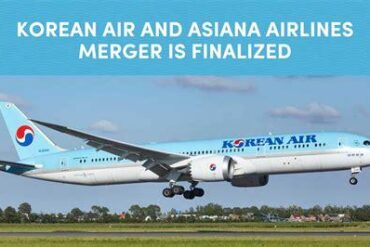
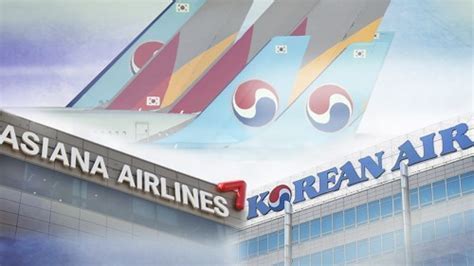
The merger was formally completed on 12 December 2024, with Korean Air acquiring 63.88% of Asiana for 1.5 trillion won (approx. $1.6 billion USD). As part of this, the cargo business was sold to Air Incheon for 470 billion won.
Future Integration by 2026
In December 2024, Asiana debuted a revised brand identity, quietly removing the “red arrow” or Asiana Wings from aircraft and corporate materials. The integration process will involve merging subsidiary carriers—Air Seoul, Air Busan, and Jin Air—into a new unified low-cost airline, optimizing services for domestic and Asia-Pacific routes.
By end of 2026, Asiana is expected to fully dissolve as an independent entity, completing 38 years of service, and will be fully absorbed under Korean Air’s branding and operations.
Corporate Infrastructure and Fleet Modernization
Asiana’s headquarters remain in Asiana Town, Gangseo District, Seoul. Its current fleet consists of 68 aircraft, including:
- Airbus A321-200/neo (short-to-medium haul)
- Airbus A330-300
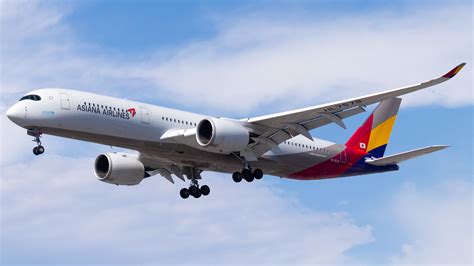
- Airbus A350-900 (new long-haul flagship)
- Airbus A380-800 (set for retirement by 2030)
- Boeing 777-200ER
An additional 27 aircraft are on order. Legacy aircraft—such as Boeing 747 variants, 737-400/500, and 767 series—have been retired, some transferred to subsidiaries like Air Busan, Air Seoul, or Air Incheon, or decommissioned after accidents.
Global Network and Alliances
Asiana serves five continents, with particularly dense coverage across Asia, including China, Japan, Southeast Asia, and Central Asia. It also connects to Europe, North America, and select Oceania destinations. Its cargo division plays a critical role in global supply chains, particularly in Europe and the U.S.
As a Star Alliance member, Asiana codeshares with global airlines such as United Airlines, Singapore Airlines, Thai Airways, and Turkish Airlines. Other partnerships include Air Astana, Qatar Airways, and Etihad Airways. It also holds interline agreements with operators like Deutsche Bahn for integrated rail-air connectivity in Europe.
Asiana Club: Loyalty Through Tiers
Asiana’s frequent-flyer program, Asiana Club, offers five tiers: Silver, Gold, Diamond, Diamond Plus, and Platinum. Tier status is earned over two years through mileage accrued on Asiana or Star Alliance flights, or select partners. Members enjoy access to airport lounges, priority boarding, and bonus mileage accrual, depending on tier.
Incidents and Safety Milestones
Despite a mostly safe record, Asiana has faced several notable incidents:
- Flight 733 (1993): Boeing 737-500 crash near Mokpo; 68 fatalities.
- Flight 991 (2011): Cargo 747-400F crash due to in-flight fire; 2 fatalities.
- Flight 214 (2013): Boeing 777-200ER crash on approach at San Francisco; 3 fatalities, $500,000 U.S. fine.
- Flight 162 (2015): A320 crash at Hiroshima; 20+ injuries.
- Flight 8124 (2023): Passenger opened emergency door mid-air; several injuries, passenger arrested.
These incidents prompted extensive reviews of safety protocols, training, and fleet decisions.
Conclusion: Legacy in Transition
Asiana Airlines has spent nearly four decades as a symbol of South Korea’s aviation growth, transforming from a regional upstart into a globally recognized airline. Its merger with Korean Air marks the end of an era but also the start of a new chapter, aiming to create a world-leading carrier by 2026. With careful integration, brand preservation, and fleet modernization, Asiana’s legacy will continue to shape the skies over Asia and beyond.