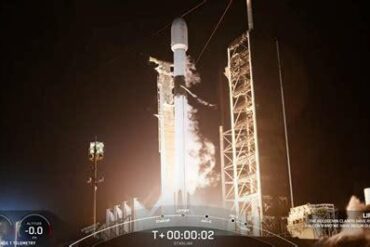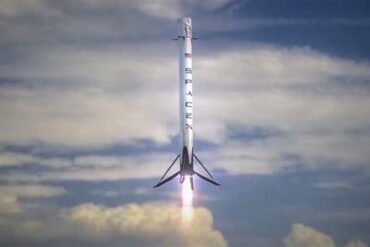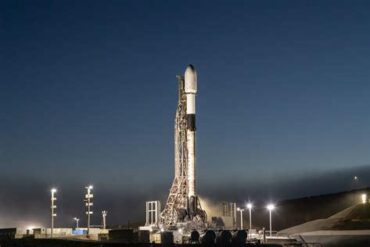
The era of low-cost commercial launches is entering a new phase. SpaceX, the company that transformed the global space industry with reusable rockets and rapid launch schedules, will soon face mandatory federal fees for future launches and reentries. The change marks a significant shift in how the United States regulates and funds commercial access to space.
For years, regulators largely avoided imposing direct launch charges in order to help private spaceflight grow. That strategy succeeded. Private companies expanded rapidly, launch frequency surged, and orbital activity accelerated. Now, with the industry maturing, policymakers are moving toward a model where operators help pay for the system that oversees them.
The Federal Aviation Administration is implementing a fee schedule tied to payload weight. Starting in 2026, launches and reentries will be charged $0.25 per pound, with the rate increasing annually until it reaches $1.50 per pound by 2033. A cap of $30,000 per mission will limit total charges on any single launch or reentry event.
Why SpaceX Will Be Required To Pay
The fees are designed to support the FAA’s Office of Commercial Space Transportation, the agency division responsible for licensing launches, reviewing safety plans, monitoring reentries, and coordinating airspace restrictions. As rocket traffic increases, those responsibilities have expanded dramatically.
Commercial launches are no longer rare spectacles. They are becoming routine transportation events. SpaceX alone has established an unmatched cadence of missions involving satellites, cargo, rideshares, and crewed flights. Every launch requires approvals, technical reviews, hazard assessments, and coordination with aviation systems.
Without additional funding, regulators risk becoming a bottleneck. Delays in licensing can stall missions, disrupt contracts, and slow innovation. The new fee structure is intended to provide the manpower and systems needed to keep pace with an industry moving at extraordinary speed.
A Booming Space Economy Needs Oversight
Recent years have seen a record number of satellites and payloads sent into orbit. Much of that growth comes from mega-constellations designed for broadband internet, Earth observation, military communications, and future cloud-computing infrastructure in space.
That means more launches, more reentries, and more crowded orbital lanes. It also means greater pressure on safety systems both in the sky and on the ground. Regulators must monitor debris risks, launch windows, airspace closures, and vehicle reliability with increasing precision.
Companies such as Blue Origin, Rocket Lab, and emerging launch providers are also expanding operations. Space is no longer a one-company race. It is becoming a busy commercial marketplace that needs rules, staffing, and predictable administration.

How Much This Could Affect SpaceX
For a company the size of SpaceX, the fees are unlikely to create financial strain. Compared with launch contracts worth millions of dollars, a capped regulatory charge is relatively minor. However, across dozens or even hundreds of annual missions, the cumulative cost becomes meaningful.
More importantly, the policy signals that commercial spaceflight is graduating from startup status into a fully regulated transportation sector. Airlines pay fees that support aviation oversight. Rocket companies are now entering the same reality.
What Happens Next
The biggest impact may not be the cost itself, but what the money funds. Faster approvals, stronger oversight, and better infrastructure could help the entire sector scale more efficiently. If licensing becomes smoother, operators may ultimately save more through reduced delays than they spend in fees.
For SpaceX, future launches will cost a little more. But in exchange, the industry may gain something far more valuable: a regulatory system built for the next space age.