Space exploration was once defined by caution, lengthy development cycles, and hardware that flew only after years—sometimes decades—of testing. In that environment, a single launch failure could stall an entire program for years. Yet SpaceX has fundamentally rewritten those rules. Rather than treating rockets as static machines that must be perfected before flight, the company approaches spacecraft development much like modern software engineering: build, test, fail, improve, and launch again.
This philosophy has enabled SpaceX to become the most successful commercial launch provider in history, completing hundreds of missions while pioneering reusable orbital rockets. The company’s rapid iteration strategy has not only reduced costs dramatically but has also accelerated technological progress at a pace previously considered impossible in the aerospace industry.
Traditional aerospace companies often spend years refining designs on paper before committing to hardware. SpaceX reverses that sequence. The company prefers to place real hardware into flight environments as early as possible, gather vast amounts of performance data, and rapidly implement improvements in subsequent versions. In many ways, each new rocket resembles a software patch—introducing fixes, enhancements, and new capabilities with every flight.
After more than 600 missions and over 500 booster recoveries, the results speak for themselves. What initially appeared reckless to critics has evolved into one of the most effective engineering methodologies ever applied to spaceflight.
The Software Development Mindset Behind SpaceX Engineering
The cornerstone of SpaceX’s success lies in its engineering culture. Former upper-stage production lead Tim Berry described a process deeply embedded within the company’s DNA: constantly challenge requirements, remove unnecessary components, simplify systems, optimize performance, accelerate development, and automate only after achieving the simplest possible baseline.
This approach mirrors software development practices used by major technology firms. Software engineers rarely wait until a program is perfect before releasing it. Instead, they deploy an initial version, collect user feedback, identify flaws, and release improved iterations continuously.
SpaceX applies precisely the same philosophy to rockets.
Rather than assuming engineers can predict every possible issue in simulations, SpaceX recognizes that real-world flight data remains the ultimate teacher. Each launch becomes a high-value experiment, generating millions of data points that reveal weaknesses impossible to identify on the ground.
Failures, therefore, are not viewed as catastrophic endpoints. They are considered essential sources of information.
This mindset represents a dramatic departure from conventional aerospace programs, where fear of failure often results in extensive delays and soaring development costs.
Falcon 1: The Rocket That Established the Iteration Model
The company’s first orbital launch vehicle, the Falcon 1, established the blueprint for every SpaceX program that followed.
Early Falcon 1 flights experienced multiple failures. Engines shut down unexpectedly, staging events malfunctioned, and missions ended prematurely. Under traditional aerospace practices, such setbacks might have terminated the program altogether.
Instead, SpaceX engineers analyzed every failure in extraordinary detail.
Each unsuccessful mission produced critical insights that directly informed subsequent designs. Components were redesigned, procedures modified, and software refined. The company continuously incorporated lessons learned into newer iterations.
Eventually, Falcon 1 successfully reached orbit in 2008—a milestone widely regarded as the moment that saved SpaceX from potential bankruptcy and validated its unconventional development philosophy.
The experience proved that rapid iteration could work not only in software but also in rocketry.
How Grasshopper Revolutionized Reusable Rocket Technology
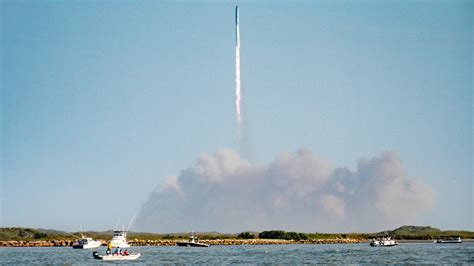
Perhaps no project better illustrates SpaceX’s software-style philosophy than the experimental Grasshopper program.
Before attempting to land operational Falcon 9 boosters, SpaceX constructed a dedicated prototype specifically designed to test vertical takeoff and landing technologies. Grasshopper conducted numerous short flights, gradually increasing altitude and complexity.
The prototype was never intended to become a commercial vehicle. Its purpose was experimentation.
By flying repeatedly, engineers gathered invaluable data regarding engine throttling, flight control algorithms, landing leg behavior, and guidance systems. Small improvements were introduced after nearly every test.
Those incremental refinements ultimately made routine booster recovery possible.
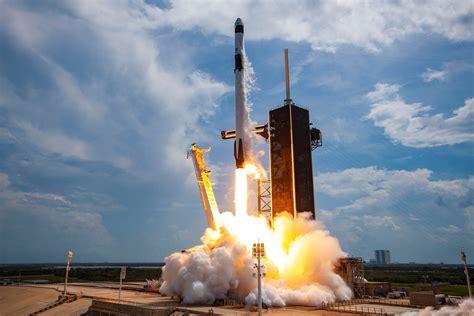
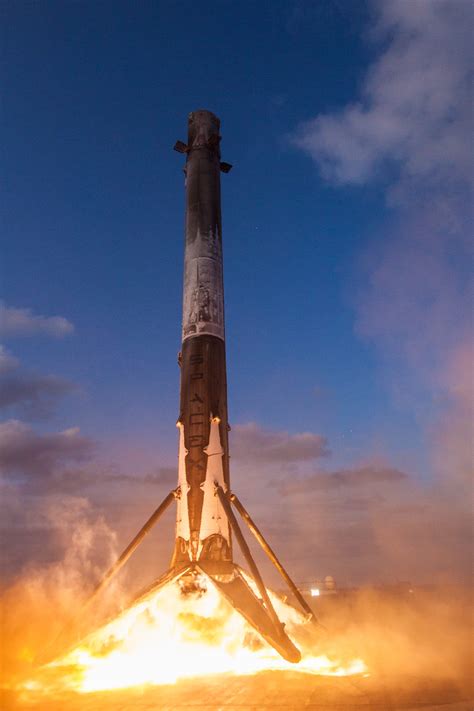
Today, reusable Falcon 9 boosters regularly return to Earth and fly again, reducing launch costs to levels previously unimaginable. Modern Falcon 9 Block 5 rockets embody years of accumulated upgrades derived from countless iterative improvements.
Starship Represents SpaceX’s Most Ambitious Update Cycle Yet
The software analogy reaches its fullest expression in the development of the Starship system.
Rather than waiting years to unveil a finalized spacecraft, SpaceX built a succession of experimental “hopper” vehicles. These early prototypes performed increasingly sophisticated flights, testing propulsion, aerodynamics, and landing techniques.
Some prototypes exploded spectacularly.
Yet each dramatic failure accelerated development.
Engineers refined structural designs, modified propellant systems, improved heat shielding, and enhanced flight software after every test. Successive versions became progressively more capable.
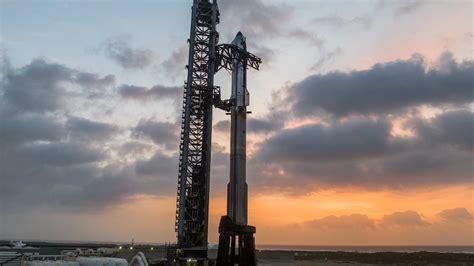
This relentless cycle culminated in increasingly successful integrated Starship test flights. By 2026, third-generation Starship and Super Heavy vehicles demonstrated significant improvements during Flight 12, particularly in atmospheric reentry performance. The spacecraft avoided major burn-through issues that had plagued earlier versions, showcasing major advances in thermal protection technology.
Why Rapid Iteration Gives SpaceX a Competitive Advantage
SpaceX’s software-inspired methodology compresses innovation timelines dramatically. Instead of requiring decades to introduce revolutionary capabilities, the company can implement meaningful improvements within months.
This speed delivers multiple strategic advantages:
- Lower development costs through continuous refinement rather than massive redesigns.
- Faster technological breakthroughs enabled by real-world testing.
- Greater reliability achieved through extensive operational experience.
- Accelerated reusability advancements that reduce launch expenses.
- Shorter pathways to ambitious goals, including lunar and Martian missions.
Most importantly, rapid iteration transforms failure from an existential threat into a valuable engineering tool.
As SpaceX pursues fully reusable spacecraft, lunar landings, and eventual missions to Mars, treating rockets like software updates may prove to be one of the most significant innovations in aerospace history—not because rockets became simpler, but because the process of improving them became dramatically faster.