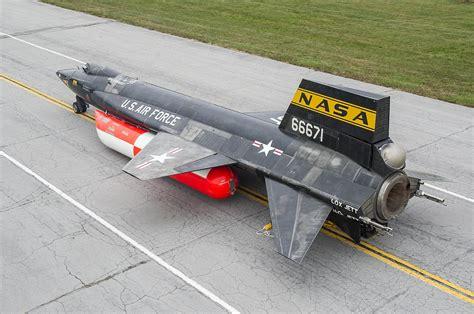
The North American X-15 stands as a landmark in the history of aviation and space exploration. Designed as a joint project between the United States Air Force (USAF) and NASA, this rocket-powered aircraft pushed the boundaries of altitude, velocity, and engineering during a time when the race to space was accelerating. Between 1959 and 1968, the X-15 not only shattered speed and altitude records but also laid the groundwork for the technologies used in the Space Shuttle, Saturn V, and modern hypersonic vehicles.
Design Origins and Development
The origin of the X-15 traces back to the collaborative vision of Walter Dornberger and engineers from NACA (predecessor to NASA), who envisioned a research aircraft capable of reaching the edge of space. A formal Request for Proposal (RFP) issued in 1954 led to North American Aviation being selected to build the airframe, with Reaction Motors tasked with designing its high-performance engines.
The final aircraft featured a sleek, cylindrical body crafted from Inconel-X, a nickel-chromium superalloy chosen for its extreme heat resistance. Unlike traditional jets, the X-15 lacked takeoff capability and was instead air-launched from modified NB-52A/B Stratofortress bombers at around 8.5 miles altitude and 500 mph. This drop-launch technique enabled the X-15 to start its missions already in thin atmosphere, bypassing much of the energy loss in traditional takeoffs.
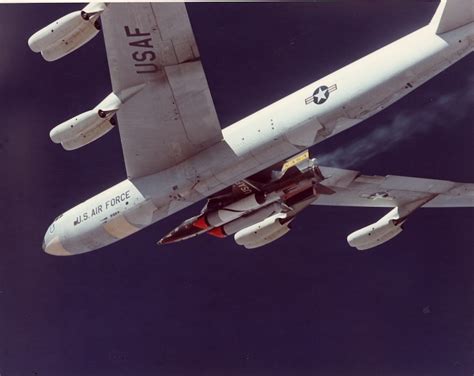
Distinctive in design, the aircraft had dorsal and ventral wedge-shaped fins for stability, a jettisonable ventral skid for landing, and heat-resistant skin to endure temperatures exceeding 1,200°F during re-entry. The wing area of just 200 sq ft and stubby wings reinforced its role as a craft intended more for speed and vertical ascension than conventional flight.
Propulsion Powerhouse: The XLR99 Engine
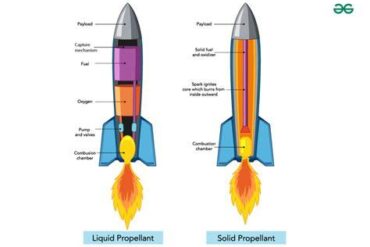
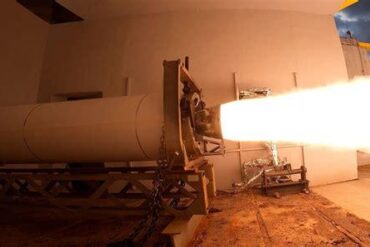
While early flights employed twin XLR11 engines with 16,000 lbf total thrust, the game-changer came in late 1960 with the debut of the XLR99 engine. This monstrous rocket engine generated a staggering 57,000 lbf of thrust and burned a mix of anhydrous ammonia and liquid oxygen, pressurized by a hydrogen peroxide-driven turbopump. The engine consumed over 15,000 pounds of propellant in just 80 seconds, highlighting the sheer intensity of each flight.
The craft’s Reaction Control System (RCS)—operating with high-test peroxide (HTP)—was essential for maneuvering in the thin atmosphere where aerodynamic control surfaces became ineffective. Helium and liquid nitrogen tanks were used to purge and cool various systems, enabling stable performance under volatile conditions.
Advanced Cockpit and Flight Control Systems
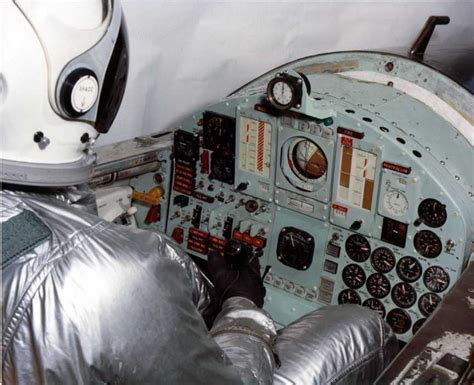
Inside the X-15 cockpit, every square inch was engineered for survival and control in near-space conditions. Pilots navigated missions involving ballistic ascents, re-entry, and unpowered glides—all without the aid of a computer.
A unique three-stick control system, later integrated into a single MH-96 adaptive control system, allowed seamless transition between aerodynamic surfaces and reaction control thrusters. This manual override capability gave pilots critical authority during high-G and low-density flight regimes.
The cockpit featured pressurized suits, heated windows, and a deceleration headrest to manage rapid G-force shifts. In emergencies, pilots could eject using a specially designed ejection seat rated to Mach 4 and 120,000 ft.
Operational Missions and Hypersonic Feats
The X-15 flew 199 missions between June 8, 1959 and October 24, 1968, covering a spectrum of experimental goals from aerodynamics and thermal protection to high-altitude physiological studies.
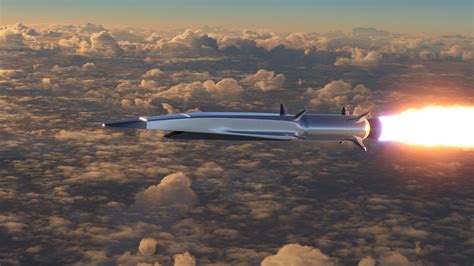
Pilots were dropped from their B-52 motherships and ignited the rocket engines to accelerate through the upper atmosphere. The most iconic mission came on October 3, 1967, when William J. “Pete” Knight flew X-15A-2 at Mach 6.7 (4,520 mph) at an altitude of 102,100 feet, setting the world record for crewed powered flight speed—a record that still stands.
Twelve highly trained pilots took part in the program, among them future astronaut Neil Armstrong, who would go on to become the first man on the Moon. Notably, Joseph A. Walker flew two missions exceeding 100 km altitude, crossing the Kármán line, the internationally recognized boundary of space.
Tragically, not all missions ended safely. On November 15, 1967, Major Michael J. Adams perished during Flight 191 when the aircraft entered an unrecoverable hypersonic spin, ultimately disintegrating upon reentry.
Aerodynamic Challenges and Stability Innovations
Flying at Mach 6+ demanded radical approaches to stability and aerodynamics. The thick wedge-shaped tail provided essential stability at hypersonic speeds, offsetting base drag and heat buildup. To control descent and ensure effective gliding, the X-15 employed extendable ventral side panels that doubled as airbrakes, drastically increasing tail surface area and deceleration ability.
Aerodynamic tests conducted during X-15 missions provided pivotal data on shockwave behavior, thermal expansion, and boundary-layer effects. These insights informed not just military programs, but also civilian spaceflight design, including components of the Space Shuttle orbiter.
Legacy and Impact on Space Exploration
The X-15’s impact on aerospace engineering cannot be overstated. It pioneered multiple systems later used in spacecraft:
- Thermal protection materials
- High-altitude control techniques
- Reusable flight surfaces
- Pilot training protocols for zero-pressure environments
The program also served as a proving ground for space-worthy crew suits, avionics, and high-speed communication systems.
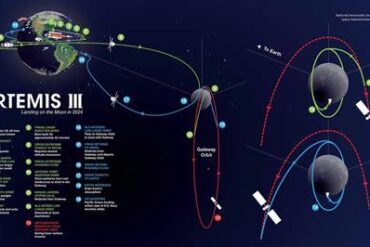
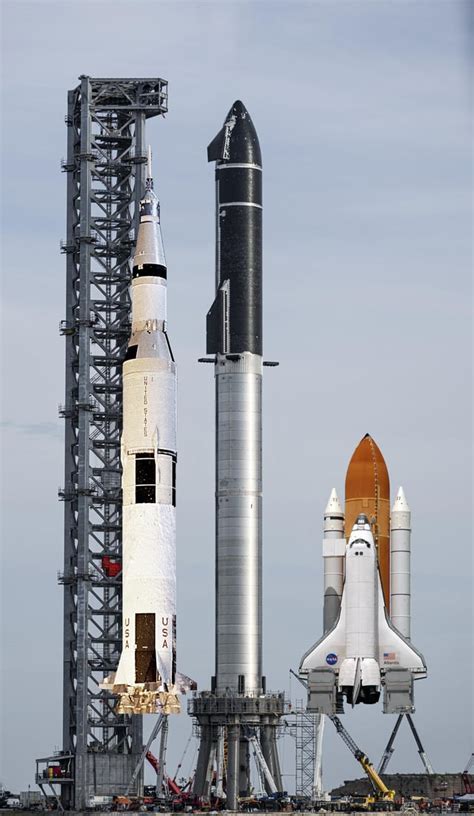
Although derivative concepts like the X-15B orbital variant and the Dyna-Soar spaceplane were canceled, many design philosophies resurfaced decades later in X-planes, SpaceShipOne, and NASA’s Artemis vehicles.
Final Flights, Preservation, and Public Display
Only three X-15 aircraft were built. X-15-1 and the modified X-15A-2 have been preserved and are currently exhibited at the Smithsonian National Air and Space Museum Udvar-Hazy Center and the National Museum of the United States Air Force, respectively. Several detailed mockups exist at the Dryden Flight Research Center, Pima Air & Space Museum, and Evergreen Aviation & Space Museum.
The modified launch aircraft, NB-52A and NB-52B, also remain on display, embodying the powerful synergy between mother ships and rocket planes that defined this era of research.
Specifications of the North American X-15
- Length: 49 ft 2 in (15 m)
- Wingspan: 22 ft 4 in (6.8 m)
- Height: 13 ft 1 in (4 m)
- Wing Area: 200 sq ft (18.6 m²)
- Empty Weight: 14,600 lb (6,623 kg)
- Gross Weight: 33,500 lb (15,195 kg)
- Engine: XLR99 rocket engine, 70,400 lbf
- Maximum Speed: 4,520 mph (Mach 6.7)
- Range: 280 miles (450 km)
- Ceiling: 354,330 ft (107.9 km)
- Climb Rate: 60,000 ft/min (18,288 m/min)
- Thrust-to-Weight Ratio: 2.07
Conclusion: The Hypersonic Trailblazer
The North American X-15 was not merely an aircraft—it was an aerospace laboratory, an engineering marvel, and a bold stride toward the stars. Its legacy endures in every modern hypersonic test, reusable spaceplane, and mission that dares to pierce the boundaries of atmosphere and imagination. The X-15 remains one of the most successful experimental aircraft ever constructed, its data and influence etched deeply into the history—and future—of human spaceflight.