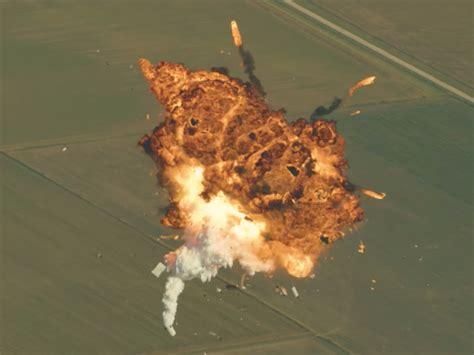
The modern aviation system is built on predictability, coordination, and precise risk management. Commercial airlines operate within tightly controlled air corridors where even minor deviations can ripple into major safety concerns. That delicate balance has increasingly been challenged by a new and unusual factor: SpaceX rocket explosions occurring in shared airspace, forcing airlines into sudden evasive maneuvers and raising uncomfortable questions about how much risk the global aviation system can absorb.
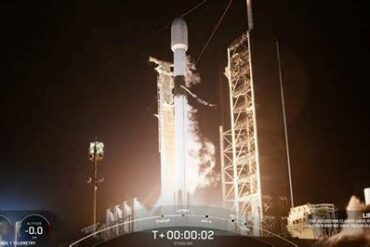
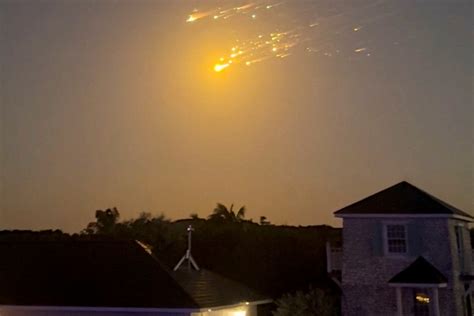
On January 16, 2025, that risk stopped being theoretical. At 5:49 p.m. local time, air traffic controllers across the Caribbean received an urgent alert. SpaceX’s Starship Flight 7 had exploded mid-flight, scattering debris across airspace used by commercial routes near Puerto Rico, Cuba, and neighboring islands. The response was immediate and dramatic. At least 20 passenger aircraft were ordered to divert, some mid-ocean, with limited fuel margins and hundreds of passengers onboard.
The incident was not an anomaly. It was another data point in a growing pattern.
SpaceX, led by Elon Musk, has built its reputation on aggressive innovation and rapid iteration. The company’s Starship program is central to its ambitions for Mars, lunar missions, and global satellite deployment. Explosions, in this context, are often framed as “learning experiences.” In controlled test zones, that philosophy has merit. In shared civilian airspace, the calculus changes entirely.
Commercial aircraft cannot simply pause, hover, or absorb uncertainty. When a rocket explodes unexpectedly, airlines must reroute instantly, sometimes into crowded corridors, sometimes toward airports not equipped for sudden influxes of diverted flights. The risks are not abstract. Emergency course changes increase mid-air collision probability, strain air traffic controllers, and can force aircraft into fuel-critical situations that aviation safety doctrine works tirelessly to avoid.
The Federal Aviation Administration sits at the center of this growing tension. Traditionally, the FAA’s mandate has been clear: protect airline passengers and crews. In recent years, it has also taken on a parallel responsibility—supporting the commercial space industry as a driver of technological and economic growth. That dual role has created an uneasy overlap between regulator and enabler.
Before any SpaceX launch, the FAA evaluates projected debris zones, establishes temporary flight restrictions, and determines whether the acceptable risk thresholds are met. The problem is frequency. Starship has exploded often enough that failures are no longer statistically rare events. There is now an entire online ecosystem cataloging Starship explosions, a fact that would be unthinkable in commercial aviation.
In February 2025, the FAA confirmed an open investigation into Starship Flight 7, yet still permitted Starship Flight 8 to proceed. This decision followed a regulatory framework reinforced during the Trump administration, allowing launches to continue during investigations as long as baseline requirements are met. From an airline safety perspective, this approach appears counterintuitive. Investigations exist to identify unknown risks. Continuing launches while those risks remain unresolved places airlines in a reactive posture rather than a protected one.
Public reaction has been sharply divided. Elon Musk’s response has leaned toward bravado. After one high-profile explosion, he posted a video on X with the caption, “Success is uncertain, but entertainment is guaranteed!” For SpaceX enthusiasts, the message reinforces a culture of bold experimentation. For airline passengers, it underscores a perceived disconnect between spaceflight ambition and everyday safety.
That disconnect became painfully real for Ray Peck, a pharmaceutical CEO traveling from Miami to Colombia in March 2025. His flight was forced to turn back mid-route due to debris risks from Starship Flight 8. In an NBC News interview, Peck noted that airline delays usually come with familiar explanations—weather, mechanical issues, missed connections. This time, the reason was surreal: a rocket had exploded overhead, and debris was falling through controlled airspace.
Online discussions reflect the same divide. On Reddit and aviation forums, some users dismiss the danger as overstated, emphasizing SpaceX’s long-term benefits to science and humanity. Others argue that no technological progress justifies placing uninvolved passengers at risk, especially when alternatives like offshore launch corridors or stricter exclusion zones exist.
What makes the issue particularly serious is scale. SpaceX launch cadence is accelerating, not slowing. Starship is designed for high-frequency operations, potentially multiple launches per week. Each launch increases the cumulative probability of failure during active airline traffic windows. Even if individual risks remain statistically “acceptable,” their aggregation over time tells a different story.
Aviation safety has historically improved by eliminating edge cases, not normalizing them. Near-misses, emergency diversions, and fuel-critical reroutes are treated as warning signs, not acceptable collateral. The continued coexistence of experimental heavy-lift rockets and dense commercial air routes challenges that philosophy at a systemic level.
The question is no longer whether SpaceX explosions can disrupt airline operations. That has already been answered. The real issue is whether regulators will recalibrate airspace prioritization, adjust risk thresholds, or impose stricter separation between experimental spaceflight and civilian aviation. As launch activity increases, the margin for error shrinks, and the consequences of miscalculation grow heavier with every passenger onboard.
The skies are getting crowded, not just horizontally, but vertically. How those layers coexist will define the next era of both aviation safety and commercial spaceflight.