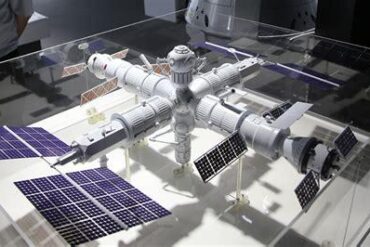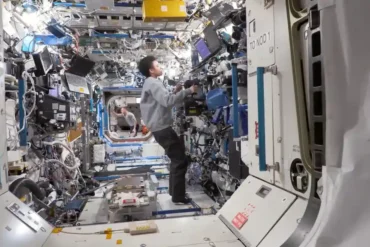
The International Space Station has orbited Earth since 1998, circling the planet every 90 minutes as a symbol of fragile but remarkable global cooperation. For more than two decades, it has functioned as humanity’s most ambitious laboratory in microgravity, hosting astronauts from across the world and enabling thousands of experiments in medicine, materials science, fluid dynamics, and Earth observation. Yet by 2030, this orbital icon is scheduled for deorbit, with SpaceX tasked to guide the ISS into a controlled descent over the Pacific Ocean. The retirement of the ISS is not the end of low Earth orbit infrastructure. It is the beginning of a commercial reckoning.
NASA has made it clear: the next generation of orbital platforms will not be government-built monoliths assembled over 40 separate launches. Instead, the agency intends to lease space aboard commercial space stations, transforming itself from operator to customer. That pivot has ignited competition among aerospace giants and ambitious startups. Among them stands Max Space, a company that believes the future of orbital infrastructure is not rigid, metallic, and pieced together over a decade—but expandable, modular, and radically efficient.
Max Space calls itself a pioneer in space real estate, a phrase that sounds audacious until you examine the engineering logic behind it. Traditional stations like the ISS rely on hard-shell modules constrained by rocket fairing dimensions. What fits inside the rocket is what you get in orbit. Expandable habitats invert that equation. They launch compact and then unfurl once in space, increasing their internal volume dramatically. According to Max Space, its habitats can expand up to 20 times their launch size, a claim that, if validated at scale, changes the economics of orbital construction.
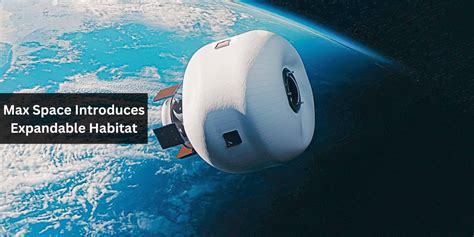
Thunderbird: The First Commercial ISS Replacement Candidate
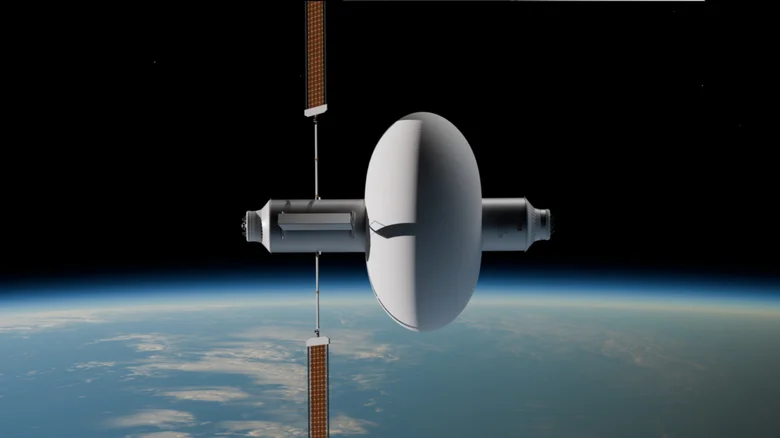
At the center of Max Space’s vision is Thunderbird, an expandable habitat engineered to maximize pressurized volume while minimizing launch constraints. Thunderbird is not a theoretical sketch. It is the company’s first operational station concept, designed to compete directly in NASA’s Commercial Low Earth Orbit Destinations (CLD) program.
Thunderbird will provide over 12,300 cubic feet of pressurized volume, roughly one-third the size of the ISS. That comparison matters. The ISS required more than 40 launches and nearly a decade of assembly to achieve approximately one million pounds of orbiting infrastructure. Thunderbird aims to compress that complexity into a system capable of launching aboard a SpaceX Falcon 9, eliminating the need for super-heavy lift vehicles in its initial configuration.
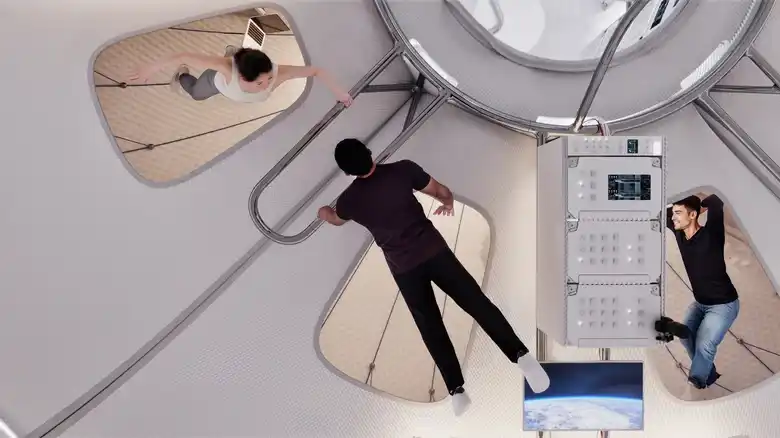
What distinguishes Thunderbird is its so-called “morphic interior structure.” Rather than fixed walls and static modules, the interior is designed to be reconfigurable. CEO Saleem Miyan has likened it to movable furniture on a grand scale—an architectural flexibility that allows astronauts to reshape their environment depending on mission needs. Private crew quarters, shared communal areas, research stations, and an observation gallery can be arranged dynamically. More than 60 payload lockers will support experiments and commercial manufacturing in microgravity.
The station is designed to support four full-time crew members and up to eight visitors, positioning it not only as a research hub but as a potential destination for commercial astronauts, private researchers, and even space tourism clients. The inclusion of visitor capacity signals an understanding of where orbital economics are headed: diversified revenue streams beyond government contracts.
Expandable Habitats and the Physics of Efficiency
Expandable habitats are not science fiction. NASA previously tested inflatable technology with the Bigelow Expandable Activity Module (BEAM) attached to the ISS. The physics are straightforward. A flexible outer shell reinforced with advanced fabrics and micrometeoroid shielding can remain compressed during launch, then inflate and rigidize in microgravity. The engineering challenge lies in ensuring durability, radiation protection, and long-term structural integrity.
If Max Space successfully validates its design, the advantages become obvious. Larger internal volumes mean more laboratory space, better crew comfort, and improved manufacturing capacity—all without the mass and assembly requirements of rigid modules. In orbital engineering, mass is money. Every kilogram saved reduces launch costs and complexity.
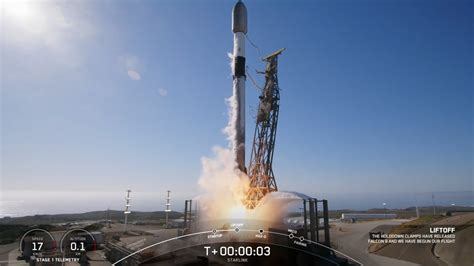
Max Space plans to test these principles during Mission Evolution, scheduled for February 2027. This milestone will send a 175-cubic-foot expandable prototype into low Earth orbit aboard a Falcon 9. The mission will evaluate structural resilience and scrutinize the station’s environmental control and life support systems (ECLSS)—the technological backbone that regulates air, water, temperature, and waste recycling in a closed environment. Without a reliable ECLSS, expansion volume is meaningless.
NASA’s Commercial Low Earth Orbit Strategy
NASA’s CLD initiative is designed to prevent a post-ISS vacuum in American orbital presence. Instead of building a single successor, the agency is expected to award multiple Space Act Agreements, allowing private firms to mature their platforms with NASA as an anchor tenant. This lowers risk for startups while ensuring continuity of research.
For Max Space, CLD provided strategic clarity. The company’s roadmap now extends beyond Thunderbird to larger systems, including a lunar station concept up to 30 times larger and a massive habitat exceeding 350,000 cubic feet for lunar and Martian operations. That scale suggests ambitions well beyond replacing the ISS. It hints at infrastructure for sustained human presence beyond Earth orbit.
Partnerships will be essential. Max Space has aligned with SpaceX for launch services, industrial design firm Omi for interior architecture, mission designer Astro Digital, and aerospace-focused firms such as Redwire and Voyager. These collaborations create an ecosystem rather than a solitary venture—a necessary condition in an industry where reliability is measured in microns and milliseconds.
The Competitive Battlefield in Low Earth Orbit
Max Space is not alone. Established aerospace players including Lockheed Martin and Sierra Space are pursuing their own commercial stations. NASA’s Artemis Base Camp concepts also incorporate inflatable habitats for lunar operations. Yet Max Space currently distinguishes itself by scheduling a concrete launch timeline for its expandable module.
That timeline matters. In aerospace, credibility is currency. Announced capabilities mean little without flight data. If Mission Evolution succeeds and Thunderbird reaches orbit by 2029, the company could enter the ISS retirement window with operational hardware rather than promises.
The broader implication is profound. The ISS was an engineering cathedral assembled by governments. Its successor may resemble a commercial business park in orbit, where research labs, manufacturing bays, and private astronaut quarters coexist under corporate stewardship. Expandable habitats could make that transformation economically viable.
The strangeness of the moment should not be overlooked. Humanity is preparing to dismantle its most ambitious cooperative structure in space while simultaneously accelerating private-sector competition to replace it. Whether Max Space ultimately claims that mantle remains uncertain. What is certain is that the era of monolithic, state-built space stations is closing. In its place emerges a marketplace of modular, inflatable, rapidly deployable habitats—an orbital real estate revolution unfolding 250 miles above Earth.
If Thunderbird performs as advertised, the next great chapter in human space infrastructure will not be written solely by NASA or SpaceX. It will be shaped by companies bold enough to rethink what a space station looks like when it is no longer built piece by piece—but expanded into existence.