United Airlines has quietly crossed a milestone that is reshaping expectations for in-flight connectivity. More than 300 aircraft in its fleet are now equipped with Starlink satellite WiFi, marking a decisive shift from legacy onboard internet systems toward a faster, more reliable, and passenger-friendly experience. For an airline once criticized for fragmented and inconsistent connectivity, the transformation has been swift, deliberate, and unusually ambitious in scale.
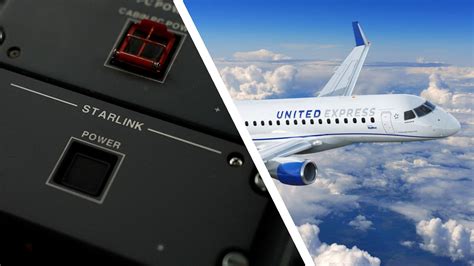
The rollout is part of United’s broader commitment to modernize its entire fleet of more than 1,000 aircraft using SpaceX’s Starlink low-Earth orbit network. By prioritizing its regional jets first, United ensured that a large portion of its short- and medium-haul passengers experienced the new service early. The strategy paid off. Over seven million travelers have already used Starlink WiFi on United flights, collectively logging connectivity across 129,000 flights, with usage patterns resembling those of ground-based broadband rather than traditional in-flight internet.
This progress places United firmly ahead of competitors in the race to redefine onboard digital experiences. While other major U.S. carriers offer free WiFi, none have yet committed to Starlink’s architecture. United’s leadership is not just about speed; it reflects a philosophical shift toward treating connectivity as a core part of the travel experience rather than a premium add-on.
United’s Starlink Expansion Passes the 300-Aircraft Mark
The partnership between United Airlines and Starlink was first announced in 2024, framed as an all-fleet transformation rather than a limited trial. Since then, the airline has moved methodically, completing installations at a pace rarely seen in commercial aviation retrofits. Each aircraft requires roughly eight hours of downtime for installation, an impressively short window considering the complexity of avionics integration and antenna calibration.
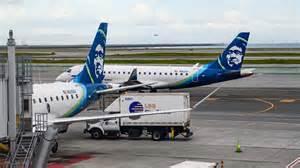
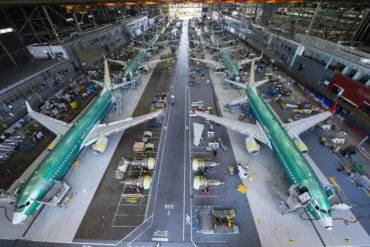
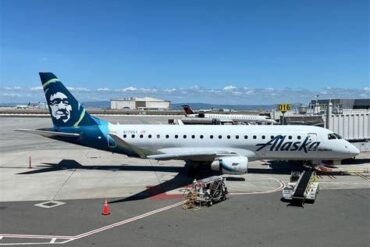
By early 2026, more than 300 aircraft were fully Starlink-enabled, with the majority coming from United’s regional fleet, including the Embraer E175. These aircraft were the first to receive FAA Supplemental Type Certification, clearing the path for broader deployment. Late last year, United quietly introduced its first mainline Starlink-equipped Boeing 737, signaling the start of a much faster installation phase focused on narrowbody and widebody jets.
The airline now expects to exceed 800 Starlink-equipped aircraft by the end of the year, effectively covering more than half of its total fleet. If the current pace continues, full fleet completion is expected in 2027, a timeline that would make this the largest in-flight connectivity rollout in aviation history.
Why Starlink Changes the In-Flight WiFi Equation
For years, passengers tolerated slow, unstable, and expensive onboard internet because expectations were low. Delivering connectivity at 35,000 feet using geostationary satellites inevitably introduced latency, signal dropouts, and uneven coverage. Starlink changes that equation by relying on a dense constellation of low-Earth orbit satellites, dramatically reducing signal travel distance and improving performance.
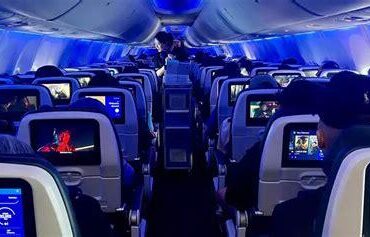
In practical terms, this means download speeds frequently exceeding 200 Mbps, latency low enough for real-time applications, and coverage that begins at the gate rather than after takeoff. Streaming high-definition video, participating in online gaming sessions, or working on cloud-based platforms now feels normal rather than aspirational.

United’s data suggests that passengers are using Starlink in ways previously unseen on commercial flights. Usage spikes during boarding and taxi, a phase where older systems were typically unavailable. This gate-to-gate connectivity has quietly redefined productivity and entertainment expectations, particularly for business travelers.
From Patchwork Providers to a Unified Digital Strategy
Before Starlink, United’s fleet relied on four different WiFi providers, creating an inconsistent experience that varied by aircraft type and route. That patchwork approach is now being dismantled in favor of a single, scalable platform. The operational simplicity alone is significant, reducing maintenance complexity and training requirements while delivering a consistent passenger experience.
This shift has also altered United’s competitive positioning. Once considered behind the curve in onboard technology, the airline is now widely regarded as the benchmark for in-flight connectivity. American Airlines and Delta Air Lines, while offering free WiFi, continue to rely on more traditional satellite systems, leaving a noticeable performance gap on routes where Starlink is available.
Regulatory Limits and Cabin Experience Considerations
Despite Starlink’s technical capabilities, not everything is permitted in the air. United has confirmed that voice and video calls remain prohibited, in line with federal regulations and long-standing airline policies. The restriction is less about bandwidth and more about cabin harmony, as unrestricted calling could quickly turn a flight into an echo chamber of overlapping conversations.
Instead, United is positioning Starlink as a tool for seamless digital continuity rather than unrestricted communication. Messaging, streaming, browsing, and cloud-based work are encouraged, while the overall cabin atmosphere remains intentionally calm.
A Signal of Where Airline Connectivity Is Headed
United Airlines’ Starlink rollout is more than a hardware upgrade; it is a statement about the future of air travel. Connectivity is no longer a novelty or a paid perk. It is infrastructure. By committing to fleet-wide deployment and executing at scale, United has set a new industry standard that competitors will find difficult to ignore.
As installations accelerate across mainline aircraft and international routes, the line between airborne and ground-based internet continues to blur. For passengers, the result is simple: fewer compromises, fewer frustrations, and a flight experience that finally feels connected to the modern digital world.