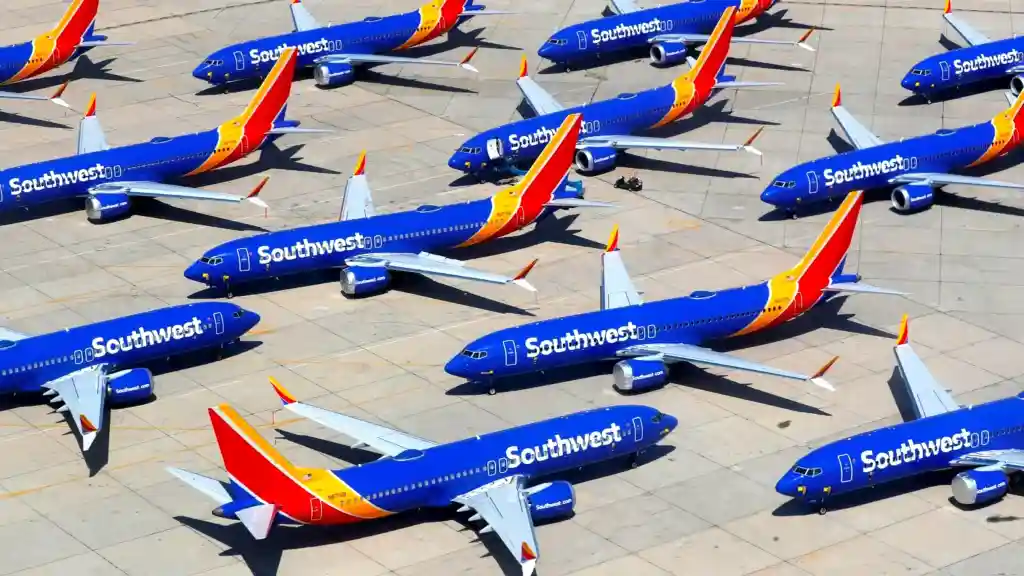
Southwest Airlines is preparing to enter a new era of onboard connectivity, announcing plans to equip a significant portion of its fleet with Starlink high-speed satellite Wi-Fi, making it the fourth U.S. carrier to adopt SpaceX’s rapidly expanding aviation internet service. The initiative marks a pivotal step in the airline’s broader transformation strategy, blending its historic low-cost model with increasingly premium passenger experience upgrades.
The rollout will begin with 300 aircraft, representing roughly 37.5% of Southwest’s 799-plane fleet, all of which consist exclusively of Boeing 737 variants. Installation is expected to progress quickly, with the first wave of Starlink-enabled jets scheduled for completion by the end of 2026. The move follows Southwest’s late-2025 decision to make onboard Wi-Fi free for passengers for the first time, signaling a clear commitment to digital accessibility in the skies.
Customer sentiment is likely to be shaped heavily by the upgrade. Recent operational and policy changes—including adjustments to baggage and boarding procedures—have drawn mixed reactions. Against that backdrop, free ultra-fast in-flight internet stands poised to become a defining pillar of customer satisfaction and brand repositioning.
How Starlink Changes the In-Flight Internet Experience
Starlink’s aviation platform operates on a constellation of more than 9,400 Low Earth Orbit (LEO) satellites, a network engineered by SpaceX to deliver low-latency, high-bandwidth connectivity across the globe. Unlike traditional geostationary satellite systems, which orbit far higher above Earth, LEO satellites reduce signal travel distance dramatically—translating into faster speeds and more stable connections.

This infrastructure enables download speeds exceeding 250 Mbps, fast enough to support 4K streaming, real-time gaming, and seamless video conferencing at cruising altitude. Optical inter-satellite laser links allow data to travel between satellites in space, maintaining uninterrupted service even over oceans or polar routes where ground stations are absent.
For passengers, the technical sophistication fades into a simple promise: gate-to-gate connectivity that mirrors the “at-home” internet experience. Streaming live sports, participating in virtual meetings, or downloading large files mid-flight becomes not just possible, but routine.
U.S. Airlines Race to Adopt SpaceX Connectivity
Southwest’s adoption places it among a fast-growing cohort of American carriers turning to Starlink to modernize cabin technology. Hawaiian Airlines led the charge in February 2024, installing the service on Airbus A321neo aircraft before expanding to its A330 fleet later that year. The airline leveraged its Pacific route structure—where connectivity gaps are most pronounced—to showcase Starlink’s oceanic coverage advantages.
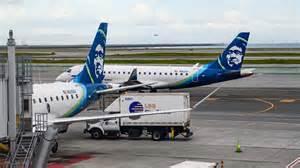
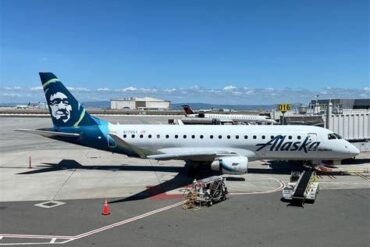
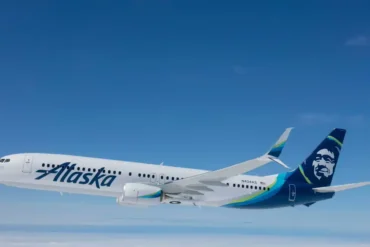
United Airlines followed with a late-2024 agreement, rolling out installations across regional jets and Boeing 737 aircraft throughout 2025. Alaska Airlines then secured third place in early 2026, announcing fleetwide deployment just weeks ahead of Southwest’s confirmation.
Southwest Executive Vice President Tony Roach emphasized the experiential leap the technology provides, highlighting passengers’ ability to stream entertainment, download music, play online games, work remotely, and maintain real-time contact with family and colleagues from takeoff through landing.
A Transformational Year for Southwest Airlines
The Starlink deal arrives amid what may be the most consequential strategic shift in Southwest’s 55-year history. Long synonymous with its no-frills, egalitarian cabin model, the airline is pivoting toward a more segmented and revenue-diverse product structure designed to compete more directly with legacy carriers.
As of January 27, 2026, Southwest officially retired its iconic open seating policy, replacing it with assigned seating and a structured one-through-eight boarding group system. The change ends decades of first-come, first-served boarding culture that had become central to the airline’s identity.
Cabin retrofits are also introducing tiered comfort offerings for the first time. Extra Legroom seats—providing up to five additional inches of pitch—now occupy approximately one-third of each aircraft. These seats include priority boarding placement along with complimentary premium beverages and snacks, reflecting a calibrated move toward upsell opportunities without abandoning price competitiveness.
Simultaneously, Southwest is upgrading onboard hardware. USB-A and USB-C power ports are being installed fleetwide, with new Boeing 737 MAX deliveries arriving factory-equipped and older 737-700 aircraft entering retrofit programs beginning in early 2026. The connectivity ecosystem—power plus high-speed internet—positions the airline to meet modern passenger expectations shaped by remote work and streaming culture.
The Strategic Logic of an All-Boeing 737 Fleet
Southwest’s Starlink integration is operationally streamlined by one defining characteristic: it operates only Boeing 737 aircraft, making it one of the world’s largest single-type commercial fleets. This uniformity underpins the airline’s entire economic model.
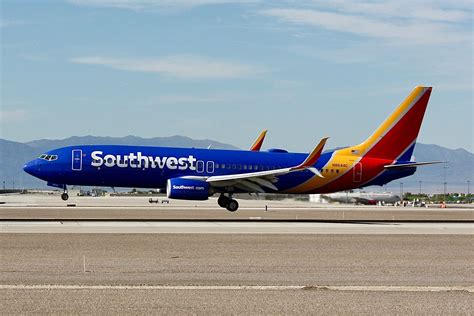
Fleet commonality generates cost efficiencies across three critical domains—pilot certification, maintenance logistics, and ground handling procedures. Pilots can transition between aircraft with minimal retraining, spare parts inventories remain standardized, and airport operations benefit from procedural consistency.
Even in the aftermath of the Lion Air and Ethiopian Airlines 737 MAX tragedies—which triggered the longest global grounding of a commercial airliner—Southwest maintained its Boeing allegiance. Industry analysts estimate introducing a second aircraft type would cost the airline billions in training, tooling, and infrastructure adjustments, eroding its low-cost foundation.
This loyalty has also cultivated a preferential commercial relationship with Boeing, influencing aircraft pricing, delivery priority, and customization flexibility—including technology integrations such as Starlink installations.
Connectivity as Competitive Currency
In today’s aviation landscape, onboard internet has evolved from novelty to necessity. Business travelers expect uninterrupted productivity; leisure passengers expect entertainment parity with home streaming services. Airlines that fail to deliver both risk brand erosion.
Southwest’s dual move—free Wi-Fi access plus Starlink speed—creates a powerful value proposition: premium connectivity without premium pricing. That equation could prove especially potent on domestic U.S. routes, where flight durations are long enough for meaningful internet use but historically underserved by high-bandwidth systems.
As installations accelerate through 2026, Southwest’s cabins will become laboratories of its new hybrid identity—still cost-conscious, yet increasingly experience-driven. The airline built its legacy on operational simplicity; it may build its future on digital sophistication cruising at 35,000 feet, stitched together by a mesh of orbiting satellites and the quiet expectation that passengers should never feel disconnected from the world below.