The modern battlefield no longer begins on land—it begins in orbit. The sudden denial of access to SpaceX’s Starlink network to Russian forces has exposed a critical vulnerability in Moscow’s warfighting capabilities, transforming satellite connectivity from a strategic advantage into an operational necessity. What followed was immediate, chaotic, and deeply revealing: Russian units, once quietly dependent on unauthorized access, found themselves abruptly disconnected—isolated in a war increasingly defined by data, speed, and precision.
For Ukraine, this moment represented more than a technical disruption. It was a decisive shift in momentum. For Russia, it was a stark reminder that in 21st-century warfare, connectivity is combat power.
How Starlink Became Ukraine’s Invisible Force Multiplier
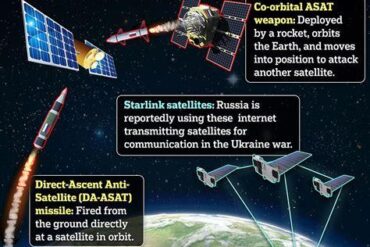
Since the outbreak of the Russia-Ukraine War in 2022, Ukraine has leveraged Starlink to reshape the dynamics of battlefield communication. Unlike traditional military networks vulnerable to jamming and interception, Starlink delivered low-latency, resilient, and decentralized connectivity that proved nearly impossible to suppress.
This technological edge translated directly into operational superiority. Ukrainian forces maintained uninterrupted communication between command centers and frontline units, even under heavy electronic warfare pressure. Drone operators benefited the most, using high-bandwidth links to control first-person-view (FPV) drones with lethal precision across vast distances.
The result was a battlefield ecosystem where information flowed seamlessly. Units adapted faster, strikes became more precise, and coordination reached levels rarely seen in conventional warfare.
The Sudden Blackout: Russian Forces Cut Off and Disoriented
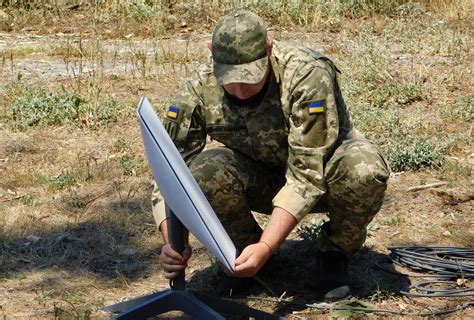
Russia’s workaround—smuggling and using unauthorized Starlink terminals—was always a temporary solution. That reality came crashing down when Ukrainian Ministry of Defense enforced a strict verification system in coordination with SpaceX.
The implementation of a dynamic whitelist system, updated daily, effectively severed Russian access overnight.
The consequences were immediate and severe. Russian units lost real-time communication, drone operations faltered, and battlefield coordination deteriorated rapidly. Reports from the frontlines painted a vivid picture: soldiers relying on outdated radios, wired communication lines, and improvised methods reminiscent of pre-digital warfare.
One soldier’s remark captured the situation with biting clarity: “All we’ve got left now are radios, cables, and pigeons.”
This wasn’t just a technical setback—it was a systemic collapse. Without reliable connectivity, Russian units became slower, less coordinated, and dangerously exposed.
Battlefield Impact: Momentum Swings in Ukraine’s Favor
The operational vacuum created by the Starlink cutoff had measurable effects. Ukrainian commanders observed a noticeable decline in Russian offensive activity across multiple sectors. Units that once executed coordinated assaults now struggled to synchronize movements or respond dynamically to threats.
According to Volodymyr Zelenskyy, Ukrainian forces recaptured approximately 460 square kilometers of territory in early 2026—marking one of the most significant territorial gains in recent years.
This shift wasn’t coincidental. It underscored a critical truth: modern warfare rewards the side that controls the information domain. When Russian forces lost access to satellite-enabled communication, they didn’t just lose connectivity—they lost tempo, awareness, and initiative.
Russia’s Strategic Response: Enter the Rassvet Satellite Constellation
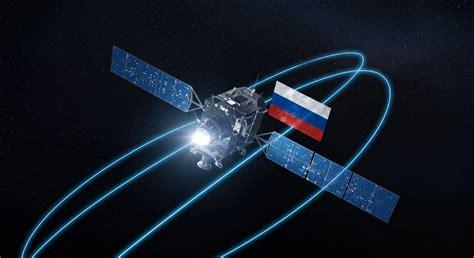
Faced with a glaring technological gap, Moscow accelerated a long-developing solution: its own low-Earth orbit (LEO) satellite network. The project, known as Rassvet, represents Russia’s most ambitious attempt to replicate—and eventually challenge—Starlink’s dominance.
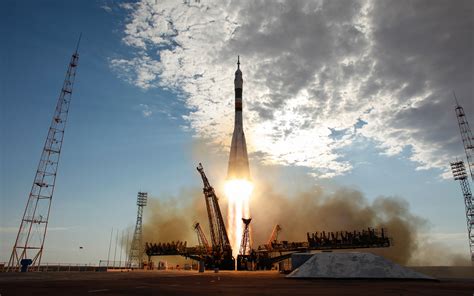
Developed by Bureau 1440, the Rassvet initiative took a significant step forward with the launch of its first 16 satellites aboard a Soyuz-2.1B rocket.
These satellites are not mere prototypes. They are equipped with 5G non-terrestrial network (NTN) communication systems, advanced power modules, inter-satellite laser links, and plasma propulsion engines—technologies designed to enable high-speed, low-latency data transmission across a distributed orbital network.
From Experiment to Deployment: Russia’s Race Against Time
The transition from experimental platforms to operational satellites marks a critical milestone for Rassvet. Bureau 1440 claims it achieved this progression in just 1,000 days—a rapid timeline given the complexity of satellite constellation development.
Yet, the program’s challenges are evident. Initial plans called for deploying 300 satellites by the end of 2025. As of March 2026, only 16 have been launched.
This gap highlights the immense logistical, industrial, and financial demands of building a global satellite network. Even with substantial government backing—over 100 billion rubles—and additional private investment, scaling remains a formidable obstacle.
Russia now aims to deploy:
- 250 satellites by 2027
- 350 satellites for initial operational capability
- Over 900 satellites by 2035
Ambitious targets, but still modest compared to the scale already achieved by Starlink.
Starlink’s Unmatched Scale and First-Mover Advantage
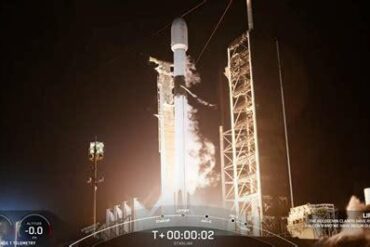
While Rassvet is just beginning, Starlink has already redefined the boundaries of satellite internet. Since its first launch in 2019, SpaceX has placed over 11,000 satellites into orbit, with more than 10,000 currently active.
This massive constellation enables global coverage, ultra-low latency, and unmatched bandwidth capacity. More importantly, it provides redundancy—if one satellite fails or is jammed, others seamlessly compensate.

Plans for expansion are even more aggressive. SpaceX has outlined a vision for up to 34,000 satellites, creating a mega-constellation that could dominate both civilian and military communications for decades.
This scale creates a nearly insurmountable lead. For competitors like Rassvet, the challenge isn’t just technological—it’s exponential.
Global Satellite Race: China and Europe Join the Fray
Russia is far from alone in recognizing the strategic importance of LEO satellite networks. China and Europe are investing heavily in their own alternatives, each aiming to reduce dependence on foreign infrastructure and secure sovereign communication capabilities.
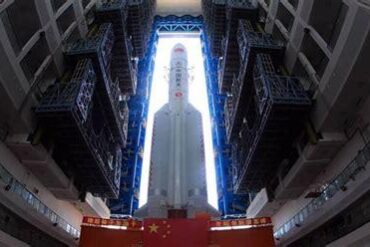
China’s Guowang and Qianfan projects are particularly aggressive, targeting tens of thousands of satellites and rapid deployment timelines. These systems are designed not only for commercial broadband but also for military-grade communication resilience.
Meanwhile, Europe is advancing initiatives like Eutelsat’s OneWeb constellation and the IRIS program. Although technologically sophisticated, these systems often operate at higher orbital altitudes, resulting in slightly increased latency compared to Starlink.
Despite these efforts, no competitor currently matches Starlink’s combination of scale, maturity, and operational integration.
The Future of Warfare: Connectivity as a Decisive Weapon
The Starlink cutoff incident has crystallized a new reality: wars are no longer fought solely with bullets and missiles—they are fought with bandwidth. Control of satellite networks now directly influences battlefield outcomes, from drone strikes to troop coordination.
For Russia, the urgency behind Rassvet is clear. Without an independent, resilient satellite network, its military remains vulnerable to external disruption. For Ukraine, continued access to Starlink ensures a sustained edge in communication and situational awareness.
This evolving dynamic signals a broader transformation. Space is no longer a supporting domain—it is a contested battlefield where dominance translates into terrestrial advantage.
Conclusion: A Turning Point in Orbital Power Politics
The abrupt loss of Starlink access didn’t just blind Russian troops—it illuminated the future of conflict. The rapid deployment of the Rassvet constellation is a direct response to that realization, a race to reclaim autonomy in a domain where dependence can be catastrophic.
Yet, the gap remains vast. Starlink’s head start, technological maturity, and sheer scale position it as the undisputed leader in satellite communications—for now.
What unfolds next is not merely a competition between companies or nations. It is a strategic contest for control of the digital high ground, where satellites dictate the flow of information, and information dictates the outcome of war.