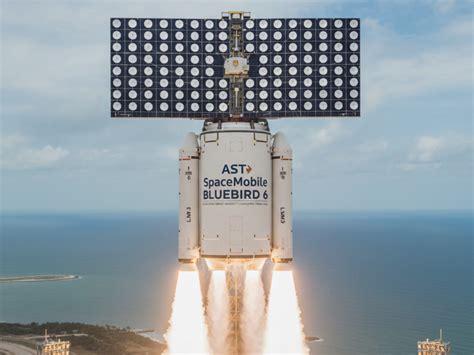
In a bold leap forward for satellite communications, AST SpaceMobile has launched the largest commercial satellite ever to reach low-Earth orbit. Dubbed BlueBird 6, this engineering marvel spans an astonishing 2,400 square feet, roughly equivalent to the footprint of a modern three-bedroom apartment. This significant scale isn’t just a marvel of hardware—it marks a direct challenge to SpaceX’s Starlink, not in volume but in technological capability.
A New Breed of Satellite Connectivity
Where Starlink relies on a constellation of over 10,000 small satellites requiring specialized user terminals, AST SpaceMobile’s BlueBird 6 aims to eliminate the need for extra hardware altogether. The satellite’s massive antenna array is engineered to detect and process the relatively weak signals emitted by everyday smartphones. This innovation allows for direct 5G connectivity without the mediation of terrestrial cell towers or ground-based equipment.
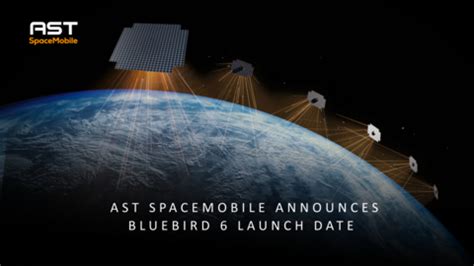
The concept is simple, yet groundbreaking: when a phone moves out of tower range—whether on a remote highway, deep in the forest, or far offshore—it would automatically switch to a satellite signal without user intervention. This seamless integration with mobile networks, including giants like AT&T, Verizon, and over 50 other global operators, promises to keep users connected in areas that were previously unreachable.
Performance That Rivals Ground Networks
According to AST, BlueBird 6 can deliver data speeds of up to 120 Mbps, rivaling many terrestrial 5G offerings. This isn’t just a convenience—it represents a fundamental shift in how we think about mobile coverage. The new satellite doesn’t just relay signals; it processes them using sophisticated onboard systems to clean, stabilize, and transmit data with minimal latency.
Such functionality sets AST apart from Starlink, whose satellites are too small to handle direct phone connections. Starlink’s system requires a relay through proprietary dishes and routers, making it less adaptable to standard mobile devices. In contrast, AST’s BlueBird 6 leverages its size to bridge that gap directly.
A Bright Threat to the Night Sky
But this ambition comes with trade-offs. The satellite’s enormous solar panels—essential for powering its advanced systems—also reflect sunlight with an intensity that is already drawing concern from the astronomical community. AST’s earlier, smaller satellites were among the brightest objects in the night sky, and BlueBird 6 is three times larger than its predecessors.
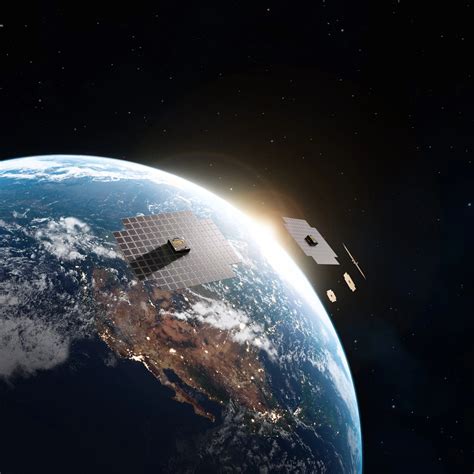
As AST prepares to launch around 50 additional BlueBird-class satellites in 2026, fears are mounting that the company could significantly impact astronomical research and stargazing. Observatories on Earth and in orbit may find their observations compromised by the unwanted luminance of these floating giants.
SpaceX Responds: Collision Concerns and Regulatory Pushback
The launch has not gone unnoticed by SpaceX, which has voiced strong opposition to BlueBird 6’s presence in orbit. In a complaint to the FCC, SpaceX claimed that such large satellites increase the risk of in-orbit collisions, threatening the safety of space traffic. Given that SpaceX’s own Starlink network involves tens of thousands of satellites, the argument has raised eyebrows across the industry.
This reaction underscores the growing tension in a sector quickly becoming saturated. With multiple companies racing to occupy prime orbital real estate, the question isn’t just who provides the best service, but also who governs space, how, and at what cost to science and safety.
The Dawn of Satellite 5G for Everyone
Regardless of these disputes, the technological leap that BlueBird 6 represents cannot be understated. The idea of unbroken global mobile coverage, reachable even from the most remote corners of the Earth, is no longer theoretical. If AST SpaceMobile’s roadmap holds true, 2026 could see the dawn of a fully space-integrated mobile experience—a step beyond the infrastructure-dependent limits of Starlink.
The launch of BlueBird 6 may just be the beginning of a new era of communication, one in which satellite size—and not just number—determines the power and reach of global connectivity. In the clash between quality and quantity, AST has made its move. Now, the world watches as Starlink decides how to respond.